AFP USA

What is the state of play with Trump’s tariffs?

With sweeping tariffs on friend and foe, US President Donald Trump has roiled financial markets and sparked a surge in economic uncertainty — and tensions are mounting days before a fresh volley of higher duties are due to kick in.Here is a rundown of what Trump has implemented in his second presidency, with levies on dozens of economies set to bounce from 10 percent to a range between 11 percent and 50 percent on Wednesday.- Global tariffs -While Trump imposed a 10 percent tariff on most US trading partners in April, the rate is set to rise for dozens of economies including the European Union and Japan come Wednesday.To avoid higher levies, countries have been rushing to strike deals with Washington.So far, the UK and Vietnam have struck pacts with the United States, while China has managed to temporarily lower tit-for-tat duties.There are notable exceptions to the duty.Immediate US neighbors Canada and Mexico, which were separately targeted over illegal immigration and fentanyl, are not affected by the 10 percent global tariff.Also off the hook are copper, pharmaceuticals, semiconductors and lumber — although these are sectors that Trump is mulling levies on. Gold and silver, as well as energy commodities, are excluded too.- China focus -China has borne the brunt of Trump’s levies. The world’s two biggest economies engaged in an escalating tariffs war this year before a temporary pullback.Both sides imposed triple-digit tariffs on each other’s goods at one point, a level effectively described as a trade embargo.After high level talks, Washington agreed to lower its levies on Chinese goods to 30 percent and Beijing slashed its own to 10 percent.The US level is higher as it includes a 20 percent tariff imposed over China’s alleged role in the global fentanyl trade.- Autos, metals -Trump has also targeted individual business sectors in his second term.In March, he imposed a 25 percent levy on steel and aluminum imports and last month doubled them to 50 percent.He has also rolled out a 25 percent tariff on imported autos, although those imported under the US-Mexico-Canada Agreement (USMCA) can qualify for a lower levy.Trump’s auto tariffs impact vehicle parts too, while the president has issued rules to ensure automakers paying vehicle tariffs will not also be charged for certain other duties.- Canada, Mexico -Canadian and Mexican products were initially hard hit by 25 percent US tariffs, with a lower rate for Canadian energy.Trump targeted both neighbors saying they did not do enough on illegal immigration and the flow of illicit drugs across borders.But he eventually announced exemptions for goods entering his country under the USMCA, covering large swaths of products. Potash, used as fertilizer, got a lower rate as well.- Other threats -Beyond expansive tariffs on Chinese products, Trump ordered the closure of a duty-free exemption for low-value parcels from the country. This adds to the cost of importing items like clothing and small electronics.Trump has also opened the door for 25 percent tariffs on goods from countries importing Venezuelan oil. He has threatened similar “secondary tariffs” involving Russian oil.And he has ordered investigations into imports of copper, lumber, semiconductors, pharmaceuticals and critical minerals that could eventually bring new duties.- Legal challenges -Trump’s sweeping tariffs on countries have faced legal challenges. The US Court of International Trade ruled in May that Trump had overstepped his authority with across-the-board global levies.It blocked many of the duties from going into effect, prompting the Trump administration’s challenge, and a US federal appeals court has since allowed the duties to remain while it considers the case.

Where do trade talks stand in the rush to avert higher US tariffs?

As a Wednesday deadline approaches for steeper US tariffs to hit dozens of economies ranging from the EU to India, trade negotiations with President Donald Trump’s administration are coming down to the wire.The levies taking effect July 9 were announced in April, with the White House citing a lack of “reciprocity” in trade relations. But they were swiftly halted, allowing room for talks.Days before their reimposition, where do things stand?- EU: ‘Ready’ for deal -The European Union said it is “ready for a deal” with Washington, with the bloc’s trade chief meeting his US counterparts Thursday.European Commission president Ursula von der Leyen said the EU was targeting an “agreement in principle” when it came to the July 9 cutoff.With no deal, the US tariff on EU goods doubles from the “baseline” of 10 percent to 20 percent — with Trump previously threatening a 50 percent level.- Vietnam: A pact with uncertainties -Washington and Hanoi unveiled a trade pact Wednesday with much fanfare and few details, but it allowed Vietnam to avoid Trump’s initial 46 percent tariff.Under the agreement, Vietnamese goods face a minimum 20 percent tariff while products made elsewhere face a 40 percent levy — a clause to restrict “transshipping” by Chinese groups.But there remain questions on how the higher levy would apply to products using foreign parts.There is also a risk that Beijing will adopt retaliatory measures, analysts warned.- Japan: Rice, autos at stake -Despite being a close US ally and major source of foreign investment, Japan might not escape Trump’s tariff hike.Tokyo’s trade envoy Ryosei Akazawa has made numerous trips to Washington through the end of June.But Trump recently criticized what he described as Japan’s reluctance to open up further to US rice and auto exports.”I’m not sure we’re going to make a deal,” Trump said, adding that the country could pay a tariff of “30 percent, 35 percent, or whatever the number is that we determine.”- India: A good position -Indian manufacturers and exporters want to believe they can avoid a 26 percent tariff.Negotiations between both countries have been going well for weeks, and Trump himself suggested at the end of June that a “very big” agreement was imminent.Ajay Sahai, director general of the Federation of Indian Export Organisations, said the feedback he received “suggests positive developments.” But he maintained that the situation was fluid. Finance Minister Nirmala Sitharaman has stressed that agriculture and dairy products remain “very big red lines.”- South Korea: Muted optimism -Seoul, which is already reeling from US tariffs on steel and autos, wants to avert a sweeping 25 percent levy on its other exports.Cooperation in shipbuilding could be a bargaining chip, but “at this stage, both sides still haven’t clearly defined what exactly they want,” said new President Lee Jae Myung on Thursday.”I can’t say with confidence that we’ll be able to wrap everything up by July 8,” he added.- Indonesia, Thailand, Taiwan in the wings -Other Asian economies including Indonesia, Thailand and Cambodia, which faces a 49 percent tariff, wait with bated breath.Indonesia has indicated willingness to boost energy, agriculture and merchandise imports from the United States. Bangladesh meanwhile is proposing to buy Boeing planes and step up imports of US agriculture products.Taiwan, for whom Washington is a vital security partner, faces a 32 percent duty without a pact.Although both sides have faced bumps along the way, Taiwanese Vice President Hsiao Bi-khim said “negotiators from both sides are working diligently” to find a path forward.- Switzerland: Hope for delay -Switzerland’s government said Washington has acknowledged it was acting in good faith, and assumes its tariff level will remain at 10 percent on July 9 while negotiations continue.But without a decision by the president as of the end of June, Switzerland did not rule out that levies could still rise to a promised 31 percent.burs-jug-bys/jgc

As US stocks hit records, experts see the dollar falling further

While the US stock market has fully recovered from a spring rout, the relentless drop in the dollar is prompting currency experts to warn of greater financial market turmoil ahead.The American currency is down more than 10 percent so far in 2025, a historic retreat that has overlapped with occasional spikes in long-term US Treasury yields. The anomalous dynamic suggests investors are rethinking US holdings, once considered safe havens, as they take stock of President Donald Trump’s unpredictable policy shifts.While the dollar’s status as the global reserve currency appears unshakeable in the near future, many currency experts expect the greenback to continue to weaken in the coming years, given expectations for slower growth after a long run of US out-performance.”It’s US exceptionalism basically falling by the wayside and the rest of the world playing catch-up,” said Erik Nelson, a macro strategist at Wells Fargo, who predicts the dollar will continue to depreciate.In April, global markets were shaken by “Sell America” gyrations in the stock, foreign exchange and US treasury markets, and analysts expect similar sentiment in the future.”I think the world is becoming a little bit less stable politically, which is generally kind of problematic for economic and financial market volatility,” Nelson said.”We are witnessing the end of a 14-year bull run of the US dollar,” said Joseph Brusuelas, chief economist at RSM US, a consultancy, who expects a “multi-year unwinding of the dollar.”Harvard Economist Kenneth Rogoff, author of the 2025 book “Our Dollar Your Problem,” said central banks in China and elsewhere were diversifying away from dollars even before 2025, but that Trump accelerated the trend.”I think we’ll see a period of a lot of financial volatility, largely centered around the chaos in the United States,” Rogoff told AFP, pointing to factors that include uncertainty about US central bank independence and the rise of populism.”We’ll probably have a more volatile period in financial markets over the next 10 years than we have in the preceding.”- Onshoring benefit -Both Nelson and Rogoff pointed out that the dollar at the start of 2025 was unusually lofty after surging in the weeks following Trump’s November 2024 victory. Economists have since rethought assumptions that the US would continue to outperform rival economies.According to the ICE US Dollar Index, a basket of seven currencies, the dollar fell 10.7 percent through the end of June, the biggest drop in the first six months of a year since 1973.On Thursday, the dollar index rose modestly after solid US jobs data dimmed odds for imminent Federal Reserve interest rate cuts.With a gain of more than 13 percent against the dollar, the euro has been among the biggest winners following Germany’s big fiscal investments in defense, even as the European Central Bank continued to cut interest rates.Besides a weaker US economic outlook, the shift in the dollar reflects expectations for looser US monetary policy. Trump has taken relentless aim at Jerome Powell, referring to the Federal Reserve Chair as “a stupid person” while calling for interset rates “at least two to three points lower” — a huge shift in monetary policy.While Treasury Secretary Scott Bessent and other top officials have rejected suggestions they prefer a cheap dollar, a less expensive currency is beneficial to US exporters and consistent with the administration’s stated goal of beefing up manufacturing.”Lower interest rates and a weaker dollar would enable the US to strengthen its economic self-sufficiency and increase onshoring,” said Jason Schenker of Prestige Economics, who argues that the moves align with a muscular national security posture towards China.Market watchers have come to expect Trump to modulate his actions in response to big negative market swings. On April 9, Trump backtracked on many of the most onerous tariffs from his “Liberation Day” announcement a week earlier after a spike in Treasury bond yields hammered stocks. Later that month, he said he has “no intention” of firing Powell after earlier comments set markets ablaze.But equity markets so far appear unfazed by dollar weakness, with both the S&P 500 and Nasdaq ending Thursday’s session at records.”At some point it’s going to get investors’ attention,” Cresset Capital Management’s Jack Ablin said of the weak dollar.”It signals foreign investors are less inclined to own US assets.” 

‘Hug therapy’: How Pope Leo is trying to unify Vatican

Pope Leo XIV heads off on holiday on Sunday, having spent his first two months as Catholic leader rebuilding unity and bolstering tradition after his predecessor’s unorthodox papacy.”Prudent”, “methodical” and “listening” are some of the words used by Vatican insiders who spoke to AFP to describe the approach of the first American pope, who took over on May 8 as head of the world’s 1.4 billion Catholics.Leo was elected by cardinals following the death of Argentina’s Pope Francis, a charismatic reformer who sparked worldwide devotion but also internal Church divisions during his 12-year papacy.Francis shook things up from the outset, eschewing the ornate garb and palaces of his predecessors, but his successor has moved more carefully, emphasising tradition and unity.On the all-important symbols, Leo has returned to wearing the traditional red mozzetta — short cape — and stole over his white papal robes.He will take a summer break from July 6 to 20 at the papal palace at Castel Gandolfo, outside Rome, a longtime country residence for pontiffs that Francis declined to use.Leo is also expected to move into the papal apartments of the Vatican’s Apostolic Palace in the autumn after extensive renovations, according to a Vatican source.Francis had rejected the palace in favour of a simple apartment in the Santa Marta guesthouse.On policy matters, Leo has given numerous speeches but has so far avoided taking positions that might cause offence and has made no major appointments.In public, he smiles and engages with the crowds who flock to see him in St Peter’s Square, from blessing babies to singing along to the chants of the Chicago White Sox, his favourite baseball team.But the discreet former missionary — who spent two decades in Peru before joining the Roman Curia, the Catholic Church’s governing body, in 2023 — has so far kept to the script and followed protocol.”His style is simplicity… He is a presence that does not impose itself on others,” said Roberto Regoli, a professor at the Pontifical Gregorian University in Rome.”With him, rather than looking at appearances, you have to focus on the content,” he told AFP.- ‘Some relief’ -Charles Mercier, a professor of contemporary history at the University of Bordeaux, said Leo appeared keen to promote the institution over himself as an individual.”Francis had a personal charisma that he greatly emphasised through his personality. Leo seems to want to blend into an institution, the papal office, that is more than him,” he told AFP.The approach has won Leo support within the Curia.Employees who spoke to AFP described a man who was “pragmatic”, “impressively calm”, “measured and methodical”, “thoughtful” and “concerned about balance”.”He is someone who listens a lot, who needs to understand how things work before making decisions,” explained one employee of a dicastery, a Vatican government department.Even those speaking under cover of anonymity offered a broadly positive tone, reflecting how in just two months, Leo has re-engaged with the Curia.”The Curia was shaken up by Pope Francis, with reforms decided sometimes unilaterally, even in an authoritarian manner, and often badly received,” a Vatican source told AFP on condition of anonymity.The arrival of Leo — “who has a good reputation”, according to the source — “brought some relief”. “We feel that things will be fluid, less personal,” they added.A phrase Leo uttered during his first meeting with the Curia on May 24 made a lasting impression: “Popes come and go, the Curia remains.”This contrasts sharply with the criticism dealt out by Francis, who accused the Curia early in his papacy of “spiritual Alzheimer’s” and a lust for power.- Assurances -“It’s clear we’re in a phase of hug therapy,” commented a European diplomatic source.Another envoy to the Holy See added that Leo was “pursuing a unifying approach — exactly what he was elected to do”.Francis was also accused by critics of sidelining doctrine in favour of social issues, notably migration, even if he did not in fact change major tenets of Catholic belief.In his first few weeks, Leo reaffirmed the celibacy of priests, defined marriage as a union between a man and a woman, and urged bishops to stand firm against sexual abuse, a scandal that still roils the global Church.Despite criticising US President Donald Trump’s migration policy before becoming pope, Leo has barely mentioned the subject since taking office, although he has emphasised the importance of social justice.On the diplomatic front, Leo has renewed calls for peace in Gaza and in Ukraine.He discussed the latter conflict with Russia’s Vladimir Putin in a telephone call on June 4, where he urged the president to make a “gesture that favours peace”.Francis had not spoken to Putin since before Russia’s invasion of Ukraine in February 2022. Just as his overtures to the Curia have been well received, Leo’s return to the traditional symbols of the papacy has been welcomed by those in the Church who accused Francis of distorting the papal office.But Mercier noted that this did not rule out change in the future.Leo is aiming for a “symbolic rebalancing that undoubtedly stems from the desire to unite the Catholic flock, which has given the impression of being polarised under Francis”, he said.But, he added, it could also be a strategy “to provide symbolic assurances to enable continued progress on the substance”.

US, Colombia recall top diplomats as rift deepens

The United States and Colombia called home their respective envoys on Thursday in an apparent acceleration of worsening ties, against the backdrop of an alleged plot against Colombia’s leftist leader.Washington went first, recalling its charge d’affaires John McNamara “following baseless and reprehensible statements from the highest levels of the Government of Colombia,” State Department spokeswoman Tammy Bruce said, without giving specifics.In addition to McNamara’s recall, Bruce said the United States “is pursuing other measures to make clear our deep concern over the current state of our bilateral relationship.” She did not detail the actions.Within hours, Colombian President Gustavo Petro announced he was calling home his top diplomat in Washington in response. Ambassador Daniel Garcia Pena “must come to inform us of the development of the bilateral agenda,” Petro wrote on X, such as tapping South America’s “great potential for clean energy” and the fight against “drug lords and their international finances.”   The diplomatic spat came on the heels of the resignation of Colombia’s foreign minister earlier Thursday — the latest top-ranking official to exit Petro’s government.”In recent days, decisions have been made that I do not agree with and that, out of personal integrity and institutional respect, I cannot support,” Laura Sarabia, who was also Petro’s former chief of staff, wrote on X.- Plot investigation -Colombia was until recently one of the United States’s closest partners in Latin America. But ties have sharply deteriorated.Colombian prosecutors opened an investigation this week into an alleged plot to overthrow Petro with the help of Colombian and American politicians, following the publication by the Spanish daily El Pais of recordings implicating former foreign minister Alvaro Leyva.”This is nothing more than a conspiracy with drug traffickers and apparently, the Colombian and American extreme right,” Petro said on Monday.During a speech in Bogota on Thursday, Petro said he did not think US Secretary of State Marco Rubio, whom he had previously linked to the alleged overthrow attempt, was “in the midst of a coup d’etat” against his government.”I don’t believe that a government that has Iran as its enemy and nuclear weapons pointed at it… is going to start fooling around with a coup d’etat” in Colombia, he said.In late January, the United States briefly suspended consular services to retaliate for Petro’s refusal to allow US military planes to return Colombian migrants to their homeland. Petro accused the United States of treating the migrants like criminals, placing them in shackles and handcuffs. The pair issued threats and counter threats of crippling trade tariffs of up to 50 percent. A backroom diplomatic deal involving the deployment of Colombian Air Force planes to collect the migrants averted a looming trade war at the eleventh hour.Colombia’s leftist government also recently refused a US request to extradite two prominent guerrilla leaders wanted by Washington for drug trafficking.

Salvadoran man wrongly deported from US was beaten in prison: lawyers

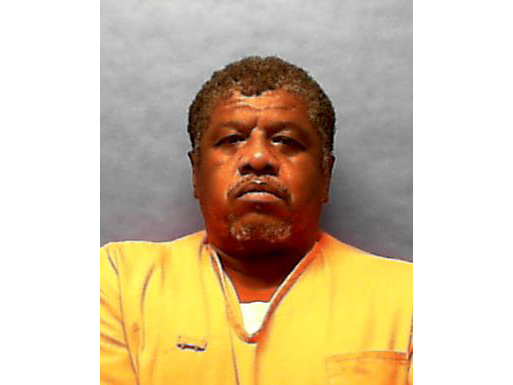
A Salvadoran man was beaten and suffered psychological torture after being wrongly deported from the United States to a notorious prison in El Salvador, his lawyers said in a court filing.Kilmar Armando Abrego Garcia, 30, was summarily deported to the maximum security CECOT prison in El Salvador in March as part of President Donald Trump’s crackdown on undocumented migrants.Justice Department lawyers later admitted that Abrego Garcia, who is married to a US citizen, was wrongly removed due to an “administrative error.”He was brought back to the United States last month to face human smuggling charges in the southern state of Tennessee.In a filing with a US District Court in Maryland, where Abrego Garcia resided until his deportation, his lawyers provided details about his treatment at the Salvadoran prison.”He was subjected to severe mistreatment upon arrival at CECOT, including but not limited to severe beatings, severe sleep deprivation, inadequate nutrition, and psychological torture,” they said.When he arrived, Abrego Garcia and other detainees were greeted by a prison official who reportedly said: “Welcome to CECOT. Whoever enters here doesn’t leave.”He was forced to strip and “kicked in the legs with boots and struck on his head and arms.”His head was shaved and he was struck with wooden batons while being frog-marched to a cell, leaving him with bruises all over his body.”Abrego Garcia and 20 other Salvadorans were forced to kneel from approximately 9:00 PM to 6:00 AM, with guards striking anyone who fell from exhaustion,” his lawyers said. “During this time, Plaintiff Abrego Garcia was denied bathroom access and soiled himself.”The prisoners were confined to metal bunks with no mattresses in an overcrowded cell with no windows and bright lights that remained on 24 hours a day.His lawyers said Abrego Garcia lost 31 pounds (14 kilograms) during his first two weeks in prison.Salvadoran President Nayib Bukele, a close ally of US President Donald Trump, denied the claims. “The man wasn’t tortured, nor did he lose weight. In fact, photos show he gained weight while in detention,” he said Thursday in a post on X. “Apparently, anything a criminal claims is accepted as truth by the mainstream media and the crumbling Western judiciary.”Abrego Garcia was among a group of 238 Venezuelans and 23 Salvadorans deported to El Salvador by the United States on March 15.The Trump administration invoked an obscure wartime law, the 1798 Alien Enemies Act (AEA), to justify the removal of the Venezuelans, accusing them of being members of the Tren de Aragua gang involved in an “invasion” of the United States.The US Supreme Court blocked further deportations under the AEA in May, saying the deported migrants were not being given enough time to legally contest their removal.Abrego Garcia had been living in the United States under protected legal status since 2019, when a judge ruled he should not be deported because he could be harmed in his home country.His lawyers in Tennessee have taken the unusual step of asking a judge to delay his release from prison ahead of his trial on the human smuggling charges, fearing he could be taken into custody by federal immigration agents and deported again.

Mexican boxer Julio Cesar Chavez Jr. arrested by US immigration

Mexican boxer Julio Cesar Chavez Jr. has been arrested by US immigration officers and faces deportation from the United States, the Department of Homeland Security said Thursday.Chavez, a former world champion and the son of legendary Mexican fighter Julio Cesar Chavez, was detained by Immigration and Customs Enforcement (ICE) officers in Los Angeles on Wednesday after authorities determined that he was in the country illegally, Homeland Security said in a statement.Homeland Security, which oversees ICE, said the 39-year-old fighter has “an active arrest warrant in Mexico for his involvement in organized crime and trafficking firearms, ammunition and explosives.”The Mexican public prosecutor’s office said in a statement later Thursday that Mexico had issued an arrest warrant for Chavez in 2023 “for organized crime and arms trafficking.”US authorities informed Mexico that they have begun the procedure to send him home, it added.Homeland Security said Chavez is believed to have ties to the Sinaloa cartel, one of six Mexican drug trafficking groups designated as terrorist organizations by the United States.- ‘Outrageous’ -Chavez’s arrest comes days after his lopsided loss to YouTuber-turned-boxer Jake Paul in a cruiserweight bout before a sell-out crowd at the Honda Center in Anaheim, California.Michael A. Goldstein, a lawyer for Chavez, told the Los Angeles Times that Chavez “was detained outside of his residence by 25 or more ICE and other law enforcement agents.””They blocked off his street and took him into custody, leaving his family without any knowledge of his whereabouts,” Goldstein said. “The current allegations are outrageous and appear to be designed as a headline to terrorize the community.”Homeland Security said Chavez had entered the United States legally in 2023 on a tourist visa that was valid until February 2024.In April last year, he applied for permanent residency based on his marriage to a US citizen “who is connected to the Sinaloa cartel through a prior relationship with the now-deceased son of the infamous cartel leader Joaquin ‘El Chapo’ Guzman.”Homeland Security said that in addition to the active warrant in Mexico, Chavez had criminal convictions in the United States, including on weapons charges in 2024 in Los Angeles.According to the statement, US Citizenship and Immigration Services told ICE that Chavez posed “an egregious public safety threat.”Donald Trump campaigned for president promising to expel millions of undocumented migrants from the United States, and he has taken a number of actions aimed at speeding up deportations and reducing border crossings.Authorities accused the administration of Trump’s predecessor Joe Biden of not making Chavez an “immigration enforcement priority.”Chavez was allowed to re-enter the United States on January 4, 2025 at the San Ysidro port of entry, Homeland Security said — while Biden was still in the White House.In a statement posted on the X account of Julio Cesar Chavez Sr., the Chavez family expressed support for Chavez Jr.”Our family is deeply dismayed by the situation,” the statement said.”In these difficult times, we reiterate our full and unconditional support for Julio.”We fully trust in his innocence and his humanity, as well as in the justice institutions in both Mexico and the United States, in which we place our hope that this situation will be clarified according to the law and truth.”- ‘Why so much violence?’ -Chavez Jr. won the WBC middleweight world title in 2011 and successfully defended it three times.He owns a record of 54-7 with one draw, but his career has also included multiple suspensions and fines for failed drug tests.Two weeks before his bout with Paul, Chavez held a public workout in California where he told the Los Angeles Times that one of his trainers had skipped the session because of fears raised by immigration arrests.”I don’t understand the situation — why so much violence?” he told the newspaper. “There are a lot of good people, and you’re giving the community an example of violence.”After everything that’s happened, I wouldn’t want to be deported,” he said.

US Supreme Court approves deportation of migrants to South Sudan

The US Supreme Court on Thursday gave the green light for the Trump administration to deport a group of migrants stranded at an American military base in Djibouti to war-torn South Sudan.The decision by the  conservative-dominated top court comes 10 days after it cleared the way for the Trump administration to deport migrants to countries that are not their own.The eight migrants were being flown to South Sudan from the US in May but ended up in Djibouti when a district court imposed a stay on third-country deportations.The court said migrants were not being given a “meaningful opportunity” to contest removal.On June 23, the Supreme Court lifted the stay imposed by District Judge Brian Murphy, clearing the way for third-country deportations.But Murphy, an appointee of former president Joe Biden, said the case of the eight migrants who ended up in Djibouti was subject to a separate stay order he issued that had not been addressed by the Supreme Court.On Thursday, the Supreme Court said its June 23 decision applied to both of the judge’s orders.Liberal justices Sonia Sotomayor and Ketanji Brown Jackson dissented from the decision.”What the Government wants to do, concretely, is send the eight noncitizens it illegally removed from the United States from Djibouti to South Sudan, where they will be turned over to the local authorities without regard for the likelihood that they will face torture or death,” Sotomayor said.”Today’s order clarifies only one thing: Other litigants must follow the rules, but the administration has the Supreme Court on speed dial,” she said.The US authorities have said that the eight men — two from Myanmar, two from Cuba, and one each from Vietnam, Laos, Mexico and South Sudan — are convicted violent criminals.The Trump administration has defended third-country deportations as necessary since the home nations of some of those who are targeted for removal sometimes refuse to accept them.Donald Trump campaigned for president promising to expel millions of undocumented migrants from the United States, and he has taken a number of actions aimed at speeding up deportations since returning to the White House in January.

World Bank’s IFC ramps up investment amid global uncertainty

While the world economy faces instability from US President Donald Trump’s threats of a global trade war, the International Finance Corporation (IFC) is dramatically ramping up its investment activities.The Washington-based IFC — the World Bank’s private sector arm — mobilizes private capital and provides financing to support businesses across emerging economies. Though not widely known outside development circles, the organization plays a crucial role in creating jobs and supporting growth in less developed regions.”The world economy has been going through a bit of a turbulent time, but what I must say is that even though there is turbulence… we are seeing a lot of interest in investing in emerging countries,” Makhtar Diop, the IFC’s managing director, told AFP.This optimism is backed by concrete numbers. In the fiscal year ending June 30, preliminary data shows that the IFC committed over $71 billion — nearly double its commitment from just three years ago and a significant jump from last year’s record of $56 billion.The investment spans the globe, with more than $20 billion flowing to Latin America, $17 billion to Asia, and $15.4 billion to Africa. The dramatic increase stems from a deliberate strategic shift. Diop, an economist and former Senegalese finance minister, explained that the IFC has focused on becoming “simpler, more agile, and delegating decision-making to our teams that are in the field.” This approach abandons the over-centralized structure that previously “was slowing down our ability to respond and seize new opportunities.”The timing is significant. As Western economies pull back from direct aid to developing countries — constrained by mounting debts, rising defense budgets, and increasingly inward-looking politics — the IFC has accelerated.”It’s totally understandable that they have fewer resources to make available in the form of grants to developing countries,” Diop acknowledges.However, he emphasized that World Bank funding for the world’s poorest countries remains fully replenished, calling it “the most efficient and best way to support countries.”The IFC’s expanding role within the World Bank Group is evident. Today, its funding nearly matches the support the bank provides directly to governments, making it an equal partner in development efforts.- Dubai to Africa -The organization is also attracting new types of investors. Many co-financing partners now come from regions that traditionally haven’t invested outside their home areas. The IFC’s largest renewable energy investment in Africa, for example, was completed with a Dubai-based company.These investors trust the IFC not only for its market knowledge but also for the risk-mitigation tools it offers, Diop said.In Africa particularly, the IFC pursues a strategy of identifying and supporting “national champions” — successful local companies that need help to become more competitive and globally integrated.A significant portion of the IFC’s mandate involves sustainability projects, an area where Diop decries debates with false choices between economic development and the environment, especially in electricity projects that form an important part of the agency’s portfolio.”It happens that today, you don’t have to make that trade-off because the sustainable solutions are often the cheaper ones, and that’s the beauty of what we are seeing,” he said. While fossil fuel generation remains part of the energy mix to ensure grid stability, the economics increasingly favor clean alternatives.Behind all these investments lies an urgent demographic reality: 1.2 billion young people will reach working age in developing countries over the next decade. For the World Bank, creating employment for this massive cohort is paramount.”The first question of any leader you meet from the developing world is how can you help to create jobs for young people?” Diop observed.Beyond infrastructure development that stimulates broader economic activity, Diop identifies tourism, pharmaceuticals, and agriculture as the most promising sectors for job creation. These industries can offer the scale and growth potential needed to absorb the coming wave of young workers entering the global economy.