AFP USA

How Trump finally learned to love NATO — for now

It will go down as the summit where US President Donald Trump learned to stop worrying and love NATO.Trump reveled in gushing praise from leaders in The Hague — including being called “daddy” by alliance chief Mark Rutte — and a pledge to boost defense spending as he had demanded. But it went further than just lapping up flattery. Trump also spoke of what sounded like an almost religious conversion to NATO, after years of bashing other members as freeloaders and threatening to leave.”I came here because it was something I’m supposed to be doing, but I left here a little bit differently,” Trump said at his closing press conference on Wednesday.”I watched the heads of these countries get up, and the love and the passion that they showed for their country was unbelievable. I’ve never seen quite anything like it. “It was really moving to see it.”A day after returning to the White House, Trump still sounded uncharacteristically touchy-feely about his time with his 31 NATO counterparts. “A wonderful day with incredible and caring Leaders,” he posted on his Truth Social platform on Thursday.- Turnaround -It was a remarkable turnaround from the US president’s first term.Trump repeatedly berated allies as not paying up and threatened to pull the United States out of NATO as part of his wider disdain for international institutions and alliances.At his first summit in 2017 in Brussels, Trump memorably shoved aside Montenegro’s prime minister Dusko Markovic as he made his way to the front of the stage.A year later Trump publicly lambasted Germany and privately talked about wanting to quit.But this time NATO leaders had carefully choreographed the trip. They massaged the numbers to give Trump the defense spending deal he craved. And while Trump headed to the summit dropping F-bombs in frustration at a shaky Iran-Israel ceasefire, NATO leaders love-bombed him from the moment he arrived. The Netherlands put him up overnight in the Dutch king’s royal palace and gave him a royal dinner and breakfast — “beautiful,” according to Trump — while NATO organizers kept the summit deliberately short.Frederick Kempe, the chief executive officer of the Atlantic Council, said Trump had “waxed poetic” about NATO in a way he had never done before.”Trump — the vilifier of European deadbeats on defense and crusader against allies for what he sees as unfair trade practices — sounded like an altered man,” he said in a commentary.- ‘Daddy’s Home’ -The question now is what it means for NATO when the alliance’s priorities end up guided by one man.The final summit statement’s language on Russia’s invasion of Ukraine was watered down from previous years. It also made no mention of Ukraine’s push to join NATO.Reporters were not allowed into Trump’s meeting with Ukrainian President Volodymyr Zelensky. The move was partly because of their Oval Office bust-up in February, but it also deprived Zelensky of the set-piece he had craved.”The biggest loser was Ukraine,” said Ed Arnold of the Royal United Services Insitute in London.Trump also hinted at what lies in store for any backsliders on the defense spending pledge, threatening to make Spain “pay” on trade over its resistance to commit to the new target.As with any relationship, the pressure will now be on NATO to keep up the first flush of love over the three summits that are due to take place over the rest of Trump’s second term.”The real worry is that NATO will be unable to keep up the hype,” said Arnold.For now, though, Trump and his administration seem to be content. As he arrived back in Washington, the White House posted a video of summit highlights, with the caption: “Daddy’s Home.”

Sean ‘Diddy’ Combs used ‘power, violence and fear’: prosecutor

Sean “Diddy” Combs used “power, violence, and fear” as the head of a decades-old criminal enterprise, a prosecutor said Thursday in closing arguments in his high-profile trial.”He counted on silence and shame to keep his crimes hidden,” Christy Slavik told the jury as the government began wrapping up its case against the once-powerful music mogul.The 55-year-old Combs was seated behind the prosecutor as she delivered her closing arguments, passing an occasional message to his lawyers.Slavik methodically walked the jury through the charges against Combs, which include racketeering and sex trafficking. “He used power, violence and fear to get what he wanted,” she said, and relied on a network of “loyal lieutenants” — none of whom testified at his trial — to cover up his crimes, which included forced labor, bribery and witness tampering.”He became more powerful and more dangerous because of the support of his inner circle and his businesses,” she said. “This is Mr Combs’s kingdom.”Slavik told the jury the case was not about criminalizing unorthodox sex.”It’s not about free choices at all,” she said.The women involved were “drugged, covered in oil, sore, exhausted” as Combs made them have sex with escorts for hours, she said.The famed producer coerced two women — the singer Casandra Ventura and later a woman who testified under the pseudonym Jane — into years of drug-addled sex with paid escorts, prosecutors say.- Potential life sentence -The most serious charge, racketeering — which includes the existence of a criminal enterprise that committed a pattern of offenses — could send Combs to prison for life.He faces two charges of sex trafficking and two more for transportation for purposes of prostitution.Combs denies it all. His lawyers have argued that the artist’s relationships were consensual and have sought to convince jurors that many of the witnesses who testified were doing so for financial gain or jealousy.Along with alleged victims, government witnesses included former assistants and other employees, as well as escorts, friends and family of Ventura, and a hotel security guard who said he was bribed with $100,000 in a paper bag.Combs opted against testifying on his own behalf, a common strategy of defense teams who are not required to prove innocence, only to cast doubt on government allegations of guilt.The government’s evidence included thousands of pages of phone and text records, and hours of testimony involved meticulous readings of some of the most explicit and wrenching exchanges.Many of those records appear to indicate distress on the part of the alleged victims. But a lot of the messages also show affection and desire — texts the defense underscored again and again.- Sex parties -Jurors have seen video evidence of the sex parties prosecutors say were criminal, while the defense has exhibited exchanges they say imply consent.Also in evidence are reams of financial records — including CashApp payments to escorts — as well as flight and hotel records.Since early May the proceedings have gripped the Manhattan federal courthouse where they’re taking place. And though electronics are barred from the building, dozens of influencers and content creators have buzzed around the courthouse’s exterior every day, delivering hot takes to eager social media fans.Combs is incarcerated and does not enter or exit the courthouse publicly. But some of the high-profile attendees and witnesses do, including members of the music mogul’s family and figures like Kid Cudi, the rapper who testified that Combs’s entourage torched his car.The closing arguments by the prosecution are expected to wrap up on Thursday and the defense is likely to start its closing on Friday.The jury of 12 New Yorkers could get the case as early as Friday afternoon.

‘It’s not US standards’: Ex-marine recounts father’s detention in immigration raid

For Alejandro Barranco, a Marine veteran, it’s difficult to process the way his father, a Mexican gardener, was detained in a raid in California as part of President Donald Trump’s immigration crackdown in the United States.”They handled this situation in a very unprofessional manner. These are not the standards of the United States government,” Alejandro said in an interview with AFP.Narciso Barranco, father of three Marines, was intercepted by Immigration and Customs Enforcement agents Saturday while trimming a garden at a restaurant in Santa Ana, a city south of Los Angeles. The incident was captured by witnesses in videos that spread like wildfire on social media. From different angles, Barranco, 48, is seen running with a weed whacker in hand before several agents beat, subdue and pepper-spray him. “It’s very hard to watch,” said Alejandro, 25.Tricia McLaughlin, assistant secretary of the US Department of Homeland Security, said in a statement to AFP that Barranco tried to flee and “brandished a weed whacker directly at an officer’s face,” so officers took appropriate action. McLaughlin added that they used “the minimum amount of force necessary to resolve the situation in a way that prioritized the safety of the public and our officers.”But Alejandro disputes the claims. “The video shows (Narciso) moving the weed whacker. I think it’s natural instinct because he was sprayed with something seconds before…but he never brandished it directly at an officer,” he said. “There’s a guy holding his gun sideways, finger on the trigger pointing at a vehicle. I don’t see how that makes sense. The minimum amount of force doesn’t include restraining a man and repeatedly hitting him in the neck and face areas. I think that’s the maximum amount of force short of lethal force.” – ‘Swallowing orders’ -The case has sparked criticism in California, in part because Barranco’s three sons are in or have been in the United States Marine Corps. Alejandro has left the military, while two brothers are stationed at Camp Pendleton, also in Southern California.The arrest also occurred amid a tense climate in the Democratic state, with protests against the raids, and where Trump sent thousands of National Guard troops and 700 Marines to support immigration operations among other things. Alejandro says he knows these troops and understands that they are “swallowing orders” and doing their job. “I do feel that some of them are suffering. Some are confused because perhaps some of their relatives are undocumented and they see all this, and I think it’s hard for them.” Trump returned to the White House riding an anti-immigration wave and promising to deport millions of undocumented immigrants, whom he called “criminals” and “the worst of the worst.” However, under pressure from immigration authorities to increase daily arrests, street operations have shaken workplaces such as car washes, hardware stores and street vendors. Activists, non-governmental organizations and families denounce the detention of people without criminal records, identified for staying or entering the United States illegally. The case of Narciso Barranco, who emigrated from Mexico in the 1990s, follows that of the wife of another former Marine in Louisiana, who was detained in May after leaving an immigration appointment to process her legal status. – ‘There has to be a change’ -Alejandro saw his father for the first time on Tuesday at a detention center in downtown Los Angeles.He told AFP that his father is being held in a cell with at least 70 other people, with only one toilet, very little food, and “minimal water, like once a day.”Narciso, with wounds and bruises, received medical attention Tuesday night, Alejandro said, adding that his father hasn’t been able to wash and still has blood on his shirt, the same one he was wearing when he was arrested.”There needs to be a change,” Alejandro said in a calm but sad tone, referring to Trump ‘s immigration policy. “They’re taking away workers who came here to make this country even greater.”They came to give their children a good education and teach them to serve, to give back, and to be grateful for this country, as my brothers and I are.”  

Top US court allows states to defund largest abortion provider

The US Supreme Court cleared the way on Thursday for states to potentially cut off funding for Planned Parenthood, one of the country’s largest abortion providers.Planned Parenthood is already barred from receiving federal money for abortion care but the 6-3 ruling would also allow states to cut off reimbursements for other medical services it provides to low-income Americans under the Medicaid program.The three liberal justices on the top court dissented.The case stems from an executive order issued by South Carolina’s Republican governor Henry McMaster in 2018 cutting off Medicaid funding to the two Planned Parenthood clinics in the state.The Medicaid reimbursements were not abortion-related, but McMaster said providing any funding to Planned Parenthood amounts to a taxpayer “subsidy of abortion,” which is banned in South Carolina for women who are more than six weeks pregnant.Planned Parenthood, which provides a wide range of reproductive health services, and a South Carolina woman suffering from diabetes, filed suit against the state arguing that Medicaid patients have the right to receive care from any qualified provider.An appeals court ruled that Planned Parenthood cannot be excluded from the state’s Medicaid program and South Carolina appealed to the Supreme Court, where conservatives wield a 6-3 majority.The court ruled that a Medicaid patient cannot sue the state to receive medical care from a provider of their choosing.Justice Ketanji Brown Jackson, in a dissent joined by the two other liberal justices, disagreed.”Congress enacted the Medicaid Act’s free-choice-of-provider provision to ensure that Medicaid recipients have the right to choose their own doctors,” Jackson said. “Today’s decision is likely to result in tangible harm to real people.”The Supreme Court ruling was welcomed by the anti-abortion group SBA Pro-Life America, which called it a “major win for babies and their mothers.”It clears the way for South Carolina and other states “to stop funding big abortion businesses like Planned Parenthood in their Medicaid programs,” it said on X.Paige Johnson, president of Planned Parenthood South Atlantic, called the ruling a “grave injustice” and said it “promises to send South Carolina deeper into a health care crisis.”The Supreme Court overturned Roe v Wade, the landmark 1973 case that established federal protections for abortion access, in June 2022. Since then, more than 20 of the 50 US states have imposed strict limits on abortion, or even outright bans.

Khamenei says Trump ‘exaggerated’ impact of US strikes on nuclear sites

Supreme leader Ayatollah Ali Khamenei accused US President Donald Trump on Thursday of exaggerating the impact of US strikes on Iranian nuclear sites, in his first appearance since a ceasefire in the war with Israel took hold.In a televised speech, Khamenei hailed what he described as Iran’s “victory” over Israel, vowed never to yield to US pressure and insisted Washington had been dealt a humiliating “slap”.”The American president exaggerated events in unusual ways, and it turned out that he needed this exaggeration,” Khamenei said, rejecting US claims Iran’s nuclear programme had been set back by decades.The strikes, he insisted, had done “nothing significant” to Iran’s nuclear infrastructure.Trump, however, maintained the US attacks were devastating.The US president said key facilities, including the underground Fordo uranium enrichment site, had been “obliterated” by American B-2 bombers.Posting on his Truth Social platform, Trump dismissed speculation Iran might have removed enriched uranium prior to the raid, saying: “Nothing was taken out… too dangerous, and very heavy and hard to move!”He added that satellite images showed trucks at the site only because Iranian crews were attempting to shield the facility with concrete.Khamenei dismissed such claims, saying “the Islamic republic won, and in retaliation dealt a severe slap to the face of America”.His remarks followed the end of a 12-day war between Iran and Israel — the deadliest between the two countries to date.Both sides have claimed victory: Israeli Prime Minister Benjamin Netanyahu called it a “historic win”, while Khamenei said Iran’s missile retaliation had brought Israel to the brink of collapse.- US defence -In Washington, the true impact of the strikes has sparked sharp political and intelligence debates.A leaked classified assessment suggested the damage to Iran’s nuclear programme may be less severe than initially claimed — possibly delaying progress by only a few months.This assessment contrasts with statements from senior US officials.CIA Director John Ratcliffe said several facilities would need to be “rebuilt over the course of years”.Pentagon chief Pete Hegseth accused the media of misrepresenting the operation.He said the United States used massive GBU-57 bunker-buster bombs on Fordo and another underground site, while submarine-launched Tomahawk missiles targeted a third facility.”President Trump created the conditions to end the war, decimating — choose your word — obliterating, destroying Iran’s nuclear capabilities,” Hegseth said.Doubts remain about whether Iran quietly removed some 400 kilograms (880 pounds) of enriched uranium from its most sensitive sites before the strikes — potentially hiding nuclear material elsewhere in the country.- Netanyahu says Iran ‘thwarted’ -Following waves of Israeli attacks on nuclear and military sites and retaliatory missile fire from Iran since mid-June, the US bombed three key Iranian atomic facilities.Initial intelligence reports, first revealed by CNN, suggested the strikes did not destroy critical components and delayed Iran’s nuclear programme only by months.Experts questioned if Iran had pre-emptively moved enriched uranium to protect it. The US administration has forcefully rejected such suggestions.Trump described the attack as having “obliterated” Iran’s nuclear facilities, including the Fordo site, which is buried inside a mountain, and claimed it had set back the program by “decades”.The Israeli military said it delivered a “significant” blow to Iran’s nuclear sites but cautioned it was “still early” to fully assess the damage.Netanyahu said Israel had “thwarted Iran’s nuclear project”, warning any attempt by Iran to rebuild it would be met with the same determination and intensity.- Nuclear talks? -Iranian foreign ministry spokesman Esmaeil Baqaei told Al Jazeera that “nuclear installations have been badly damaged, that’s for sure”.After the war derailed nuclear talks between Iran and the United States, Trump said Washington would hold discussions with Tehran next week, with his special envoy Steve Witkoff expressing hope “for a comprehensive peace agreement”.Trump told reporters Israel and Iran were “both tired, exhausted”, before going on to say that talks were planned with Iran next week.”We may sign an agreement. I don’t know,” he added.Iran has consistently denied seeking a nuclear weapon while defending its “legitimate rights” to the peaceful use of atomic energy.It has also said it is willing to return to nuclear negotiations with Washington.The Israeli strikes on Iran killed at least 627 civilians, Tehran’s health ministry said.Iran’s attacks on Israel killed 28 people, according to Israeli figures.A state funeral will be held on Saturday in Tehran for top commanders and nuclear scientists killed in the war.burs-dv/kir

Pentagon chief backs Trump on success of Iran strikes

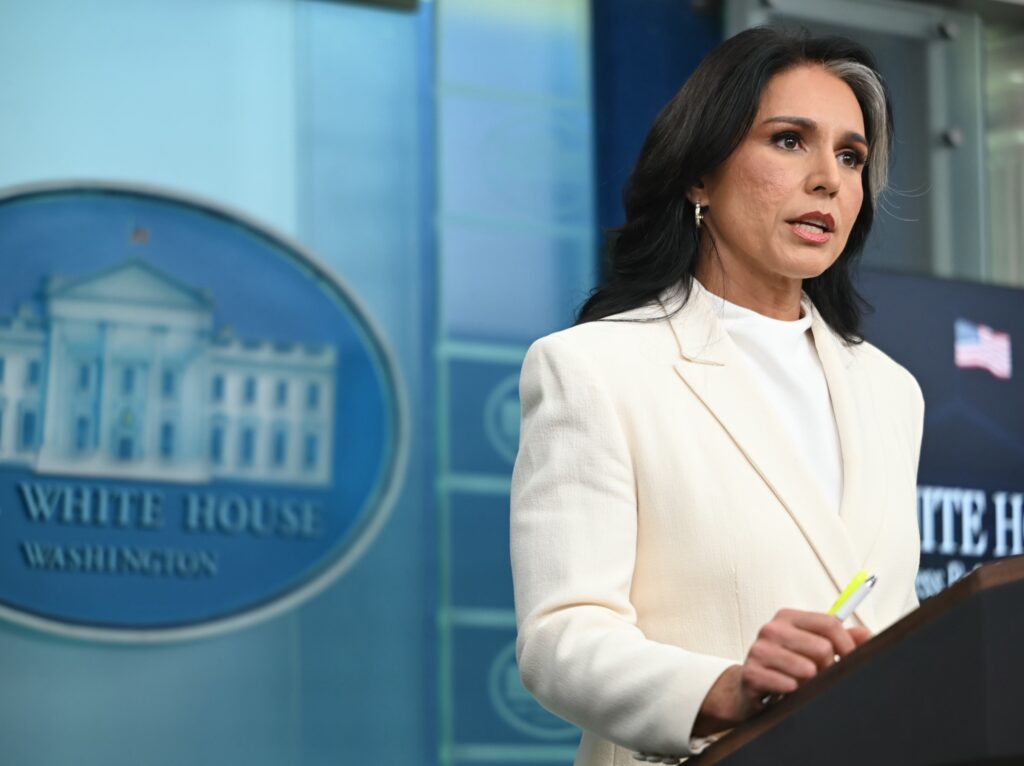
US Defense Secretary Pete Hegseth insisted Thursday that American strikes on Iranian nuclear sites were a success, backing President Donald Trump and berating the media for covering an intelligence report that questioned the results of the operation.American B-2 bombers hit two Iranian nuclear sites with massive GBU-57 bunker-buster bombs last weekend, while a guided missile submarine struck a third site with Tomahawk cruise missiles.”President Trump created the conditions to end the war, decimating — choose your word — obliterating, destroying Iran’s nuclear capabilities,” Hegseth told journalists at the Pentagon, referring to a 12-day conflict between Israel and Iran.Trump has called the strikes a “spectacular military success” and repeatedly said they “obliterated” the nuclear sites.On Thursday, he insisted that Iran did not manage to move nuclear materials — including enriched uranium — ahead of the US military action.”Nothing was taken out of facility. Would take too long, too dangerous, and very heavy and hard to move!” Trump said in a post on his Truth Social platform.However, US media revealed a preliminary American intelligence assessment earlier this week that said the strikes only set back Iran’s nuclear program by months — coverage sharply criticized by Hegseth.”Whether it’s fake news CNN, MSNBC or the New York Times, there’s been fawning coverage of a preliminary assessment.”The document was “leaked because someone had an agenda to try to muddy the waters and make it look like this historic strike wasn’t successful,” Hegseth said.Trump has also lashed out at coverage of the intelligence report, calling for journalists to lose their jobs.- ‘Get a big shovel’ -Hegseth did not definitively state that the enriched uranium and centrifuges at the heart of Iran’s controversial nuclear program had been wiped out, but cited intelligence officials — although giving little detail — as saying the nuclear facilities were destroyed.”If you want to know what’s going on at Fordo, you better go there and get a big shovel, because no one’s under there right now,” Hegseth said, referring to the deep-underground nuclear site.Among the officials cited by Hegseth was US Director of National Intelligence Tulsi Gabbard, who said the previous day that “Iran’s nuclear facilities have been destroyed.”He also referred to a statement by CIA chief John Ratcliffe that said: “A body of credible intelligence indicates Iran’s nuclear program has been severely damaged by the recent, targeted strikes.”Ratcliffe pointed to a “historically reliable and accurate” source of information indicating that “several key Iranian nuclear facilities were destroyed and would have to be rebuilt over the course of years.”International Atomic Energy Agency chief Rafael Grossi, speaking Thursday on French radio, meanwhile said Iran’s uranium-enriching centrifuges had been knocked out.”Given power of these (bombs) and the characteristics of a centrifuge, we already know that these centrifuges are no longer operational,” Grossi said.Israel launched an unprecedented air campaign targeting Iranian nuclear sites, scientists and top military brass on June 13 in a bid to end the country’s nuclear program, which Tehran says is for civilian purposes but Washington and other powers insist is aimed at acquiring atomic weapons.Trump had spent weeks pursuing a diplomatic path to replace the nuclear deal with Tehran that he tore up during his first term in 2018, but he ultimately decided to take military action.The US operation was massive, involving more than 125 US aircraft including stealth bombers, fighters and aerial refueling tankers as well as a guided missile submarine.

Spaceship carrying astronauts from India, Poland, Hungary, docks with ISS

A US commercial mission carrying astronauts from India, Poland and Hungary docked with the International Space Station on Thursday, marking the first time in decades that these nations have sent crew to space.Axiom Mission 4, or Ax-4, lifted off early Wednesday from NASA’s Kennedy Space Center in Florida aboard a brand-new SpaceX Crew Dragon capsule riding a Falcon 9 rocket.Onboard were pilot Shubhanshu Shukla of India; mission specialists Slawosz Uznanski-Wisniewski of Poland and Tibor Kapu of Hungary; and Commander Peggy Whitson of the United States, a former NASA astronaut now with Axiom Space, which organizes private spaceflights.The capsule, the fifth and final Dragon in the SpaceX fleet, was christened “Grace” after reaching orbit.It achieved “soft capture,” or the first stage of docking, with the orbital lab Thursday at 6:31 am Eastern Time (1031 GMT).They later entered the station through the hatch and were greeted by the current ISS crew during a brief welcome ceremony.”It’s so great to be here at last,” said Whitson. “That was a long quarantine.”The crew will now spend about 14 days aboard the station, conducting some 60 experiments — including studies on microalgae, sprouting salad seeds, and the hardiness of microscopic tardigrades in space.- Key step for India -The last time India, Poland or Hungary sent people to space, their current crop of astronauts had not yet been born — and back then they were called cosmonauts, as they all flew on Soviet missions before the fall of the Iron Curtain.Shukla is the first Indian to reach space since Rakesh Sharma, who flew to the Salyut 7 station in 1984 as part of an Indo-Soviet mission.India’s space agency, ISRO, sees this flight as a key step toward its first independent crewed mission, slated for 2027 under the Gaganyaan (“sky craft”) program.”What a fantastic ride,” Shukla said in Hindi after liftoff. “This isn’t just the start of my journey to the International Space Station — it’s the beginning of India’s human space program.”Each country is funding its astronaut’s seat.Poland has spent 65 million euros for its astronaut’s flight, according to the Polish Space Agency. Hungary announced a $100 million deal with Axiom in 2022, according to spacenews.com, while India has not officially commented.The Ax-4 launch comes after technical issues delayed the mission, originally slated for early June.It also follows an online spat between US President Donald Trump and SpaceX chief Elon Musk, the world’s richest person and, until recently, Trump’s ally and advisor.Trump threatened to yank SpaceX’s federal contracts — worth tens of billions of dollars — prompting Musk to threaten an early retirement of Dragon, the only US spacecraft currently certified to carry astronauts to the ISS.Musk walked back the threat a few hours later and in the days that followed continued to deescalate, stating on X that he had gone “too far.”Any falling out between SpaceX and the US government would be massively disruptive, given NASA and the Pentagon’s reliance on Falcon 9 and Falcon Heavy to send up crew, cargo, satellites and probes.But for now, analysts believe both sides are too entangled to risk a serious break.

US to offer new defense of strikes on Iran nuclear sites

US Defense Secretary Pete Hegseth is set to hold a news conference on Thursday to offer a fresh assessment of strikes on Iran’s nuclear facilities, following a stinging row over how much American bombardment set back Tehran’s nuclear program.After waves of Israeli attacks on nuclear and military sites and retaliatory missile fire from Iran since June 13, the United States bombed three key Iranian atomic facilities at the weekend.The extent of the damage in Iran, where Israel said it had acted to stop an imminent nuclear threat, has become the subject of profound disagreement in the United States.An initial classified assessment, first reported by CNN, was said to have concluded that the strike did not destroy key components and that Iran’s nuclear program was set back only months at most.Another key question raised by experts is whether Iran, preparing for the strike, moved out some 400 kilogram (880 pounds) of enriched uranium — which could now be hidden elsewhere in the vast country.The US administration has hit back furiously, with Trump repeatedly saying the attack “obliterated” Iran’s nuclear facilities, including the key site of Fordo buried inside a mountain.”I can tell you, the United States had no indication that that enriched uranium was moved prior to the strikes, as I also saw falsely reported,” White House Press Secretary Karoline Leavitt told Fox News.”As for what’s on the ground right now, it’s buried under miles and miles of rubble because of the success of these strikes on Saturday evening,” she said.Trump said that Hegseth, whom he dubbed “war” secretary, would hold a news conference at 8 am (1200 GMT) on Thursday to “fight for the dignity of our great American pilots”.CIA chief John Ratcliffe said in a statement on Wednesday that “several key Iranian nuclear facilities were destroyed and would have to be rebuilt over the course of years”.The Israeli military said it had delivered a “significant” blow to Iran’s nuclear sites but that it was “still early” to fully assess the damage.Israeli Prime Minister Benjamin Netanyahu announced that “we have thwarted Iran’s nuclear project”.”And if anyone in Iran tries to rebuild it, we will act with the same determination, with the same intensity, to foil any attempt,” he said.- Nuclear talks? -Iranian foreign ministry spokesman Esmaeil Baqaei told Al Jazeera that “nuclear installations have been badly damaged, that’s for sure”.After the war derailed nuclear talks between Iran and the United States, Trump said Washington would hold discussions with Tehran next week, with his special envoy Steve Witkoff expressing hope “for a comprehensive peace agreement”.Trump told reporters that Israel and Iran were “both tired, exhausted”, before going on to say that talks were planned with Iran next week.”We may sign an agreement. I don’t know,” he added.Iran has systematically denied seeking a nuclear weapon while defending its “legitimate rights” to the peaceful use of atomic energy.It has also said it was willing to return to nuclear negotiations with Washington.In both Iran and Israel, authorities have gradually lifted wartime restrictions.Iran on Wednesday reopened the airspace over the country’s east, without allowing yet flights to and from the capital Tehran.In the Israeli coastal hub of Tel Aviv, 45-year-old engineer Yossi Bin welcomed the ceasefire: “Finally, we can sleep peacefully. We feel better, less worried… and I hope it stays that way.”- State funeral -While Iran and Israel have been locked in a shadow war for decades, their 12-day conflict was by far the most destructive confrontation between them.The Israeli strikes on Iran killed at least 627 civilians, Tehran’s health ministry said.Iran’s attacks on Israel killed 28 people, according to official figures.According to Mehr news agency, the funeral of Revolutionary Guard commander Hossein Salami, who was killed in an Israeli strike, will no longer be held in his hometown on Thursday.Instead, a state funeral will be held on Saturday in Tehran for top commanders including Salami and nuclear scientists killed in the war.burs-ami/ser

The reluctant fame of Gazan photojournalist Motaz Azaiza

At a church in Philadelphia, Pennsylvania, hundreds of people gathered recently for a weeknight charity fundraiser hosted by a celebrity guest.The venue was not announced in advance due to security concerns, and attendance cost at least $60 a pop — with some spending $1,000 to get a photo with the host.Yet, the event was not a gala hosted by a movie star or famed politician, but by a photojournalist: Gaza native Motaz Azaiza, whose images of the Israeli assault following the October 7, 2023 attack by Hamas launched him to international recognition.Wearing a black T-shirt, jeans, sneakers and gold-framed glasses, the 26-year-old boasts nearly 17 million followers on Instagram for his images from the war in Gaza.”I wish you would have known me without the genocide,” Azaiza told the crowd, his voice faltering.Before the war, Azaiza was a relative unknown, posting photos from his daily life in Deir al-Balah in the central Gaza Strip to his roughly 25,000 Instagram followers at the time.But as soon as the first strikes from Israel hit Gaza, he became a war photographer by virtue of circumstance, and his wartime posts soon went viral.”As a photojournalist, I can’t watch this like anyone else, I’m from there, this is my home,” Azaiza said.- ‘I want to go back’ -After surviving 108 days of Israeli bombardment, Azaiza managed to escape Gaza via Egypt, and he has since become an ambassador of sorts for the Palestinian territory, sharing the story of his people as the conflict rages on.”Every time you feel like you regret leaving, but then you lose a friend, you lose a family, you say, OK, I saved my life,” Azaiza said.Before the war, Azaiza had been hired to manage the online content for the United Nations Relief and Works Agency for Palestine Refugees in the Near East (UNRWA), the humanitarian agency accused by Israel of providing cover for Hamas militants.This month, he is touring the United States to raise money for UNRWA USA, a nonprofit which collects funding for the agency.”I can’t handle this much of fame…it’s a real big responsibility,” Azaiza told AFP from the fundraiser in Philadelphia.”This is not me… I’m waiting to the genocide to stop. I want to go back to Gaza, continue my work capturing pictures,” he added.At one point he embedded himself in the crowd, posing for a selfie before shaking hands with donors.At the fundraiser, a UNRWA USA official solicited donations.”Is there someone who wants to give $20,000? I would like to have $20,000. Nobody? Is there someone who want to give $10,000? I would like to have $10,000,” the official calls out.Once the call lowered to $5,000, five hands raised, and even more went up when asked for donations of $2,000 and $1,000.One of the donors, Nabeel Sarwar, told AFP Azaiza’s photographs “humanize” the people in Gaza.”When you see a picture, when you see a child, you relate to that child, you relate to the body language, you relate to the dust on their face, the hunger, the sadness on their face,” Sarwar said.”I think it’s those pictures that really brought home towards the real tragedy of what’s going on in Gaza.”- ‘A million words’ – Veronica Murgulescu, a 25-year-old medical student from Philadelphia, concurred.”I think that people like Motaz and other Gazan journalists have really stuck a chord with us, because you can sense the authenticity,” she said.”The mainstream media that we have here in the US, at least, and in the West, it lacks authenticity,” she added.Sahar Khamis, a communications professor at the University of Maryland who specializes in Arab and Muslim media in the Middle East, said Gazan journalists like Azaiza who have become social media influencers “reshape public opinion, especially among youth, not just in the Arab world, not just in the Middle East, but globally and internationally, including in the United States.””The visuals are very, very important and very powerful and very compelling…as we know in journalism, that one picture equals a thousand words.”And in the case of war and conflict, it can equal a million words, because you can tell through these short videos and short images and photos a lot of things that you cannot say in a whole essay.”

Global matcha ‘obsession’ drinks Japan tea farms dry

At a minimalist Los Angeles matcha bar, powdered Japanese tea is prepared with precision, despite a global shortage driven by the bright green drink’s social media stardom.Of the 25 types of matcha on the menu at Kettl Tea, which opened on Hollywood Boulevard this year, all but four were out of stock, the shop’s founder Zach Mangan told AFP.”One of the things we struggle with is telling customers that, unfortunately, we don’t have” what they want, he said.With its deep grassy aroma, intense color and pick-me-up effects, the popularity of matcha “has grown just exponentially over the last decade, but much more so in the last two to three years,” the 40-year-old explained.It is now “a cultural touchpoint in the Western world” — found everywhere from ice-cream flavor boards to Starbucks. This has caused matcha’s market to nearly double over a year, Mangan said.”No matter what we try, there’s just not more to buy.”Thousands of miles (kilometers) away in Sayama, northwest of Tokyo, Masahiro Okutomi — the 15th generation to run his family’s tea business — is overwhelmed by demand.”I had to put on our website that we are not accepting any more matcha orders,” he said.Producing the powder is an intensive process: the leaves, called “tencha,” are shaded for several weeks before harvest, to concentrate the taste and nutrients.They are then carefully deveined by hand, dried and finely ground in a machine.- ‘Long-term endeavor’ -“It takes years of training” to make matcha properly, Okutomi said. “It’s a long-term endeavor requiring equipment, labor and investment.””I’m glad the world is taking an interest in our matcha… but in the short term, it’s almost a threat — we just can’t keep up,” he said.The matcha boom has been fuelled by online influencers like Andie Ella, who has more than 600,000 subscribers on YouTube and started her own brand of matcha products.At the pastel-pink pop-up shop she opened in Tokyo’s hip Harajuku district, dozens of fans were excitedly waiting to take a photo with the 23-year-old Frenchwoman or buy her cans of strawberry or white chocolate flavored matcha.”Matcha is visually very appealing,” Ella told AFP.To date, her matcha brand, produced in Japan’s rural Mie region, has sold 133,000 cans. Launched in November 2023, it now has eight employees.”Demand has not stopped growing,” she said.In 2024, matcha accounted for over half of the 8,798 tonnes of green tea exported from Japan, according to agriculture ministry data — twice as much as a decade ago.Tokyo tea shop Jugetsudo, in the touristy former fish market area of Tsukiji, is trying to control its stock levels given the escalating demand.”We don’t strictly impose purchase limits, but we sometimes refuse to sell large quantities to customers suspected of reselling,” said store manager Shigehito Nishikida.”In the past two or three years, the craze has intensified: customers now want to make matcha themselves, like they see on social media,” he added.- Tariff threat -Anita Jordan, a 49-year-old Australian tourist in Japan, said her “kids are obsessed with matcha.””They sent me on a mission to find the best one,” she laughed.The global matcha market is estimated to be worth billions of dollars, but it could be hit by US President Donald Trump’s tariffs on Japanese products — currently 10 percent, with a hike to 24 percent in the cards.Shortages and tariffs mean “we do have to raise prices. We don’t take it lightly,” said Mangan at Kettl Tea, though it hasn’t dampened demand so far.”Customers are saying: ‘I want matcha, before it runs out’.”At Kettl Tea, matcha can be mixed with milk in a latte or enjoyed straight, hand-whisked with hot water in a ceramic bowl to better appreciate its subtle taste.It’s not a cheap treat: the latter option costs at least $10 per glass, while 20 grams (0.7 ounces) of powder to make the drink at home is priced between $25 and $150.Japan’s government is encouraging tea producers to farm on a larger scale to reduce costs.But that risks sacrificing quality, and “in small rural areas, it’s almost impossible,” grower Okutomi said.The number of tea plantations in Japan has fallen to a quarter of what it was 20 years ago, as farmers age and find it difficult to secure successors, he added.”Training a new generation takes time… It can’t be improvised,” Okutomi said.