AFP USA

Trump expects ‘constructive conversation’ with Putin

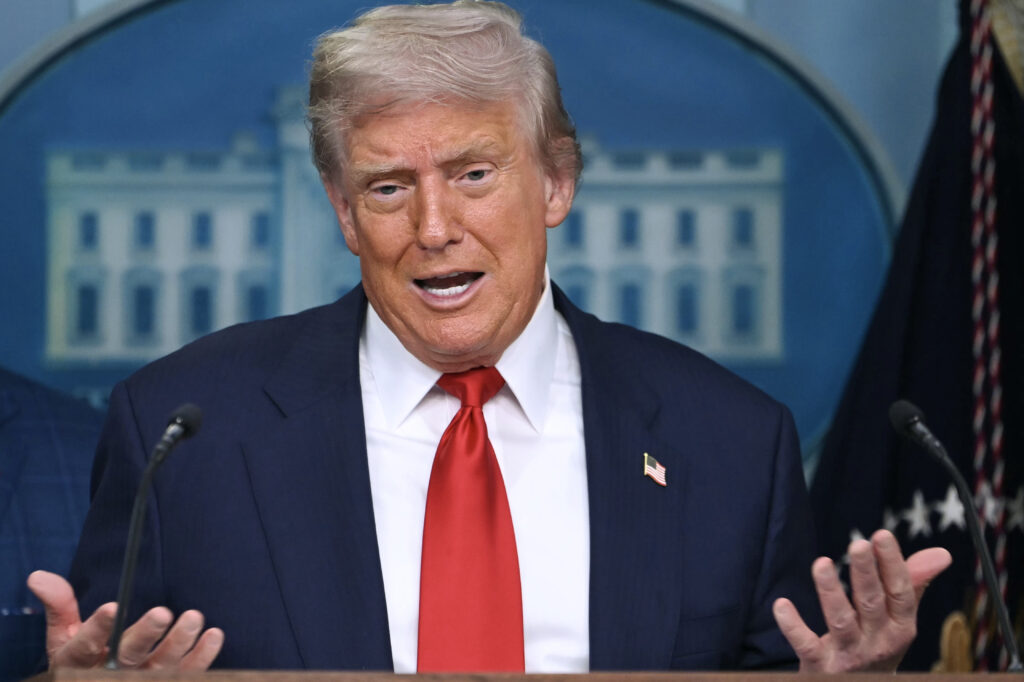
US President Donald Trump said Monday he expects to have “constructive conversations” with his Russian counterpart Vladimir Putin and expressed displeasure with Ukraine’s Volodymyr Zelensky for ruling out territorial concessions.The US president has spent the first months of his second term in office trying to broker peace in Ukraine — after boasting he could end the conflict in 24 hours — but multiple rounds of talks, phone calls and diplomatic visits have failed to yield a breakthrough.Trump and Putin will hold a summit in Alaska on Friday in a bid halt the conflict, which was triggered by Moscow’s February 2022 full-scale invasion of Ukraine.It will be the first between sitting US and Russian presidents since Joe Biden met Putin in Geneva in June 2021.”I’m going to speak to Vladimir Putin and I’m going to be telling him ‘you’ve got to end this war,'” Trump told a White House press conference, saying that he would “like to see a ceasefire very, very quickly.””I think we’ll have constructive conversations,” said the president, noting that he would seek out Putin’s “parameters” for peace, then call Zelensky and other European leaders right after the meeting.Trump said last week that “there’ll be some swapping of territories to the betterment of both” Ukraine and Russia — a suggestion Zelensky rejected.- ‘There’ll be some swapping’ -The Ukrainian president warned Saturday that “decisions without Ukraine” would not bring peace and said his country’s people “will not give their land to the occupier.”Trump said he was a “little bothered” by Zelensky’s stance on territorial concessions, and insisted that land swaps would take place.”There’ll be some swapping, there’ll be some changes in land,” he said.But Trump also stated that he would not make a unilateral agreement: “I’m not going to make a deal, it’s not up to me to make a deal,” he said, while emphasizing that he thinks “a deal should be made.”Three rounds of negotiations between Russia and Ukraine have failed to bear fruit, and it remains unclear whether the Trump-Putin summit would bring peace any closer.Russian bombardments have forced millions of people to flee their homes and have destroyed swathes of eastern and southern Ukraine, and Putin has resisted multiple calls from the United States, Europe and Kyiv for a ceasefire.Trump said he will know fairly quickly into the talks with Putin whether or not a deal would be coming, and that he may still walk away from trying to broker peace in Ukraine.”I may leave and say good luck and that’ll be the end. I may say this is not going to be settled,” Trump said.The US president said his aim is to bring Putin and Zelensky together, with or without being present himself.”Ultimately I’m going to put the two of them in a room, I’ll be there or I won’t be there, and I think it’ll get solved,” Trump said.
US judge denies govt request to release Maxwell transcripts

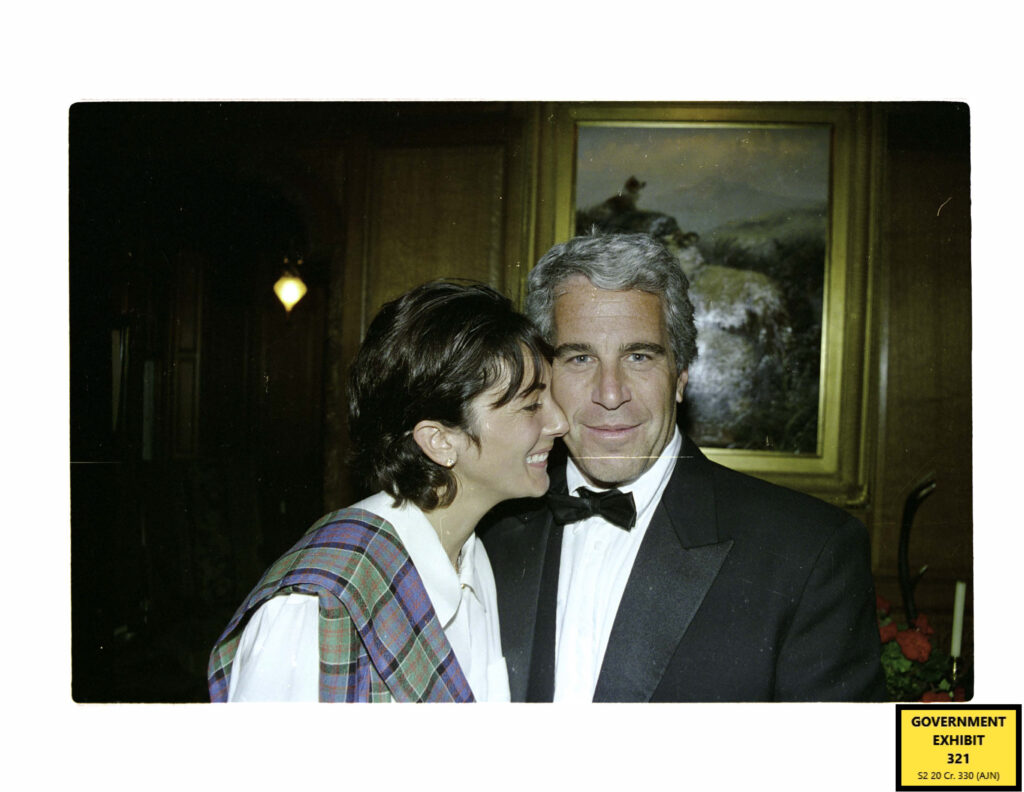
A federal judge on Monday rejected the Trump administration’s request to unseal grand jury transcripts from the criminal case against Ghislaine Maxwell, the convicted accomplice of sex offender Jeffrey Epstein.District Judge Paul Engelmayer said there is little in the transcripts that is not already in the public record, and they do not identify anyone other than Maxwell and Epstein as having had sexual contact with underage girls.The Justice Department had sought to release the transcripts to help defuse spiraling anger among President Donald Trump’s own supporters over what they have long seen as a cover-up of Epstein’s crimes and high-level connections.Engelmayer dismissed government arguments that the grand jury transcripts should be released because of “abundant public interest” in the case.”Its entire premise — that the Maxwell grand jury materials would bring to light meaningful new information about Epstein’s and Maxwell’s crimes, or the Government’s investigation into them — is demonstrably false,” he wrote.”Insofar as the motion to unseal implies that the grand jury materials are an untapped mine lode of undisclosed information about Epstein or Maxwell or confederates, they definitively are not that,” the judge said.”There is no ‘there’ there.”The Manhattan-based judge also cast doubt on the Trump administration’s motivation for seeking the public release of the Maxwell transcripts and suggested it was “disingenuous.””A member of the public, appreciating that the Maxwell grand jury materials do not contribute anything to public knowledge, might conclude that the Government’s motion for their unsealing was aimed not at ‘transparency’ but at diversion — aimed not at full disclosure but at the illusion of such,” he said.- Maxwell opposed release of transcripts-Maxwell, 63, is serving a 20-year sentence after being convicted in 2021 of recruiting underage girls for Epstein, who died in a New York jail in 2019 while awaiting trial for sex trafficking.Her lawyers had opposed releasing the transcripts, saying it could potentially impact her ongoing legal appeals of her conviction.The Justice Department is also seeking the release of the secret grand jury transcripts in Epstein’s case. That request is being handled by a different judge.Trump’s supporters have been obsessed with the Epstein case for years and have been up in arms since the FBI and Justice Department said last month that the wealthy financier had committed suicide while in jail, did not blackmail any prominent figures, and did not keep a “client list.”In a bid to calm the furor, the Justice Department asked for the release of the grand jury transcripts from the cases against Epstein and Maxwell.US Deputy Attorney General Todd Blanche — who is also Trump’s former personal lawyer — met recently with Maxwell but has not revealed what was discussed.She was later moved to a minimum security prison.Trump, 79, was once a friend of Epstein, and The Wall Street Journal reported last month that the president’s name was among hundreds found during a Justice Department review of the so-called “Epstein files,” though there has not been evidence of wrongdoing.Maxwell is the only former Epstein associate convicted in connection with his activities, which right-wing conspiracy theorists allege included trafficking young girls for VIPs and other elites.

Trump deploys National Guard in Washington crime crackdown

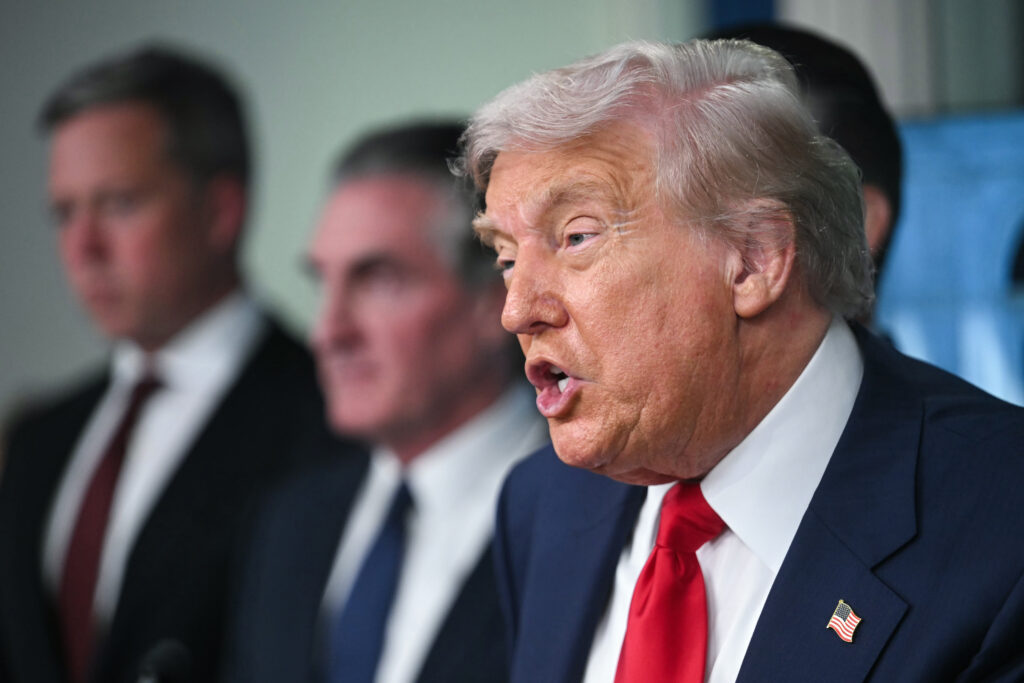
Donald Trump on Monday deployed military and federal law enforcement to curb violent crime in Washington, as he seeks to make good on his campaign pledge to be a “law and order” president.The Republican leader said he would place the city’s Metropolitan Police under federal government control while also sending the National Guard onto the streets of the US capital.The overwhelmingly Democratic city faces allegations from Republican politicians that it is overrun by crime, plagued by homelessness and financially mismanaged — although violent offenses are down.”This is Liberation Day in DC, and we’re going to take our capital back,” Trump said.Trump — a convicted felon who granted blanket clemency to nearly 1,600 people involved in the 2021 US Capitol riot in Washington — has complained that local police and prosecutors aren’t tough enough. He said 800 DC National Guardsmen — “and much more if necessary” — would be deployed to the city of 700,000.As Trump was speaking at the White House, several dozen demonstrators gathered outside.”There is absolutely no need for the National Guard here,” said 62-year-old retiree Elizabeth Critchley, who brandished a sign with the slogan “DC says freedom not fascism.””It’s all for show. It’s just a big theater,” she said.Defense Secretary Pete Hegseth, who was among several cabinet officials flanking Trump, said “other specialized” National Guard units could also be deployed.”They will be strong, they will be tough, and they will stand with their law enforcement partners,” he said.The new approach echoes Trump’s immigration policies that have effectively sealed the southern border amid mass deportations while deploying active-duty troops against protesters in Los Angeles.- New York, Chicago next? -The president told reporters he planned to roll out the policy to other cities, spotlighting New York and Chicago.Unlike the 50 states, Washington operates under a unique relationship with the federal government that limits its autonomy and grants Congress extraordinary control over local matters.Since the mid-1970s, the Home Rule Act has allowed residents to elect a mayor and a city council, although Congress still controls the city’s budget.Data from Washington police show significant drops in violent crime between 2023 and 2024, although that was coming off the back of a post-pandemic surge.Trump posted on social media ahead of the news conference that he also wants to tackle homeless encampments, after signing an order last month making it easier to arrest homeless people.  He promised individuals “places to stay,” but “FAR from the Capital.” Trump said criminals would be jailed and that it would all happen “very fast.”Federal law enforcement have already increased their presence after a former Department of Government Efficiency staffer was beaten during an attempted carjacking. “Last week my administration surged 500 federal agents into the district including from the FBI, ATF, DEA, Park Police, the US Marshals Service, the Secret Service, and the Department of Homeland Security,” Trump said.”You know a lot of nations, they don’t have anything like that… They made dozens of arrests.”A Gallup poll in October found that 64 percent of Americans believed crime had risen in 2024, although FBI data shows the lowest levels of violent crime nationwide in more than half a century.”Let me be crystal clear — crime in DC is ending, and it’s ending today,” said Attorney General Pam Bondi.

The shrill is gone: AOL to shut down dial-up internet

The ear-piercing beeps, squeals and buzzes of 90s-era dial-up internet will vanish from thousands of holdout American homes in September as historic provider AOL shuts down the service.The raucous sounds of modems establishing their connection to distant servers marked a generation of internet users and still pop up in memes to this day.It also made AOL one of the biggest tech firms of the era, but in the following decades the dial-up connections were steadily replaced with much faster ADSL and then fibre-optic lines.”AOL routinely evaluates its products and services and has decided to discontinue dial-up internet,” the pioneering internet service provider (ISP) said in a blog post. AOL did not say how many users would be affected by the September 30 shutoff.CNBC reported that numbers using dial-up had fallen from around 2.1 million in 2015 to just a few thousand in 2021.AOL merged with Time Warner in a 2001 mega-deal worth $162 billion at the peak of the dotcom bubble.After splitting off again, it was sold to Verizon in 2015 for a far humbler $4.4 billion.AOL was merged with another early internet heavyweight, Yahoo, and sold to the investment fund Apollo Global Management for $5 billion in 2021.Its once widely used chat programme AIM, launched in 1997 and beloved of early-2000s teens, was shut down in 2017.

Trump deploys National Guard to tackle Washington crime

US President Donald Trump said Monday he will deploy military and federal law enforcement in Washington as he seeks to curb violent crime in the nation’s capital.The Republican leader told a White House news conference he plans to place the DC Metropolitan Police under the direct control of the federal government while sending in the National Guard.The overwhelmingly Democratic city faces allegations from Republican politicians that it is overrun by crime, plagued by homelessness and financially mismanaged — although violent offenses are down.”This is Liberation Day in DC, and we’re going to take our capital back,” Trump said.Trump — a convicted felon who has pardoned around 1,500 people involved in the 2021 US Capitol riot in Washington — complained that police and prosecutors aren’t tough enough.  He had repeatedly threatened a federal takeover of the city of 700,000, saying crime in Washington is “totally out of control.” The new approach echoes Trump’s immigration policies that have effectively sealed the southern border amid mass deportations while deploying active-duty troops against protesters in Los Angeles.He told reporters he planned to roll out the policy to other crime-ridden cities, spotlighting problems in New York and Chicago.Unlike the 50 states, Washington operates under a unique relationship with the federal government that limits its autonomy and grants Congress extraordinary control over local matters.Since the mid-1970s, the Home Rule Act has allowed residents to elect a mayor and a city council, although Congress still controls the city’s budget.Preliminary data from DC police show significant drops in violent crime between 2023 and 2024, although that was coming off the back of a post-pandemic surge.Trump posted on social media ahead of the news conference that he wants to “stop violent crime” and tackle homeless encampments, after signing an order last month making it easier to arrest homeless people.  Trump ordered homeless people to “move out” of the city in a Truth Social post on Sunday, vowing to “make our Capital safer and more beautiful than it ever was before.”He promised individuals “places to stay,” but “FAR from the Capital.” Trump said criminals would be jailed and that it would all happen “very fast.”

US judge denies govt request to release Maxwell transcripts

A federal judge on Monday rejected the Justice Department’s request to unseal grand jury transcripts from the criminal case against Ghislaine Maxwell, the convicted accomplice of sex offender Jeffrey Epstein.District Judge Paul Engelmayer said there is little in the transcripts that is not already public record and they do not identify anyone other than Maxwell and Epstein as having had sexual contact with underage girls.President Donald Trump’s administration had sought to release the transcripts to help defuse spiraling anger among his own supporters over what they have long seen as a cover-up of Epstein’s crimes and high-level connections.Engelmayer dismissed government arguments that the grand jury transcripts should be released because of “abundant public interest” in the case.”Its entire premise — that the Maxwell grand jury materials would bring to light meaningful new information about Epstein’s and Maxwell’s crimes, or the Government’s investigation into them — is demonstrably false,” he wrote.”Insofar as the motion to unseal implies that the grand jury materials are an untapped mine lode of undisclosed information about Epstein or Maxwell or confederates, they definitively are not that,” the judge said.”There is no ‘there’ there.”Maxwell, 63, is serving a 20-year sentence after being convicted in 2021 of recruiting underage girls for Epstein, who died in a New York jail in 2019 while awaiting trial for sex trafficking.The Justice Department is also seeking the release of the grand jury transcripts in Epstein’s case. That request is being handled by a different judge.Trump’s supporters have been obsessed with the Epstein case for years and have been up in arms since the FBI and Justice Department said last month that the wealthy financier had committed suicide, did not blackmail any prominent figures, and did not keep a “client list.”In a bid to calm the furor, the Justice Department asked for the release of the grand jury transcripts from the cases against Epstein and Maxwell.US Deputy Attorney General Todd Blanche — who is also Trump’s former personal lawyer — met recently with Maxwell but has not revealed what was discussed.She was later moved to a lower security prison.Trump, 79, was once a close friend of Epstein, and The Wall Street Journal reported last month that the president’s name was among hundreds found during a Justice Department review of the so-called “Epstein files,” though there has not been evidence of wrongdoing.Maxwell is the only former Epstein associate convicted in connection with his activities, which right-wing conspiracy theorists allege included trafficking young girls for VIPs and other elites.

What makes Washington D.C. so special?

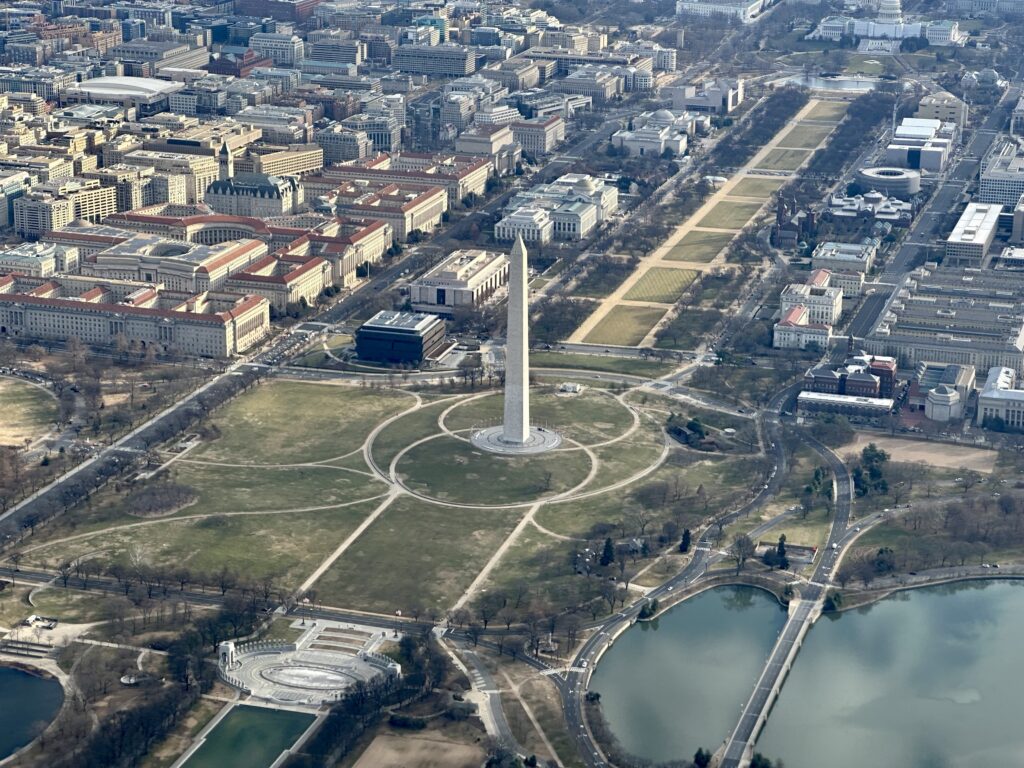
The capital of the world’s leading superpower is a city unlike any other in the United States — not just in symbolism but in its legal and political structure.President Donald Trump’s repeated threats to impose his will on the city has brought its unique status back into the spotlight.Washington D.C. is a bustling urban center with schools and businesses serving 700,000 residents — but is also the seat of national power, home to the White House, Capitol and Supreme Court.This dual identity often places local interests at odds with federal oversight, in a city where democracy is on display daily, even as the locals themselves lack full democratic rights.Unlike the 50 states, the city operates under a unique relationship with the federal government that limits its autonomy and grants Congress extraordinary control over local matters.The overwhelmingly Democratic city faces complaints from Republican politicians that it is overrun by crime, plagued by homelessness and financially mismanaged.- ‘Taxation without representation’ -The city was established by the constitution in 1790 as a federal district, not part of any state as the Founders wanted the capital to be independent of any single state’s influence. The land for the district was ceded by Maryland and Virginia, although the Virginia portion was returned in 1847.Because of its federal status, Washington is governed under the authority of Congress. Residents pay federal taxes, but lack voting representation in the House and Senate — earning the city the long-standing slogan seen on bumper stickers: “Taxation without representation.”- Limited home rule -In 1973, Congress passed the Home Rule Act, allowing residents to elect a mayor and a city council, although laws passed by the body are subject to congressional review and veto. Congress also controls the city’s budget, which has led to political tensions when lawmakers have blocked local initiatives on marijuana legalization, reproductive rights and police funding.- Push for statehood -Supporters of making the US capital the nation’s 51st state have framed their cause as an effort to end a glaring American civil rights violation.Despite having no say in congressional votes, the city’s residents fight and die in US wars and face a higher federal tax burden than people in the 50 states. Statehood advocates argue that the residents — who are more numerous than the populations of Vermont or Wyoming — deserve full congressional representation and local autonomy. In 2021, the House of Representatives passed a bill to make the District of Columbia the 51st state, but it stalled in the Senate.Opponents argue that the city was never intended to be a state and that making it one would require a constitutional amendment.A constitutional amendment ratified in 1961 gave the city votes in the presidential electoral college.- Mixed crime picture -Washington is not among the top 10 US cities for the rate of violent offenses, although it has historically struggled with crime.The 1990s saw soaring homicide rates, peaking at around 480 deaths in 1991, during a crack cocaine epidemic. Crime dropped significantly in the 2000s but then surged again after the Covid-19 pandemic.In 2023, homicides reached a 20-year high with 274 lives lost — a 36 percent increase on the previous year.However, preliminary data for 2024 indicates a substantial drop, with homicides down by 32 percent compared to 2023, according to the Metropolitan Police Department. The decrease has contributed to an overall reduction in violent crime in the city, which is down 35 percent from 2023. – Melting pot -As of the 2020 Census, Washington’s population stood at 683,000, although it is now estimated at 702,000.A racially diverse melting pot, Washington is around 44 percent Black and 37 percent white, with Hispanic and Asian Americans making up much of the rest of the population, according to Census data.It is also one of the best educated and richest urban areas in the country, though stark income inequality persists between neighborhoods.

The Russian past of Alaska, where Trump and Putin will meet

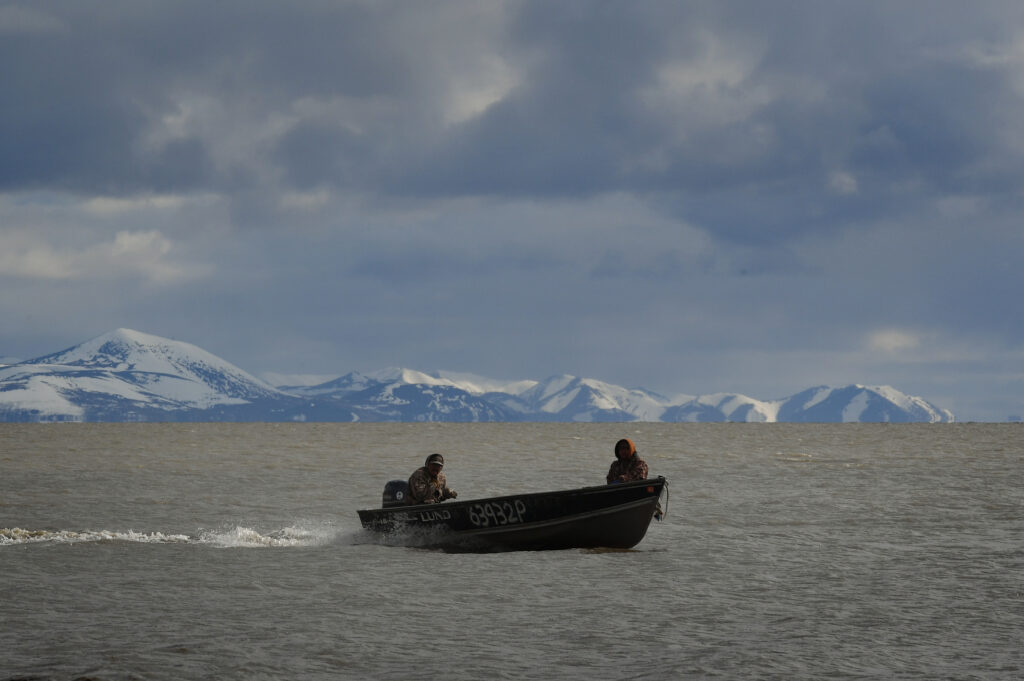
Presidents Donald Trump and Vladimir Putin will hold a high-stakes meeting about the Ukraine war on Friday in Alaska, which the United States bought from Russia more than 150 years ago.Russian influence still endures in parts of the remote state on the northwest edge of the North American continent, which extends just a few miles from Russia.- Former Russian colony -When Danish explorer Vitus Bering first sailed through the narrow strait that separates Asia and the Americas in 1728, it was on an expedition for Tsarist Russia.The discovery of what is now known as the Bering Strait revealed the existence of Alaska to the West — however Indigenous people had been living there for thousands of years.Bering’s expedition kicked off a century of Russian seal hunting, with the first colony set up on the southern Kodiak island.In 1799, Tsar Paul I established the Russian-American Company to take advantage of the lucrative fur trade, which often involved clashes with the Indigenous inhabitants.However the hunters overexploited the seals and sea otters, whose populations collapsed, taking with them the settlers’ economy.The Russian empire sold the territory to Washington for $7.2 million in 1867.The purchase of an area more than twice the size of Texas was widely criticized in the US at the time, even dubbed “Seward’s folly” after the deal’s mastermind, secretary of state William Seward.- Languages and churches -The Russian Orthodox Church established itself in Alaska after the creation of the Russian-American Company, and remains one of the most significant remaining Russian influences in the state.More than 35 churches, some with distinctive onion-shaped domes, dot the Alaskan coast, according to an organization dedicated to preserving the buildings.Alaska’s Orthodox diocese says it is the oldest in North America, and even maintains a seminary on Kodiak island.A local dialect derived from Russian mixed with Indigenous languages survived for decades in various communities — particularly near the state’s largest city Anchorage — though it has now essentially vanished.However near the massive glaciers on the southern Kenai peninsula, the Russian language is still being taught. A small rural school of an Orthodox community known as the “Old Believers” set up in the 1960s teaches Russian to around a hundred students.- Neighbors -One of the most famous statements about the proximity of Alaska and Russia was made in 2008 by Sarah Palin, the state’s then-governor — and the vice-presidential pick of Republican candidate John McCain.”They’re our next-door neighbors, and you can actually see Russia from land here in Alaska, from an island in Alaska,” Palin said.While it is not possible to see Russia from the Alaskan mainland, two islands facing each other in the Bering Strait are separated by just 2.5 miles (four kilometers).Russia’s Big Diomede island is just west of the American Little Diomede island, where a few dozen people live.Further south, two Russians landed on the remote St. Lawrence island — which is a few dozen miles from the Russian coast — in October, 2022 to seek asylum. They fled just weeks after Putin ordered an unpopular mobilization of citizens to boost his invasion of Ukraine.For years, the US military has said it regularly intercepts Russian aircraft that venture too close to American airspace in the region.However Russia is ostensibly not interested in reclaiming the territory it once held, with Putin saying in 2014 that Alaska is “too cold”.

New tensions trouble small town America in Trump’s second term

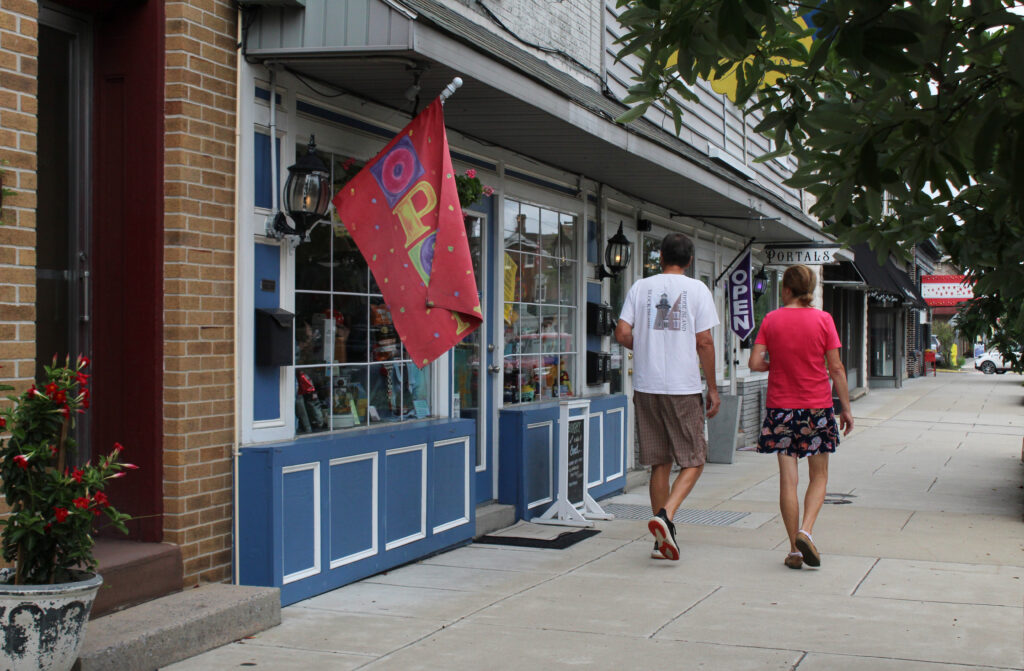
Visitors are still flocking to the quaint mountain town of Berkeley Springs in West Virginia to savor its hot springs, art galleries and gift stores. Residents, however, say they are navigating new tensions. They still smile and shake hands with neighbors at the bakery while getting their morning coffee, as long as they don’t mention two words: Donald Trump. The 850 residents of Berkeley Springs are a mix of rural conservatives who have lived here for generations and people who arrived more recently to the town, which is nestled in the Appalachian Mountains. The differences have existed for decades, but things are now growing tense.”A lot of people who quietly stand up for goodness are getting louder, and then that’s making the people who are upset by that also become louder,” says Kate Colby, 44, owner of Mineral Springs Trading Company.A large rainbow flag hangs on one wall of her gift store. Some locals told her to take it down, saying it made them feel unwelcome, she says.”They feel like they’ve got to be louder, and they’re aggressive… It just sort of builds, until it combusts,” she said with a bitter laugh.The small town dynamics are a portrait in miniature of what is happening across the country: liberal Americans hear the president’s frequent diatribes as attacks, while conservatives feel legitimized by his rhetoric.- Keeping quiet -Society in general has grown less civil in the United States in Trump’s second term, as he attacks the balance of powers and his political adversaries.”Trump does a really good job polarizing everything. He is like, you’re on my side, or you can get out,” says Nicole Harris, 47.Born in Oregon, Harris recently moved east to landlocked West Virginia, a rural and industrial state where almost 90 percent of the population voted for Donald Trump in the 2024 election.To avoid problems, she keeps quiet: no political discussions with neighbors or with guests at her bed and breakfast, the Grand Castalian Inn.”We’re a business, so we accept everyone, and we accept everyone’s opinions. I keep my own opinions for myself,” she says.Beth Curtin has owned an antiques store in one of the beautiful brick homes in the center of town for 36 years. Many of her friends are Trump supporters. She is not.”It is a small community, and so we bump into one another. It’s not like, you know, a bigger metropolitan area where you can just hang with people who share your same views…. it’s more important that we try to get along and, you know, sometimes you have to bite your tongue,” she says.   Curtin says she avoids some stores in town because she does not want her money going “towards people who have those views.”  – ‘Communists’ -In the air-conditioned chill of the Lighthouse Latte cafe, Scott Wetzel, a wiry, bright-eyed 62-year-old, recalls his farm-based childhood and adult life in landscaping and construction. He views Democrats as “communists” who threaten his way of living.”If I speak of freedom, their idea of freedom is telling me how I could live. That’s not freedom. They just don’t get it so, but you can’t fix that. That’s something that’s twisted up in their heads,” the retiree says.He says people are still welcome to “spew that garbage” but “I’m just not gonna listen to it.” In early July, some town residents held a march in Berkeley Springs against Trump’s “big, beautiful bill.” A truck nearby sold caps with his face on them.”There’s gonna have to be some shift. We can’t keep escalating like this,” says Colby, the gift store owner.  “We need to get back to a point where everybody can just sort of like, calmly live their own lives side by side, which I think was happening a lot more before Trump’s first term,” she says.Standing on the balcony of his elegant bed-and-breakfast, Mayor Greg Schene offers a more conciliatory view on town life.”This is certainly more of a melting pot,” says the Baltimore native, adding that having a spectrum of political beliefs “makes us better.””Finding, you know, some solutions and coming to a middle ground is always better than having one dominant party,” Schene said, smiling as he greeted people passing by.

Trump says to move homeless people ‘far’ from Washington

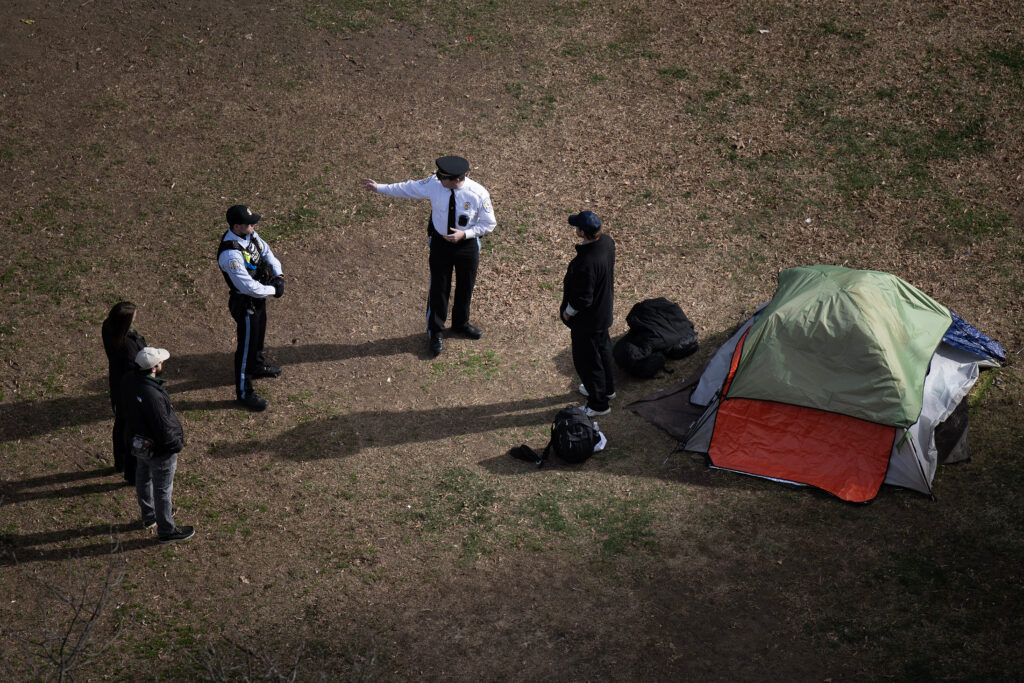
President Donald Trump said Sunday that homeless people must be moved “far” from Washington, after days of musing about taking federal control of the US capital where he has falsely suggested crime is rising.The Republican billionaire has announced a press conference for Monday in which he is expected to reveal his plans for Washington — which is run by the locally elected government of the District of Columbia under congressional oversight.It is an arrangement Trump has long publicly chafed at. He has threatened to federalize the city and give the White House the final say in how it is run.”I’m going to make our Capital safer and more beautiful than it ever was before,” the president posted on his Truth Social platform Sunday. “The Homeless have to move out, IMMEDIATELY. We will give you places to stay, but FAR from the Capital,” he continued, adding that criminals in the city would be swiftly imprisoned.  “It’s all going to happen very fast,” he said.Washington is ranked 15th on a list of major US cities by homeless population, according to government statistics from last year. While thousands of people spend each night in shelters or on the streets, the figure are down from pre-pandemic levels.Earlier this week Trump also threatened to deploy the National Guard as part of a crackdown on what he falsely says is rising crime in Washington. Violent crime in the capital fell in the first half of 2025 by 26 percent compared with a year earlier, police statistics show.The city’s crime rates in 2024 were already their lowest in three decades, according to figures produced by the Justice Department before Trump took office.”We are not experiencing a crime spike,” Washington Mayor Muriel Bowser said Sunday on MSNBC.While the mayor, a Democrat, was not critical of Trump in her remarks, she said “any comparison to a war torn country is hyperbolic and false.”Trump’s threat to send in the National Guard comes weeks after he deployed California’s military reserve force into Los Angeles to quell protests over immigration raids, despite objections from local leaders and law enforcement.The president has frequently mused about using the military to control America’s cities, many of which are under Democratic control and hostile to his nationalist impulses.