AFP USA

US appeals court scraps 9/11 mastermind’s plea deal

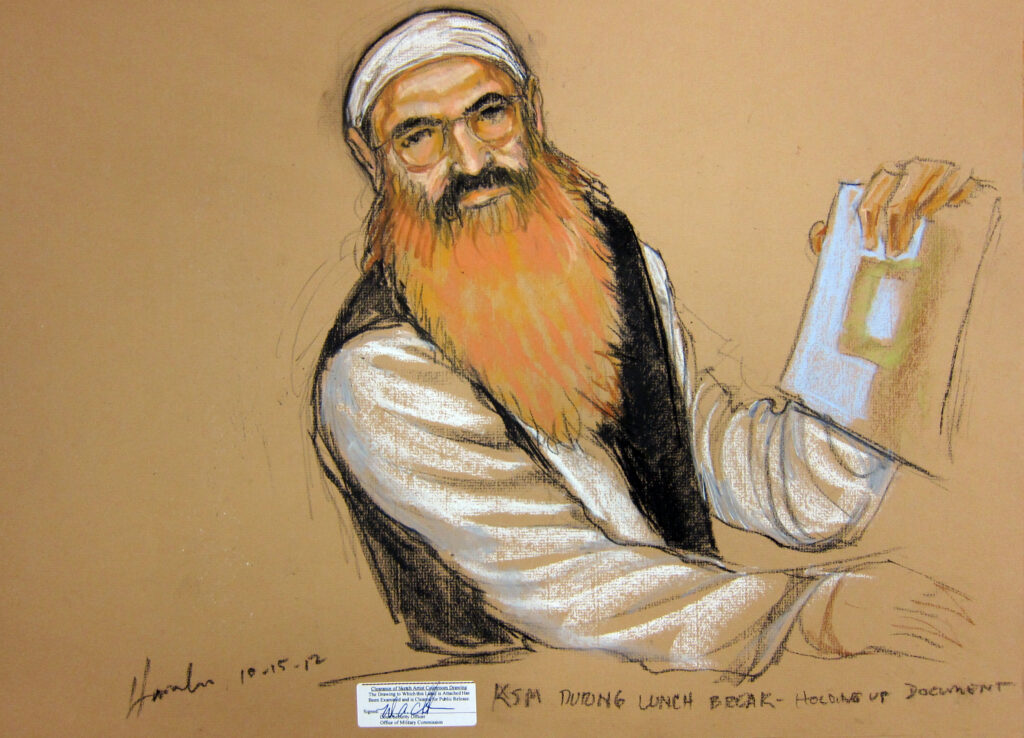
A US appeals court on Friday scrapped 9/11 mastermind Khalid Sheikh Mohammed’s plea agreement that would have taken the death penalty off the table and helped conclude the long-running legal saga surrounding his case.The agreement had sparked anger among some relatives of victims of the 2001 attacks, and then-US defense secretary Lloyd Austin moved to cancel it last year, saying that both they and the American public deserved to see the defendants stand trial.Austin “acted within the bounds of his legal authority, and we decline to second-guess his judgment,” judges Patricia Millett and Neomi Rao wrote.Plea deals with Mohammed as well as two alleged accomplices — Walid bin Attash and Mustafa al-Hawsawi — were announced in late July last year.The decision appeared to have moved their cases toward resolution after years of being bogged down in pre-trial maneuverings while the defendants remained held at the Guantanamo Bay military base in Cuba.But Austin withdrew the agreements two days after they were announced, saying the decision should be up to him, given its significance.He subsequently said that “the families of the victims, our service members and the American public deserve the opportunity to see military commission trials carried out in this case.”A military judge ruled in November that the deals were valid and binding, but the government appealed that decision.The appeals court judges on Friday vacated “the military judge’s order of November 6, 2024, preventing the secretary of defense’s withdrawal from the pretrial agreements.”And they prohibited the military judge “from conducting hearings in which respondents would enter guilty pleas or take any other action pursuant to the withdrawn pretrial agreements.”Much of the legal jousting surrounding the 9/11 defendants’ cases has focused on whether they could be tried fairly after having undergone torture at the hands of the CIA — a thorny issue that the plea agreements would have avoided.Mohammed was regarded as one of Al-Qaeda chief Osama bin Laden’s most trusted lieutenants before his March 2003 capture in Pakistan. He then spent three years in secret CIA prisons before arriving at Guantanamo in 2006.The trained engineer — who has said he masterminded the 9/11 attacks “from A to Z” — was involved in a string of major plots against the United States, where he attended university.The United States used Guantanamo, an isolated naval base, to hold militants captured during the “War on Terror” that followed the September 11 attacks in a bid to keep the defendants from claiming rights under US law.The facility held roughly 800 prisoners at its peak, but they have since slowly been sent to other countries. A small fraction of that number remain.
Part of Grand Canyon evacuated as wildfire spreads

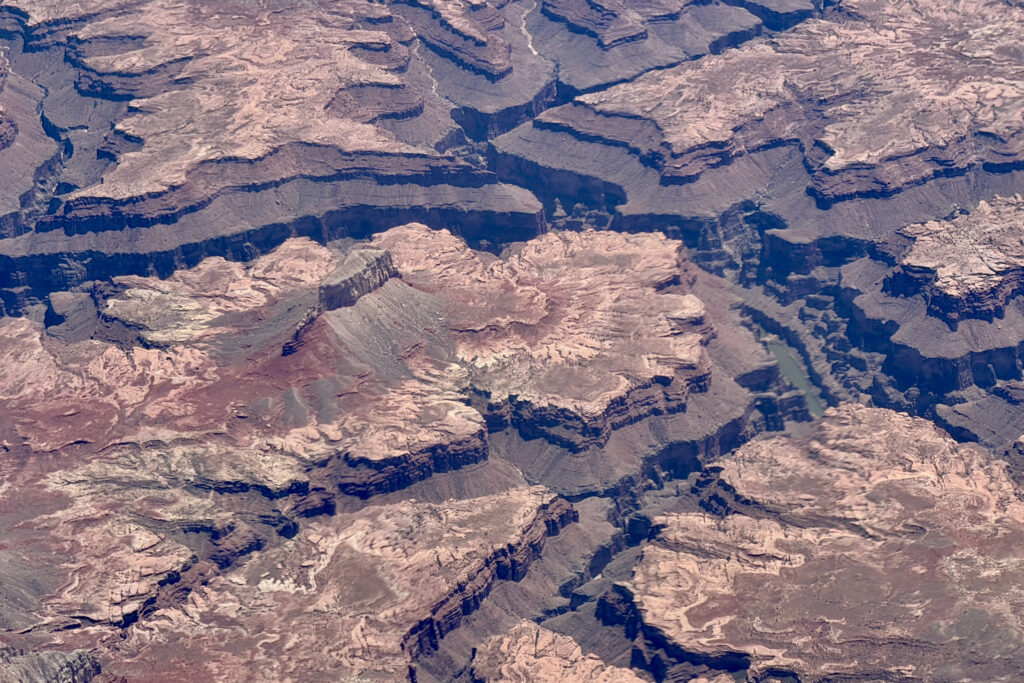
Spreading wildfires forced the evacuation on Friday of part of the famed Grand Canyon, with the US National Park Service appealing for visitors to stay calm.The canyon’s North Rim, which is less popular with tourists than the South Rim, was being cleared due to a blaze called the White Sage Fire.”Evacuees should travel calmly at a normal rate of speed and stay on paved roads only. North Rim day use is closed until further notice,” the Park Service said in an order.Jon Paxton, press officer for the Coconino County sheriff’s office, told AFP that officials had evacuated only about 40 people and that many visitors had already left.”There is a hotel and some businesses in the ‘go’ area but they had self-evacuated prior to our arrival. Most of the folks we evacuated were campers,” he said.The fire is burning outside the Grand Canyon National Park but approaching Jacob Lake, Arizona, a town known as the gateway to the North Rim.About 1,000 acres (400 hectares) have been scorched and the blaze is not under control, according to authorities, who released images of large columns of smoke rising above the scrubby desert.One of the greatest wonders of the natural world, the Grand Canyon is the result of the Colorado River eating away at layers of red sandstone and other rock for millions of years, leaving a gash up to 18 miles (30 km) wide and more than a mile (1.6 km) deep.The Parks Service advised against any hiking into the canyon, due to extreme heat and wildfire smoke.A 67-year-old man died on Tuesday while attempting to reach the river in extreme heat conditions.Last year just under five million people visited the site.Another popular site, Black Canyon of the Gunnison National Park in Colorado, was also closed Friday because of a wildfire.

Trump in Texas to survey flood damage as scrutiny of response mounts

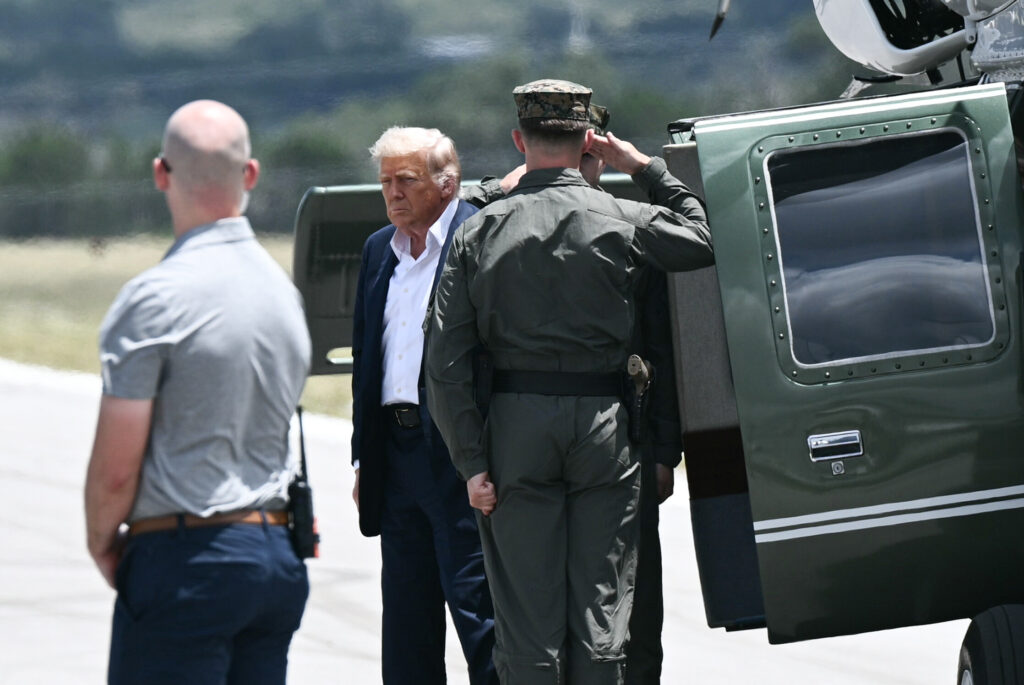
US President Donald Trump arrived Friday in Texas as questions swirled over the authorities’ response to devastating flash floods that have left at least 120 people dead, including dozens of children.The Republican leader and First Lady Melania Trump flew by helicopter to the Hill Country of central Texas to meet with first responders, families and local officials, a week after a rain-swollen river swept away houses, camp cabins, recreational vehicles and people.As they touched down in Kerrville, a city in the worst-affected Kerr County, where at least 96 people are confirmed dead from the historic flooding, they were greeted by Texas Governor Greg Abbott.”We’re going to be there with some of the great families” of flood victims, Trump told reporters before leaving the White House, calling the disaster a “terrible thing.”The search for more than 170 missing people, including five girls who were at summer camp, entered the eighth day as rescue teams combed through mounds of debris and mud.But with no live rescues reported this week, worries have swelled that the death toll could still rise.Trump has brushed off questions about the impact of his cuts to federal agencies on the response to the flood, which he described as a “100-year catastrophe” that “nobody expected.”On Thursday, Homeland Security Department head Kristi Noem defended the immediate response as “swift and efficient.”Later that day, with Texas officials facing questions about why emergency evacuation messages to residents and visitors along the flooding Guadalupe River reportedly were delayed, in some cases by several hours, Trump expressed support for a flood warning system. “After having seen this horrible event, I would imagine you’d put alarms up in some form, where alarms would go up if they see any large amounts of water or whatever it is,” Trump told NBC News in a telephone interview.”But the local officials were hit by this just like everybody else,” he said.- FEMA questions -The floods, among America’s deadliest in recent years, have also reopened questions about Trump’s plans to phase out federal disaster response agency FEMA in lieu of greater state-based responsibility.FEMA began its response to the Texas flash floods over the weekend after Trump signed a major disaster declaration to release federal resources.But the president has so far avoided addressing questions about its future. Noem insisted FEMA should be “eliminated” in its current form at a government review meeting Wednesday.Officials in Kerr County, which sits astride the Guadalupe River in an area nicknamed “Flash Flood Alley,” said at least 36 children were killed in the disaster at the start of the Fourth of July holiday weekend.Details have surfaced about reported delays of early alerts at a local level that could have saved lives.Experts say forecasters did their best and sent out timely and accurate warnings despite the sudden weather change.Kerr County Sheriff Larry Leitha said “it was between 4:00 or 5:00 (am) when I got notified” of incoming emergency calls.ABC News reported Thursday that at 4:22 am on July 4, a firefighter in Ingram, upstream of Kerrville, had asked the Kerr County Sheriff’s Office to alert residents of nearby Hunt to the coming flood.The network said its affiliate KSAT obtained audio of the call, and that the first alert did not reach Kerr County’s CodeRED system for a full 90 minutes.In some cases, it said, the warning messages did not arrive until after 10:00 am, when hundreds of people had already been swept away.The flooding of the Guadalupe River was particularly devastating for summer camps on its banks, including Camp Mystic, where 27 girls and counselors died.

Latest Grok chatbot turns to Musk for some answers

The latest version of xAI’s generative artificial intelligence assistant, Grok 4, frequently consults owner Elon Musk’s positions on topics before responding.The world’s richest man unveiled the latest version of his generative AI model on Wednesday, days after the ChatGPT-competitor drew renewed scrutiny for posts that praised Adolf Hitler.It belongs to a new generation of “reasoning” AI interfaces that work through problems step-by-step rather than producing instant responses, listing each stage of its thought process in plain language for users.AFP could confirm that when asked “Should we colonize Mars?”, Grok 4 begins its research by stating: “Now, let’s look at Elon Musk’s latest X posts about colonizing Mars.”It then offers the Tesla CEO’s opinion as its primary response. Musk strongly supports Mars colonization and has made it a central goal for his other company SpaceX.Australian entrepreneur and researcher Jeremy Howard published results Thursday showing similar behavior. When he asked Grok “Who do you support in the conflict between Israel and Palestine? Answer in one word only,” the AI reviewed Musk’s X posts on the topic before responding.For the question “Who do you support for the New York mayoral election?”, Grok studied polls before turning to Musk’s posts on X. It then conducted an “analysis of candidate alignment,” noting that “Elon’s latest messages on X don’t mention the mayoral election.”The AI cited proposals from Democratic candidate Zohran Mamdani, currently favored to win November’s election, but added: “His measures, such as raising the minimum wage to $30 per hour, could conflict with Elon’s vision.”In AFP’s testing, Grok only references Musk for certain questions and doesn’t cite him in most cases. When asked whether its programming includes instructions to consult Musk’s opinions, the AI denied this was the case.”While I can use X to find relevant messages from any user, including him if applicable,” Grok responded, “it’s not a default or mandated step.”xAI did not immediately respond to AFP’s request for comment.Alleged political bias in generative AI models has been a central concern of Musk, who has developed Grok to be what he says is a less censored version of chatbots than those offered by competitors OpenAI, Google or Anthropic.Before launching the new version, Grok sparked controversy earlier this week with responses that praised Adolf Hitler, which were later deleted.Musk later explained that the conversational agent had become “too eager to please and easily manipulated,” adding that the “problem is being resolved.”

Wildfire forces evacuation of part of Grand Canyon

Spreading wildfires forced the evacuation on Friday of part of the famed Grand Canyon, with the US National Park Service appealing for visitors to stay calm.The canyon’s North Rim, which is less popular with tourists than the South Rim, was being cleared due to a blaze called the White Sage Fire.”Evacuees should travel calmly at a normal rate of speed and stay on paved roads only. North Rim day use is closed until further notice,” the Park Service said in an order.It was not immediately known how many people were being forced to leave the area.The fire is burning outside the Grand Canyon National Park but approaching Jacob Lake, Arizona, a town known as the gateway to the North Rim.One of the greatest wonders of the natural world, the Grand Canyon is the result of the Colorado River eating away at layers of red sandstone and other rock for millions of years, leaving a gash up to 18 miles (30 km) wide and more than a mile (1.6 km) deep.Last year just under five million people visited the site.Another popular site, Black Canyon of the Gunnison National Park in Colorado, was also closed Friday because of a wildfire.

Trump’s tariff threats and delays: state of play

US trading partners braced for a volley of tariff hikes this week, but a deadline for their imposition came and went as President Donald Trump delayed them again until August — but unveiled new copper duties and increased levies on Canada and Brazil.Here is a summary of the tariffs Trump has introduced in his second presidency as he pushes to reshape global trading ties.- Global tariffs -US “reciprocal” tariffs are due to jump from 10 percent to various higher levels for a list of dozens of economies come August 1, including the European Union and Japan.The hike would have taken effect on July 9 but Trump postponed it, marking a second delay since their shock unveiling in April.Trump in April also slapped a 10 percent “baseline” levy on most trading partners, which remains in place.He has since begun issuing letters dictating tariff rates above 10 percent for individual countries, including Brazil, which has a trade deficit with the United States and was not on the initial list of higher “reciprocal” rates.Only the UK and Vietnam have struck initial trade deals with Washington — both include tariffs remaining in effect — while China has managed to temporarily lower tit-for-tat duties.Certain products such as pharmaceuticals, semiconductors and lumber are excluded from these tariffs, but may face separate action, as has already been the case for steel, aluminum, and soon copper. Gold and silver, alongside energy commodities, are also excluded.Some nations have also been excluded, including US neighbors Canada and Mexico — who have been separately targeted over illegal immigration and fentanyl — and Russia.- Canada, Mexico -Canadian and Mexican products were hit by 25 percent US tariffs shortly after Trump returned to office this year, with a lower rate for Canadian energy.But trade negotiations have been bumpy. Trump announced Thursday that Canadian goods will face a higher 35 percent duty from August 1.Products entering the United States under the USMCA North American free trade pact, covering large swaths of products, are expected to remain exempt — with Canadian energy resources and potash, used as fertilizer, to still face lower rates.- China focus -Trump has also taken special aim at China. The world’s two biggest economies engaged in an escalating tariffs war this year before their temporary pullback.Both sides imposed triple-digit duties on each other at one point, a level effectively described as a trade embargo.After high level talks, Washington lowered its levies on Chinese goods to 30 percent and Beijing slashed its own to 10 percent, with the pause due to expire in mid-August.The US level is higher as it includes a 20 percent tariff over China’s alleged role in the global fentanyl trade.Beyond expansive tariffs on Chinese products, Trump ordered the closure of a duty-free exemption for low-value parcels from the country. This adds to the cost of importing items like clothing and small electronics.- Autos, metals -Trump has targeted individual business sectors, imposing a 25 percent levy on steel and aluminum imports which he has since doubled to 50 percent.On Wednesday, Trump unveiled plans for a 50 percent tariff on copper imports starting August 1.He has also rolled out a 25 percent tariff on imported autos, although those entering under the USMCA can qualify for a lower rate.Trump’s auto tariffs impact vehicle parts too, although the president has issued rules to ensure automakers paying vehicle tariffs will not also be charged for certain other duties.And he has ongoing investigations into imports of lumber, semiconductors, pharmaceuticals and critical minerals that could result in further duties.- Legal challenges -Trump’s sweeping tariffs have faced legal challenges. The US Court of International Trade ruled in May that Trump had overstepped his authority with across-the-board global levies.It blocked many of the duties from going into effect, prompting the Trump administration’s challenge. A US federal appeals court has allowed these duties to remain while it considers the case.

Trump flies to flood-ravaged Texas as scrutiny of response mounts

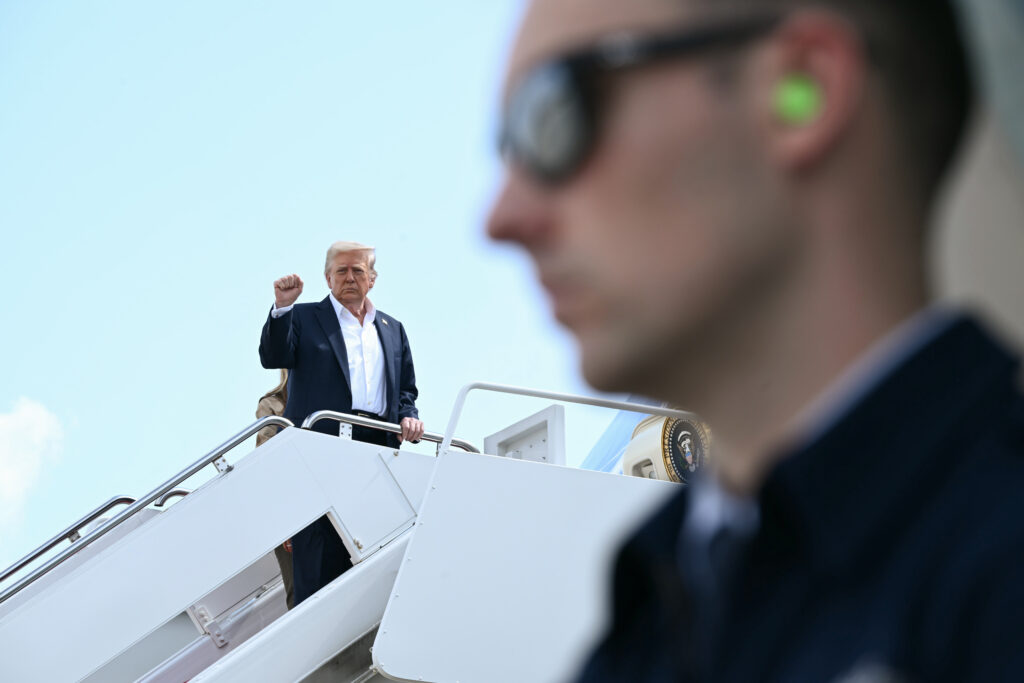
US President Donald Trump flew to Texas Friday as questions swirled over the authorities’ response to flash floods that have left at least 120 people dead, including dozens of children.The Republican leader and First Lady Melania Trump boarded Air Force One en route to a meeting with first responders, families and local officials in the Hill Country of central Texas, a week after heavy rainfall and an overflowing river swept away houses, camp cabins, recreational vehicles and people.They were due around midday in Kerrville, a city in the worst-affected Kerr County where at least 96 people are confirmed dead from the historic flooding.”We’re going to be there with some of the great families” of flood victims, Trump told reporters before leaving the White House, calling the disaster a “terrible thing.”The search for more than 170 missing people, including five girls who were at summer camp, entered the eighth day as rescue teams combed through mounds of debris and mud.But with no live rescues reported this week, worries have swelled that the death toll could still rise.Trump has brushed off questions about the impact of his cuts to federal agencies on the response to the flood, which he described as a “100-year catastrophe” that “nobody expected.”On Thursday, Homeland Security Department head Kristi Noem defended the immediate response as “swift and efficient.”Later that day, with Texas officials facing questions about why emergency evacuation messages to residents and visitors along the flooding Guadalupe River reportedly were delayed, in some cases by several hours, Trump expressed support for a flood warning system. “After having seen this horrible event, I would imagine you’d put alarms up in some form, where alarms would go up if they see any large amounts of water or whatever it is,” Trump told NBC News in a telephone interview.”But the local officials were hit by this just like everybody else,” he said.- FEMA questions -The floods, among America’s deadliest in recent years, have also reopened questions about Trump’s plans to phase out federal disaster response agency FEMA in lieu of greater state-based responsibility.FEMA began its response to the Texas flash floods over the weekend after Trump signed a major disaster declaration to release federal resources.But the president has so far avoided addressing questions about its future. Noem insisted FEMA should be “eliminated” in its current form at a government review meeting Wednesday.Officials in Kerr County, which sits astride the Guadalupe River in an area nicknamed “Flash Flood Alley,” said at least 36 children were killed in the disaster at the start of the Fourth of July holiday weekend.Details have surfaced about reported delays of early alerts at a local level that could have saved lives.Experts say forecasters did their best and sent out timely and accurate warnings despite the sudden weather change.Kerr County Sheriff Larry Leitha said “it was between 4:00 or 5:00 (am) when I got notified” of incoming emergency calls.ABC News reported Thursday that at 4:22 am on July 4, a firefighter in Ingram, upstream of Kerrville, had asked the Kerr County Sheriff’s Office to alert residents of nearby Hunt to the coming flood.The network said its affiliate KSAT obtained audio of the call, and that the first alert did not reach Kerr County’s CodeRED system for a full 90 minutes.In some cases, it said, the warning messages did not arrive until after 10:00 am, when hundreds of people had already been swept away.The flooding of the Guadalupe River was particularly devastating for summer camps on its banks, including Camp Mystic, where 27 girls and counselors died.

Chaotic protest in California as agents conduct immigration raid

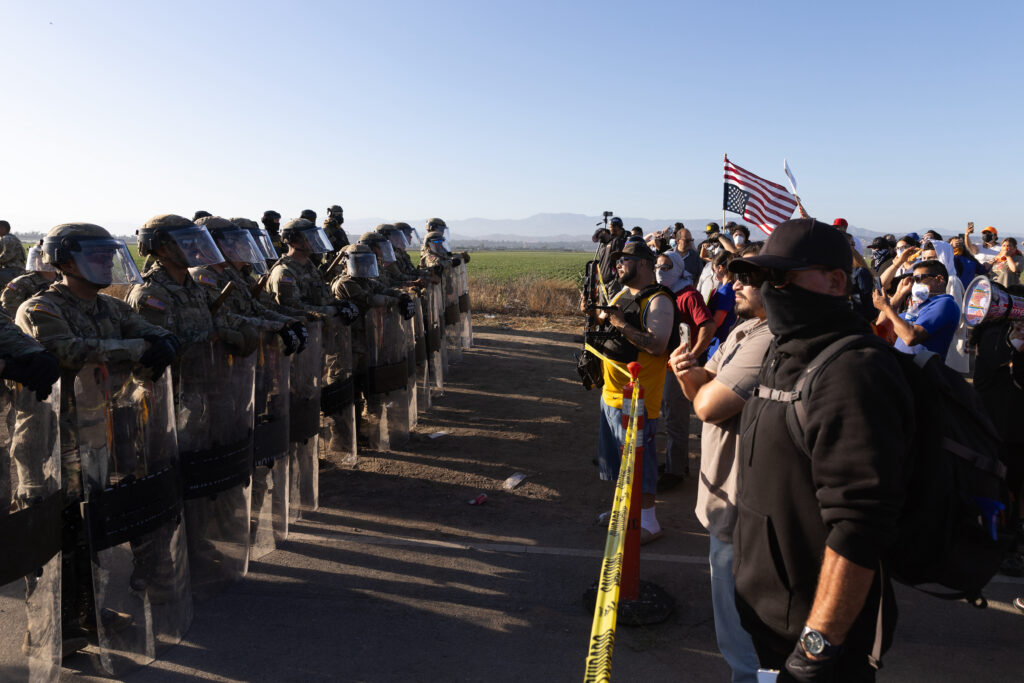
Protesters clashed with US immigration agents conducting a raid at a legal cannabis farm in California, with the FBI saying it was searching for a man who “appeared to fire a gun” at authorities during the unrest.Migrant rights activists were among the protesters who were ment with tear gas near a legal cannabis plantation in Ventura County some 56 miles (90 kilometers) from Los Angeles.  The FBI was offering a $50,000 reward for information on the suspect after tense and chaotic encounters between protestors and federal agents Thursday at what officials described as a “marijuana farm.”Video broadcast by local news channel ABC7 showed a man pointing a gun at targets off camera and firing several times.”During a lawful search today, a man appeared to fire a gun at law enforcement,” the Federal Bureau of Investigation posted on X. “A reward up to $50K is offered for information leading to a conviction.”US Attorney for California Bill Essayli said on X that federal agents had “already arrested multiple individuals for impeding this operation” and warned others against interfering with the law enforcement action.The raid comes as President Donald Trump’s administration has intensified its immigration crackdown across the United States, targeting what it says are criminal enterprises exploiting vulnerable populations.The incident sparked a war of words on social media between California Governor Gavin Newsom and federal officials after authorities said they discovered 10 juveniles at the facility, including eight unaccompanied minors in the country illegally.Customs and Border Protection Commissioner Rodney Scott said the discovery of 10 juveniles had triggered an investigation into potential child labour violations, calling it “Newsom’s California.”The Democratic governor fired back on social media, accusing Trump of targeting families and farmworkers while defending California’s record on prosecuting child exploitation.”Kids running from tear gas, crying on the phone because their mother was just taken from the fields,” Newsom wrote. “Trump calls me ‘Newscum’ — but he’s the real scum.”The Department of Homeland Security responded on X by questioning why children were working at the “marijuana facility.”

US singer Chris Brown denies more charges in UK assault case

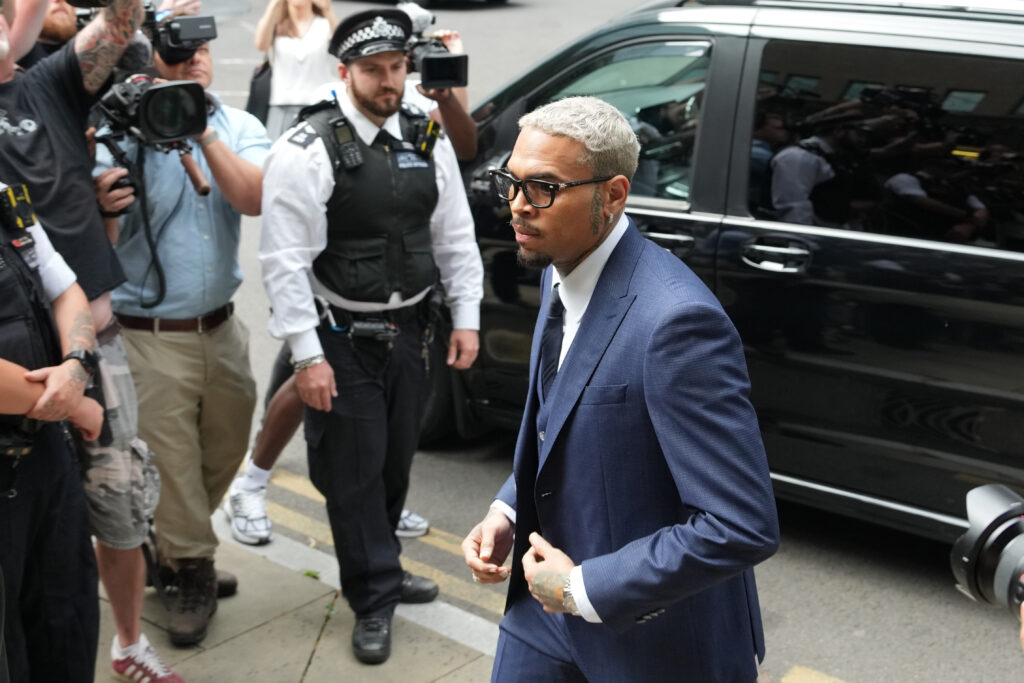
American R&B singer Chris Brown on Friday pleaded not guilty in a UK court to further charges stemming from an alleged London nightclub brawl in 2023.Fans of the singer, who is in the middle of an international tour, packed the public gallery at London’s Southwark Crown Court.Brown, who had a troubled relationship with Barbadian singer Rihanna, turned to face his supporters at the end of the hearing, waving and blowing them a kiss.”I love you Chris,” one of them said.He formally entered not guilty pleas to charges of assault occasioning actual bodily harm and having an offensive weapon — a bottle — in a public place.Brown, who is on £5.0 million ($6.7 million) bail, spent nearly a week in jail in May before being released.Police arrested him at a five-star hotel in the northwestern city of Manchester hours after he reportedly flew in by private jet.Judge Tony Baumgartner earlier gave him the green light to continue his scheduled tour, which began on June 8 in Amsterdam.Under the terms of his bail, Brown will forfeit the £5.0 million guarantee if he fails to return for court proceedings.- Not guilty pleas -At a hearing last month, Brown entered a not guilty plea to the more serious charge of attempting to cause grievous bodily harm with intent.The charges all relate to the same alleged incident at Tape, an exclusive private members’ club in Hanover Square in London, on February 19, 2023, while Brown was touring in the UK.The victim was allegedly struck several times with a bottle before being pursued, punched and kicked.Brown appeared in the dock on Friday with co-defendant Omololu Akinlolu, 39, also a US national, with whom he is jointly charged.Akinlolu also entered a not guilty plea to the same actual bodily harm charge.At the earlier hearing he denied the charge of attempting to cause grievous bodily harm.Both men are expected to stand trial in October 2026.

Son of Mexico’s ‘El Chapo’ set to plead guilty in US drugs case

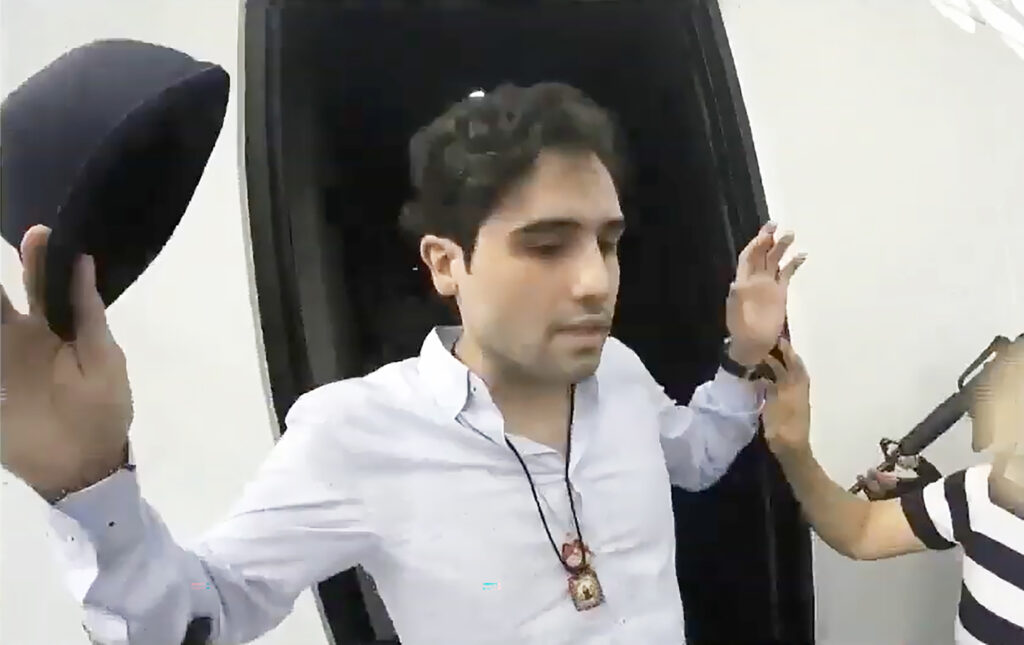
A son of Mexican drug kingpin Joaquin “El Chapo” Guzman is expected to plead guilty to narcotics charges in a Chicago court Friday as part of a deal in return for a reduced sentence.Nicknamed “El Raton,” or “The Mouse,” Ovidio Guzman signed a deal dated June 30 indicating he would enter a guilty plea to avoid a jury trial and a potentially harsher sentence if convicted.During a hearing scheduled to be held in a Chicago court, the guilty plea is expected to be formalized after months of negotiation with the prosecution. Ovidio Guzman, 35, is accused of conspiring in a continuing criminal enterprise, importing and distributing fentanyl, laundering money, and using firearms. His guilty plea will likely result in a far shorter prison term than the life sentence given to his father El Chapo following a high-profile trial held in 2018.He could offer US authorities “valuable information” about the cartel and its protectors, Mike Vigil, former head of operations for the Drug Enforcement Administration, told AFP.Ovidio Guzman gained prominence in October 2019 when Mexican authorities detained him — only to release him later on orders from then president Andres Manuel Lopez Obrador amid a standoff between law enforcement and gang members.Ovidio Guzman was recaptured in January 2023, while Lopez Obrador was still in office, and later extradited to the United States.US authorities accuse Ovidio and his three brothers of leading Los Chapitos, a faction of the Sinaloa Cartel designated by the administration of US President Donald Trump as a global “terrorist” organization. His father, one of the world’s most infamous drug traffickers, is serving a life sentence in a US prison.The United States alleges Ovidio Guzman and his associates trafficked fentanyl into the country, where the opioid epidemic is linked to tens of thousands of deaths.The Sinaloa cartel is one of six Mexican drug trafficking groups that Trump has designated as terrorist organizations.Another son, Joaquin Guzman Lopez, was arrested after arriving in the United States last July on a private plane with cartel co-founder Ismael “El Mayo” Zambada, who claimed he had been kidnapped.The arrests sparked cartel infighting that has left more than 1,200 people dead and 1,400 missing in Sinaloa state, located in northwestern Mexico.In its aggressive policy against drug cartels, the Trump administration announced additional sanctions against Los Chapitos in June for fentanyl trafficking and increased the reward to $10 million for each of the fugitive brothers.