AFP USA

US will ‘walk away’ unless Russia and Ukraine agree deal: Vance

Vice President JD Vance warned Wednesday that the United States would “walk away” unless Russia and Ukraine agree a peace deal, as envoys from Washington, Kyiv and European nations gathered for downgraded talks in Britain.”We’ve issued a very explicit proposal to both the Russians and the Ukrainians, and it’s time for them to either say ‘yes’, or for the United States to walk away from this process,” Vance told reporters in India.US media reported that President Donald Trump was ready to accept recognition of annexed land in Crimea as Russian territory, and Vance said land swaps would be fundamental to any deal.”That means the Ukrainians and the Russians are both going to have to give up some of the territory they currently own,” he added.The reports said the proposal was first raised at a meeting with European nations in Paris last week.But French President Emmanuel Macron’s office told AFP on Wednesday that “Ukraine’s territorial integrity and European aspirations are very strong requirements for Europeans”.The latest round of diplomacy comes after a fresh wave of Russian air strikes that shattered a brief Easter truce.A Russian drone strike on a bus transporting workers in the southeastern city of Marganets killed nine people and wounded at least 30 more, the Dnipropetrovsk regional governor said Wednesday.Ukrainian authorities also reported strikes in the regions of Kyiv, Kharkiv, Poltava and Odesa.In light of the attacks, Ukraine President Volodymyr Zelensky called for an “immediate, full, and unconditional ceasefire”.In Russia, one person was reported wounded by shelling in the Belgorod region.- ‘Work for peace’ -UK Foreign Secretary David Lammy had been due to lead a meeting of foreign ministers in London on Wednesday but his ministry said the talks had been downgraded to “official level” — a sign of the difficulties surrounding the negotiations. Kremlin spokesman Dmitry Peskov told reporters that “it has not yet been possible to reconcile positions on any issues, which is why this meeting did not take place”.US Ukraine envoy Keith Kellogg was still expected to attend, as was Macron’s diplomatic adviser Emmanuel Bonne.Andriy Yermak, a top aide to Zelensky, said he had arrived in London with Defence Minister Rustem Umerov and Foreign Minister Andriy Sybiga, who was “likely” to meet Lammy.”Despite everything, we will work for peace,” Yermak wrote on Telegram.A Ukraine presidency source later told AFP that the delegation would meet Kellogg, and “there will be more meetings with Europeans”.US presidential envoy Steve Witkoff is to visit Moscow this week.According to the Financial Times, President Vladimir Putin told Witkoff he was prepared to halt the invasion and freeze the current front line if Russia’s sovereignty over the Crimean Peninsula, annexed in 2014, was recognised.Peskov responded by saying that “a lot of fakes are being published at the moment”, according to the RIA Novosti news agency.Zelensky said Tuesday that his country would be ready for direct talks with Russia only after a ceasefire, though the Kremlin has said it cannot rush into a ceasefire deal.Trump promised on the campaign trail to strike a deal between Moscow and Kyiv in 24 hours but has since failed to secure concessions from Putin to halt his troops in Ukraine.He said at the weekend he hoped an agreement could be struck “this week”.- Trump ‘frustrated’ -Secretary of State Marco Rubio said he had presented a US plan to end the war and discussed it with Russian counterpart Sergei Lavrov during a phone conversation after the Paris meeting last week. Both Rubio and Trump have warned since that the United States could walk away from peace talks unless it saw quick progress.In response to the US ultimatums, a spokesperson for UK Prime Minister Keir Starmer told reporters “it has to be up to Ukraine to decide its future” and “we will never walk away from Ukraine”.Rubio had said in Paris he would go to London if he thought his attendance could be useful.But Lammy wrote on X late Tuesday that he had instead had a “productive call” with Rubio.Trump proposed an unconditional ceasefire in March, the principle of which was accepted by Kyiv but rejected by Putin.The White House welcomed a separate agreement by both sides to halt attacks on energy infrastructure for 30 days but the Kremlin has said it considers that moratorium to have expired.

IMF warns of ‘intensified’ risks to public finances amid US trade war

Donald Trump’s tariff plans have increased the risks to public finances, the International Monetary Fund said Wednesday, warning countries to get their spending plans under control and prepare for “sharper” trade-offs.The US president’s on-again, off-again introduction of levies against top trading partners has sent market volatility soaring and unnerved investors, who are attempting to chart a path through the increased uncertainty.Over the past six months, “global economic prospects have significantly deteriorated, and risks to the economic output are elevated and tilted to the downside” Vitor Gaspar, the head of the IMF’s Fiscal Affairs department, told reporters on Wednesday at the launch of the Fund’s Fiscal Monitor report. The forecast for public finances was published as part of the Fund and the World Bank’s Spring Meetings of global financial leaders currently under way in Washington.Under its new projections, which incorporate some — but not all — of the recently announced tariffs, the IMF now expects global general government debt to rise to more than 95 percent of economic output this year, and to approach 100 percent of GDP by 2030.In the forecasts, the IMF expects public debt to rise by about the same amount as the combined increases seen in 2023 and 2024, Gaspar told AFP in an interview ahead of the report’s publication.”There is a pronounced trend in public debt around the world,” he said.- ‘Heightened uncertainty’ -The IMF warned in its report that the “heightened uncertainty” about tariffs and economic policy, combined with rising bond yields in major economies, widening spreads in emerging markets, foreign aid cuts, and increased defense spending in Europe had all complicated the global debt outlook.”Fiscal policy now faces a sharper trade-off between reducing debt, building buffers against uncertainties and accommodating spending pressures, all amidst weaker growth prospects, higher financing costs, and heightened risks,” it added. While public spending levels may pose political challenges, the right policy can also “be a source of confidence and support in potentially very demanding macroeconomic circumstances,” Gaspar told AFP. “Communities may be severely affected by trade dislocations, and targeted and temporary support… could be a way forward,” he added. – Different paths -The IMF expects that more than a third of the world’s economies, who collectively account for 75 percent of global GDP, will see a rise in indebtedness this year. This includes many of the world’s largest economies, including the United States, China, Germany, Britain, and France. But these countries will face very different realities when it comes to handling that debt, Gaspar said in the interview.”Both China and the United States are continental economies,” he said. “They have a space that other economies don’t have.””The United States has an ample set of options, both on the revenue side and on the spending side, that it can deploy to control the deficit, stabilize the level of public debt and decrease the level of public debt, if it chooses to do so,” he added. “How it’s going to happen depends on… the choices made in the context of the US political system,” he said. For China, Gaspar noted that the authorities would “eventually” need to tackle its public debt, but should focus their attention at this moment in time on providing targeted support to transform the economy. “Fiscal support in China is welcome right now,” he said. “It is something that helps rebalancing China growth towards the domestic economy.””By doing so, it helps reduce the external imbalance.” 

UK hosts downgraded Ukraine talks as Easter truce shatters

Envoys from Washington, Kyiv and European nations gathered for talks in Britain on Wednesday amid a new US push to end Russia’s war in Ukraine, but a planned meeting of foreign ministers was postponed.The London meeting comes as US media reported that President Donald Trump is ready to accept recognition of annexed land in Crimea as Russian territory, and as fresh air strikes shattered a brief Easter truce.The reports said the proposal was first raised at a similar meeting with European nations in Paris last week. Trump has since threatened to “take a pass” on efforts to end the conflict unless progress is made quickly.A Russian drone strike on a bus transporting workers in the southeastern city of Marganets killed at least nine people and wounded at least 30 more, the Dnipropetrovsk regional governor said on Wednesday.Ukrainian authorities also reported strikes in the regions of Kyiv, Kharkiv, Poltava and Odesa.In Russia, one person was reported wounded by shelling in the Belgorod region.UK Foreign Secretary David Lammy had been due to lead Wednesday’s meeting, but his ministry said that the talks had been downgraded in a sign of the difficulties surrounding the negotiations. “The Ukraine Peace Talks meeting with Foreign Ministers today is being postponed. Official level talks will continue,” said the Foreign Office.- ‘Work for peace’ -US Ukraine envoy Keith Kellogg is still expected to attend, along with Emmanuel Bonne, diplomatic adviser to French President Emmanuel Macron.Andriy Yermak, a top aide to Ukraine President Volodymyr Zelensky, said Wednesday that he had arrived in London with Defence Minister Rustem Umerov and Foreign Minister Andriy Sybiga — who is “likely” to meet Lammy.”Despite everything, we will work for peace,” Yermak wrote on Telegram.A Ukraine presidency source later told AFP that the delegation would meet with Kellogg, and that “There will be more meetings with Europeans, different meetings”.US presidential envoy Steve Witkoff is to visit Moscow this week, the White House has confirmed, in what would be his fourth trip to Russia since Trump took office.According to The Financial Times, President Vladimir Putin told Witkoff he was prepared to halt the invasion and freeze the current front-line if Russia’s sovereignty over the Crimean Peninsula, annexed in 2014, was recognised.Kremlin spokesman Dmitry Peskov responded by saying that “a lot of fakes are being published at the moment”, according to the RIA Novosti state news agency.Zelensky said Tuesday that his country was ready for direct talks with Russia only after a ceasefire.The Kremlin has warned that it cannot rush into a ceasefire deal.Trump promised on the campaign trail to strike a deal between Moscow and Kyiv in 24 hours but has since failed to secure concessions from Putin to halt his troops in Ukraine.He said at the weekend he hoped an agreement could be struck “this week”.US, French and British foreign ministers, along with a senior German official, met in Paris last Thursday to discuss events.Secretary of State Marco Rubio said he had presented a US plan to end the war but no details were given. Rubio also discussed the plan with his Russian counterpart, Sergei Lavrov, during a telephone conversation after the Paris meeting. – Trump ‘frustrated’ -Rubio and Trump have warned since the Paris talks that the United States could walk away from peace talks unless it saw quick progress.Trump “wants to see this war end… and he has grown frustrated with both sides of this war, and he’s made that very known”, his spokeswoman Karoline Leavitt said Tuesday.Rubio had said in Paris last week he would go to London if he thought his attendance could be useful.But Lammy wrote on X late Tuesday that he had instead had a “productive call” with Rubio.”The UK is working with the US, Ukraine and Europe for peace and to put an end to Putin’s illegal invasion. Talks continue at pace,” he added.Trump proposed an unconditional ceasefire in March, the principle of which was accepted by Kyiv but rejected by Putin.The White House welcomed a separate agreement by both sides to halt attacks on energy infrastructure for 30 days, but the Kremlin has said it considers that moratorium to have expired.

China says ‘door open’ to trade talks after Trump signals tariffs will fall

China said on Wednesday the door was “wide open” for trade talks with Washington, a day after US President Donald Trump signalled the possibility of a “substantial” lowering of tariffs on Beijing.Bringing further relief to global markets spooked by his aggressive trade policies, Trump also said on Tuesday he had no intention of firing US Federal Reserve Chair Jerome Powell.Since returning to the White House in January, Trump has imposed additional tariffs of 145 percent on many products from China.These include duties initially imposed over China’s alleged role in the fentanyl supply chain and later over practices Washington deemed unfair. Beijing has responded with sweeping counter-tariffs of 125 percent on US goods, but reiterated on Wednesday that it was willing to engage in trade talks.”China pointed out early on that there are no winners in tariff wars and trade wars,” Chinese Foreign Ministry spokesman Guo Jiakun told a daily news conference in Beijing. “The door for talks is wide open.”Chinese President Xi Jinping also warned on Wednesday that trade wars “undermine the legitimate rights and interests of all countries, hurt the multilateral trading system and impact the world economic order”, state media said.The reiteration from Beijing comes after Trump acknowledged that 145 percent was a “very high” level and that will “come down substantially”.”They will not be anywhere near that number” but “it won’t be zero”, he said.”Ultimately, they have to make a deal because otherwise, they’re not going to be able to deal in the United States.”Those comments came after Treasury Secretary Scott Bessent told a closed-door event on Tuesday that the tariffs amounted to a reciprocal trade embargo.Bessent said he expected a de-escalation in the near future, according to a person who was in the room.Such a development should bring markets some relief, he added at the JPMorgan Chase-hosted event, which was not open to the press.- Market jitters -Trump’s recent tirades against Powell had fanned fears of an ouster, sending jitters through markets already spooked by the aggressive trade policies.The Republican had criticised Powell for warning that the White House’s sweeping tariffs policy would likely reignite inflation.”I have no intention of firing him,” Trump said on Tuesday. “I would like to see him be a little more active in terms of his idea to lower interest rates — it’s a perfect time to lower interest rates.”If he doesn’t, is it the end? No.”Wall Street’s major indexes jumped after a report on Bessent’s trade comments, which came on the sidelines of the International Monetary Fund and World Bank’s Spring Meetings. Asian markets rallied across the board on Wednesday.The main indexes in Hong Kong and Tokyo were both up around two percent, while gold fell back a day after hitting a record high as investors sought their traditional safe haven.- ‘Doing very well’ -Bessent said there was much to be done at the end of the day with Beijing but he noted the need for fair trade and said China needed to rebalance its economy.The Treasury chief stressed that the goal is not to decouple with China, noting that container bookings between both countries have slumped recently as trade tensions heated up.White House Press Secretary Karoline Leavitt also told reporters that Washington was “doing very well in respect to a potential trade deal with China”.Global finance ministers and central bankers will converge on Washington this week, with all eyes on the progress of trade talks on the sidelines as countries grapple with Trump’s new and wide-ranging tariffs.China’s foreign minister Wang Yi also held phone calls with his British and Austrian counterparts on Tuesday, urging the UK and the European Union to work with Beijing on safeguarding international trade.Japan was also reportedly eyeing a second visit to Washington by tariffs envoy Ryosei Akazawa next week, with local media reporting Tokyo was considering concessions to assuage Trump.burs-stu/pbt/lb

Prosecutors to make case against Harvey Weinstein at retrial

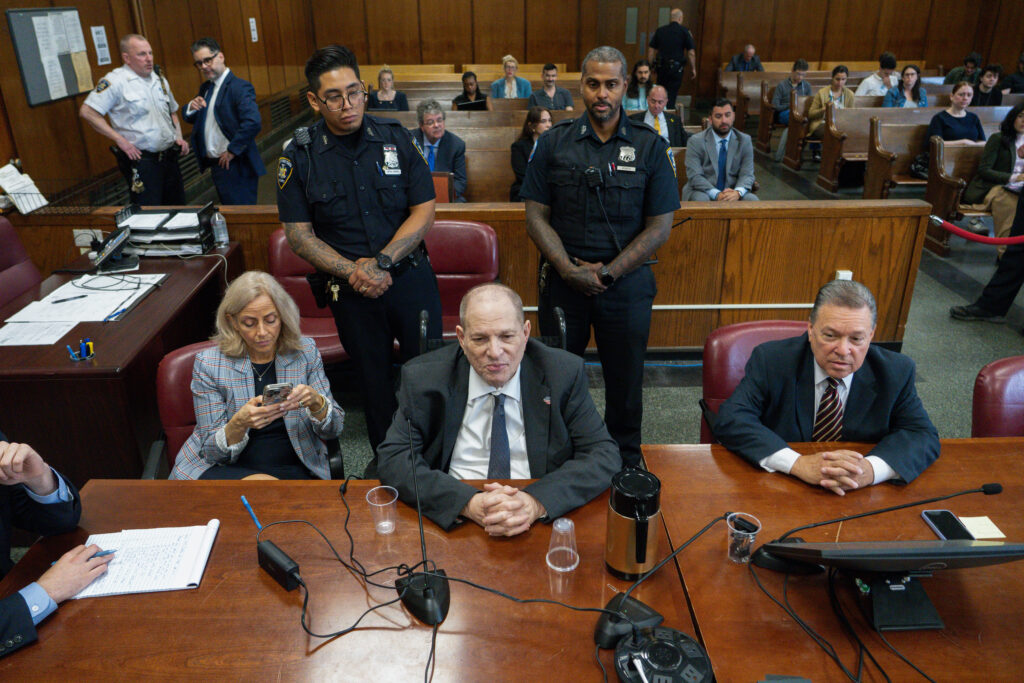
Prosecutors will begin to make their case against disgraced Hollywood mogul Harvey Weinstein to a majority-women jury on rape and sex assault charges Wednesday as opening statements begin in his retrial.Weinstein’s retrial began last week, forcing survivors who helped spark the “#MeToo” movement against sexual violence to prepare to testify against him once more.His 2020 conviction was overturned last year by the New York Court of Appeals, which ruled that the way witnesses were handled in the original New York trial was unlawful.Judge Curtis Farber said he expected presentation of evidence to last five to six weeks.”I am hopeful the trial will be over by the end of May,” he said.Jury selection took just over a week and was concluded after many members of the jury pool indicated they could not give Weinstein a fair trial because of what they knew of the highly publicized case. Those prospectives were excused, and a full jury of 12 panelists and six alternates was seated Tuesday with seven women and five men picked — more women than found him guilty at his first trial.The onetime Miramax studio boss was charged with the sexual assault of former production assistant Mimi Haleyi in 2006, the rape of aspiring actress Jessica Mann in 2013, and a new count for an alleged sexual assault in 2006 at a hotel in Manhattan. Haleyi and Mann testified in the earlier trial, sharing graphic accounts of their interactions with Weinstein.- ‘Fresh eyes’ -Weinstein, 73, has said he hopes the case will be judged with “fresh eyes,” more than seven years after investigations by the New York Times and the New Yorker led to his spectacular downfall and a global backlash against predatory abusers.Weinstein is serving a 16-year prison sentence after being convicted on separate charges in California in 2023 for raping and assaulting a European actress a decade prior.The producer of a string of box office hits such as “Sex, Lies and Videotape,” “Pulp Fiction” and “Shakespeare in Love,” Weinstein has battled health issues.”It’ll be very, very different because of the attitude of New York City, New York state and, I think, the overall country,” his lawyer Arthur Aidala said ahead of jury selection.Weinstein has never acknowledged any wrongdoing and has always maintained that the encounters were consensual.Accusers describe the movie mogul as a predator who used his perch atop the cinema industry to pressure actresses and assistants for sexual favors, often in hotel rooms.Since his downfall, Weinstein has been accused of harassment, sexual assault or rape by more than 80 women, including Angelina Jolie, Gwyneth Paltrow, Lupita Nyong’o and Ashley Judd.In 2020, a jury of New Yorkers found Weinstein guilty of two out of five charges — the sexual assault of Haleyi and the rape of Mann.But the conviction and the 23-year prison sentence were overturned in April 2024.In a hotly debated four-to-three decision, New York’s appeals court ruled that jurors should not have heard testimonies of victims about sexual assaults for which Weinstein was not indicted.

Trump says won’t fire Fed chief, signals China tariffs will come down

Donald Trump said Tuesday he had no intention of firing the chair of the US Federal Reserve and signalled a “substantial” lowering of tariffs on China — bringing relief to global markets spooked by his aggressive trade policies.Trump’s recent outbursts against Fed boss Jerome Powell had fanned concern that he would oust him, sending jitters through markets.The president had criticized Powell for warning that the White House’s sweeping tariffs policy would likely reignite inflation.”I have no intention of firing him,” Trump said Tuesday. “I would like to see him be a little more active in terms of his idea to lower interest rates — it’s a perfect time to lower interest rates.”If he doesn’t, is it the end? No.”Since Trump’s return to the White House in January, the United States has imposed additional tariffs of 145 percent on many products from China.These include duties initially imposed over China’s alleged role in the fentanyl supply chain and later over practices Washington deemed unfair. Beijing has responded with sweeping counter-tariffs of 125 percent on US goods.But Trump acknowledged Tuesday that 145 percent was a “very high” level, and that this will “come down substantially.””They will not be anywhere near that number,” but “it won’t be zero,” the president said.”Ultimately, they have to make a deal because otherwise, they’re not going to be able to deal in the United States.”His comments came after Treasury Secretary Scott Bessent told a closed-door event on Tuesday that the tariffs amounted to a reciprocal trade embargo.But he said he expected a de-escalation in the near future, according to a person who was in the room.Such a development should bring markets some relief, he added at the JPMorgan Chase-hosted event, which was not open to media.Wall Street’s major indexes jumped after a report on Bessent’s comments, which came on the sidelines of the International Monetary Fund and World Bank’s Spring Meetings. Asian markets rallied across the board on Wednesday.- ‘Doing very well’ -Bessent said there was much to be done at the end of the day with Beijing but he noted the need for fair trade and said China needed to rebalance its economy.The Treasury chief stressed that the goal is not to decouple with China, noting that container bookings between both countries have slumped recently as trade tensions heated up.Also on Tuesday, White House Press Secretary Karoline Leavitt told reporters that Washington is “doing very well in respect to a potential trade deal with China.””The president and the administration are setting the stage for a deal,” she added, noting that “the ball is moving in the right direction.”She said the feeling was that parties involved want to see a trade deal happen, though China has as of yet not confirmed that it is negotiating with the United States.As global finance ministers and central bankers converge in Washington this week, all eyes are on the progress of trade talks on the sidelines of the spring meetings as countries grapple with Trump’s new and wide-ranging tariffs.China’s foreign minister Wang Yi, meanwhile, urged Tuesday in phone calls with his British and Austrian counterparts for the UK and European Union to work with Beijing on safeguarding international trade.Japan was reportedly eyeing a second visit to Washington by tariffs envoy Ryosei Akazawa next week, with local media saying Tokyo is mulling concessions to assuage Trump.Japan’s Sumitomo Rubber, which recently bought the Dunlop brand, said it would from May hike tire prices for cars and small trucks in the United States and Canada by up to 25 percent.burs-stu/dan

Trial testimony reveals OpenAI interest in Chrome: reports

OpenAI is ready to buy Chrome if Google is forced to sell its popular browser as part of antitrust trial, a top executive testified Tuesday, according to media reports.OpenAI product manager Nick Turley revealed the startup’s interest in the world’s most popular internet browser while testifying in court in Washington DC. Turley spoke in front of a judge who will decide what remedies to impose on Google after making a landmark decision last year that the tech giant maintained an illegal monopoly in online search.US government attorneys have urged Judge Amit Mehta to force Google to sell off its Chrome browser, arguing artificial intelligence is poised to ramp up the tech giant’s online search dominance.Google countered in the case that the US government has gone way beyond the scope of the suit by recommending it be forced to sell Chrome and holding open the option to force a sale of its Android mobile operating system.The legal case focused on Google’s agreements with partners such as Apple and Samsung to distribute its search tools, noted Google president of global affairs Kent Walker.”The DOJ chose to push a radical interventionist agenda that would harm Americans and America’s global technology leadership,” Walker wrote in a blog post.”The DOJ’s wildly overbroad proposal goes miles beyond the Court’s decision.”A Bloomberg analyst has estimated the price of Chrome browser, which has more than three billion users, at $15 billion or more.Turley said during his testimony that OpenAI had approached Google about integrating its search technology into ChatGPT artificial intelligence power digital assistant but was rebuffed, according to media reports.Google is among the tech companies investing heavily to be among the leaders in AI, and is weaving the technology into search and other online offerings.The DOJ case against Google regarding its dominance in internet search was filed in 2020. Mehta ruled against Google in August 2024 and the tech giant has appealed.

Scientists sound alarm as Trump reshapes US research landscape

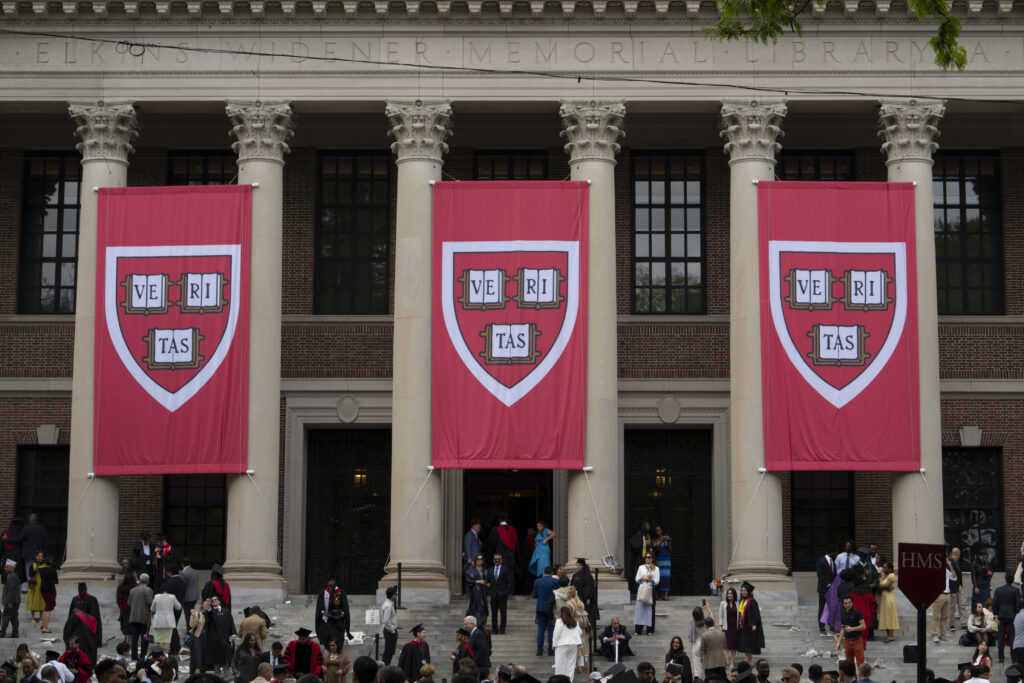
From cancer cures to climate change, President Donald Trump’s administration has upended the American research landscape, threatening the United States’ standing as a global science leader and sowing fear over jobs and funding.Mass layoffs at renowned federal agencies. Billions in research grants slashed. Open threats against universities. Bans on words linked to gender and human-caused global warming — all within the first 100 days.”It’s just colossal,” Paul Edwards, who leads a department at Stanford University focused on the interaction between society and science, told AFP. “I have not seen anything like this ever in the United States in my 40 year career.”The sentiment is widely shared across the scientific and academic community. At the end of March, more than 1,900 leading elected members of the National Academies of Sciences, Engineering and Medicine, sounded an SOS in an open statement, warning that using financial threats to control which studies are funded or published amounted to censorship and undermines science’s core mission: the quest for truth.”The nation’s scientific enterprise is being decimated,” they wrote, calling on the administration “to cease its wholesale assault” on US science and urging members of the public to join them. – ‘Rage against science’ -Even during Trump’s first term, the scientific community had warned of an impending assault on science, but by all accounts, today’s actions are far more sweeping.”This is definitely bigger, more coordinated,” said Jennifer Jones, director of the Center for Science and Democracy at the Union of Concerned Scientists, who described the administration as operating straight from the Project 2025 playbook.That ultra-conservative blueprint — closely followed by the Republican billionaire since returning to power — calls for restructuring or dismantling key scientific and academic institutions, including the National Oceanic and Atmospheric Administration (NOAA), which it accuses of promoting “climate alarmism.”Trump’s officials have echoed these views, including Health Secretary Robert Kennedy Jr., a vaccine skeptic who has tapped into public distrust of science, amplified during the Covid-19 pandemic.The result, says Sheila Jasanoff, a professor at Harvard, is a breakdown of the tacit contract that once bound the state to the production of knowledge.Harvard, now a primary target in Trump’s campaign against academia, has faced frozen grants, threats to its tax-exempt status, and potential limits on enrolling international students —- moves framed as combating antisemitism and “woke” ideology, but widely viewed as political overreach.”The rage against science, to me, is most reminiscent of a fundamentalist religious rage,” Jasanoff told AFP.- Generational damage -Faced with this shift, a growing number of researchers are considering leaving the United States — a potential brain drain from which other countries hope to benefit by opening the doors of their universities. In France, lawmakers have introduced a bill to create a special status for “scientific refugees.” Some will leave, but many may simply give up, warns Daniel Sandweiss, a climate science professor at the University of Maine, who fears the loss of an entire generation of rising talent.”It’s the rising students, the superstars who are just beginning to come up,” he said, “and we’re going to be missing a whole bunch of them.”Many US industries — including pharmaceuticals — depend on this talent to drive innovation. But now, said Jones, “there’s a real danger they’ll fill those gaps with junk science and discredited researchers.”One such figure is David Geier, an anti-vaccine activist previously found to have practiced medicine without a license, who has been appointed by Kennedy to study the debunked link between vaccines and autism — a move critics say guarantees a biased result.”The level of disinformation and confusion this administration is creating will take years — potentially generations — to undo,” said Jones.

Trump solo: first lady, children out of frame in new term

First Lady Melania Trump, relatively out of public view during her husband’s first term, has been even more off-grid this time around.In the first 100 days since Donald Trump returned to office, the first lady has appeared at only a handful of public events. It is unclear how many days she has even spent in Washington.Trump’s other family members have similarly been missing from the White House, but most are not shying away from the public spotlight.Here is a look at what Trump’s family is — or isn’t — up to early in his second term:- Whither Melania? -When the president has returned from Florida — where he spends nearly every weekend — it is neither the first lady nor any other family member exiting the helicopter with him, but often his billionaire aide Elon Musk and Musk’s young son.Apart from fueling further speculation of marital strife, Melania Trump’s absence from this weekly ritual highlights what Ohio University history professor Katherine Jellison calls a “major and very noticeable” shift from precedent.”She’s quite different from every first lady for a couple of generations at least, more than a couple of generations. I would have to go all the way back to Bess Truman in the late ’40s and early ’50s to find such a low-profile first lady,” Jellison told AFP.”Weeks and weeks go by and the American public doesn’t really see her.”So what has she been up to? The public may eventually get a glimpse via a documentary series she is filming with Amazon, under a contract reportedly worth tens of millions of dollars.Jaded by the critiques of her previous tenure as first lady, Melania Trump, 54, seems determined to “get the upper hand and have more control over her public image,” Jellison said.”I think the American people in general still feel they don’t know her, and maybe this… is her attempting to tell us who she is, but on her own terms.”- Older Kids -During Donald Trump’s first term, his daughter Ivanka and her husband Jared Kushner held important White House advisory roles — but not this time.Ivanka has stated she wants to spend more time with her children, while Jared is managing a private equity fund backed by Saudi and other Gulf wealth.Elder sons Don Jr. and Eric continue to run the Trump family business, which now includes, controversially, a growing cryptocurrency portfolio.Unlike Ivanka, they both frequently take to social media to tout their father’s MAGA agenda.Don Jr. — known for his ability to tap into the Trump base — is especially vocal and hosts a twice-weekly podcast, “Triggered,” which recently had Secretary of State Marco Rubio as an “exclusive guest.”Eric’s wife Lara Trump, who co-led the national Republican Party during last year’s campaign, now hosts a weekly Fox News show. It also frequently includes administration officials as guests.The Trump family has continued to “capitalize on their roles as the First Family,” Jellison said, in what previously would have been considered “quite taboo behavior.”Meanwhile, Tiffany Trump — the president’s only child with his second wife Marla Maples — is expecting a child with husband Michael Boulos, and has remained out of the spotlight.The president has, however, tapped Michael’s wealthy father Massad Boulos, a Lebanese-born businessman with extensive experience in Nigeria, to be his senior advisor for Africa, and an advisor on Middle Eastern affairs.- Generation Z -Barron, the president’s only child with Melania, has grown up a lot since his father’s first term.The 19-year-old, now a towering six-foot-seven-inches (2.01 meters), is studying business at New York University. He won MAGA admirers with his brief inauguration appearances, but has since remained out of public view.Donald Trump’s camp has credited Barron’s advice on new media, such as podcasts and TikTok, as helping him win over young men voters.Kai Trump, daughter of Don Jr. and ex-wife Vanessa Trump, has a growing social media following, especially on TikTok.The 17-year-old, who notably spoke at last year’s Republican National Convention, posts frequent video blogs showing her life as an amateur golfer, as well as sharing behind-the-scenes moments with “grandpa.”

Climate watchers fret over Trump’s cut to sciences

In his California laboratory, Ralph Keeling examines a graph created from data his father began collecting that keeps a record of the amount of carbon dioxide in the atmosphere.After 67 years, the fate of this “major indicator of climate change” is uncertain under President Donald Trump’s administration.The United States “needs this information, there’s no doubt about it,” the geochemistry professor at the Scripps Institution of Oceanography in San Diego told AFP. His father, Charles David Keeling, decided in 1958 to measure atmospheric CO2 concentrations at the summit of the Mauna Loa volcano in Hawaii. This gave rise to the Keeling curve, which today represents the oldest continuous measurement of this greenhouse gas, which is produced by the burning of fossil fuels.This graph “showed early on that humans were having an impact on the whole planet,” even before the effects of climate change were palpable, Ralph Keeling said.Even as science as evolved, the project remains an essential climate watchdog. It provides a basis for thinking about how farmers can modify their crops in the face of a warming atmosphere, or how insurers can adapt their coverage to cope with increasingly fierce fires and more frequent flooding.”This is very rock solid data, but the program that makes this is fragile,” Keeling said.- ‘Concerning’ – Concerns arose in early March, when Elon Musk’s so-called Department of Government Efficiency recommended canceling the lease on the National Oceanic and Atmospheric Administration (NOAA) office in Hawaii by the end of August. This office, located in the town of Hilo, is responsible for maintaining the measurements at the summit of Mauna Loa.But it’s not just buildings. NOAA, a key agency for American climate research, has been targeted by hundreds of layoffs since the return to the White House of Trump, who has repeatedly called climate change a “hoax”.The administration also wants to cut the agency’s budget by $1.6 billion, according to documents revealed in mid-April by The New York Times. The plan also envisages eliminating the branch dedicated to oceanic and atmospheric research. “It’s concerning,” said Keeling. At the summit of Mauna Loa, an observatory houses machines from the Scripps Institute and NOAA, which simultaneously measure atmospheric CO2 concentrations at an altitude of 3,400 meters (11,000 feet). To ensure they’re working properly, local scientists also regularly collect air samples in glass carboys, following the method developed by Charles Keeling more than six decades ago in San Diego. Since then, other countries have begun recording the amount of CO2 in the atmosphere, thanks to new methods sometimes involving satellites. But these alone are not enough, according to Keeling. “Although there’s a bigger community now, and there’s a constellation of methods being used, those additional efforts have assumed that this backbone from Scripps and NOAA is there,” he said.”A satellite measurement of CO2… gives you a lot of fine grained information, but it doesn’t give you reliable long term trends, and it doesn’t give you certain other measures that we can get from direct atmospheric measurements. “You have to ground truth it, you need the calibration.”- Attack on climate science – NOAA declined to comment on the potential impact of the proposed cuts on its program.”We are not discussing internal management matters and we do not do speculative interviews,” the agency told AFP.”NOAA remains dedicated to its mission, providing timely information, research, and resources that serve the American public and ensure our nation’s environmental and economic resilience.”For Tim Lueker, who spent his career with the atmospheric measurement program launched by the Scripps Institute, that is cold comfort.The Trump administration “is not making these cuts to save money. It’s so transparent what’s going on,” he said.At 67, he is worried about a full-scale attack on climate science, with the government ordering the NOAA to identify funding for projects that mention the terms “climate crisis,” “clean energy,” “environmental quality,” or “pollution.””The idea of saving money… is kind of silly when you consider how much one fighter plane costs compared to the annual funding of NOAA Climate Research.”