AFP USA

EU vows ‘unflinching’ response to Trump’s Greenland gambit

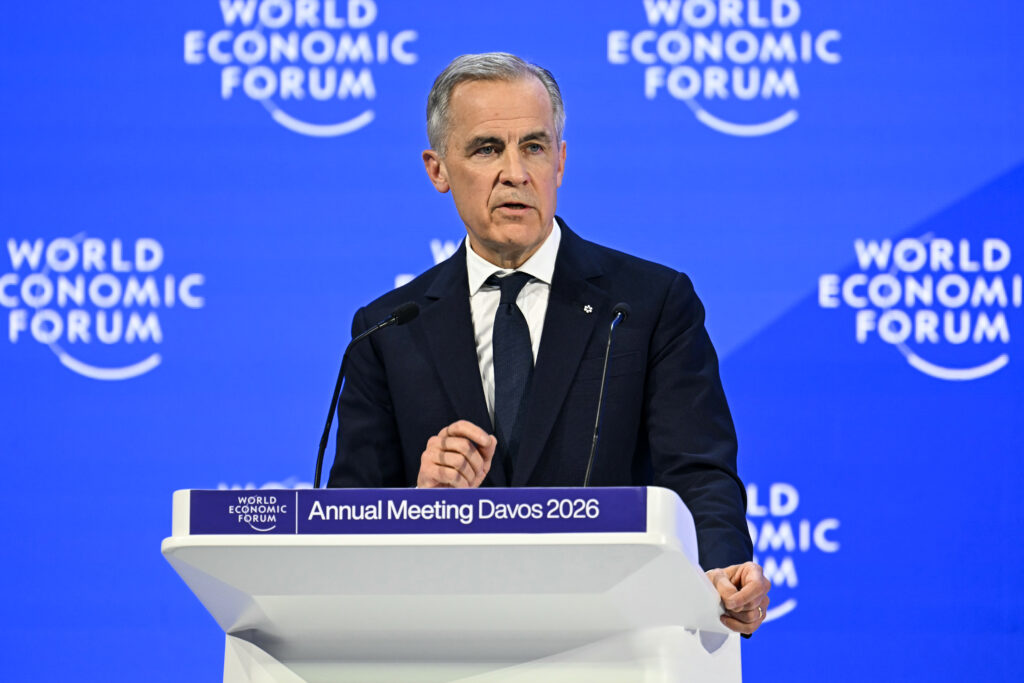
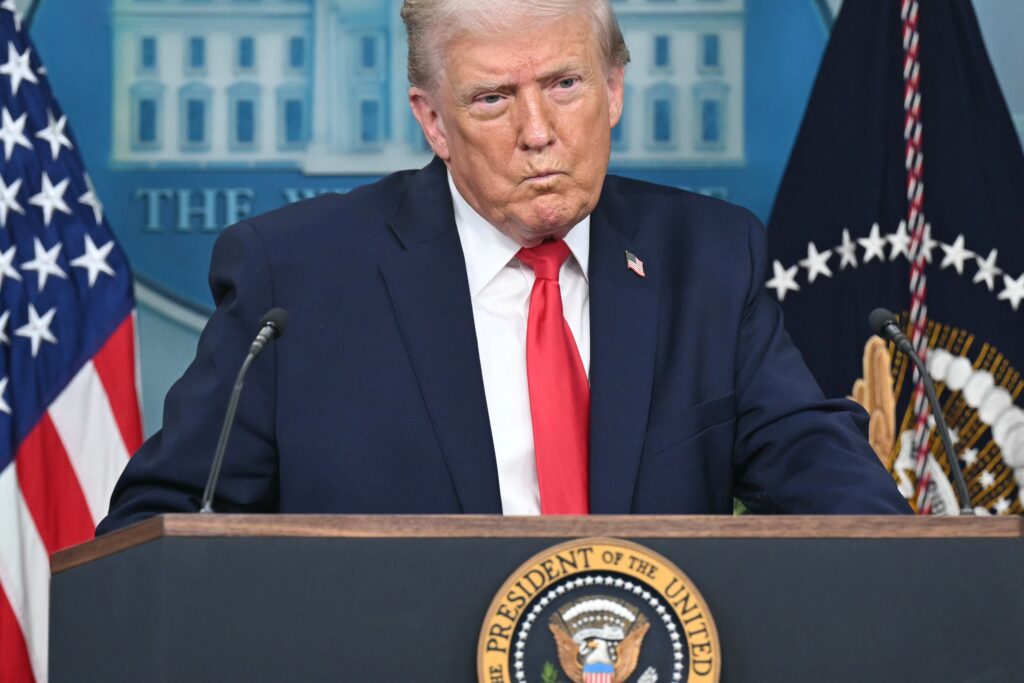
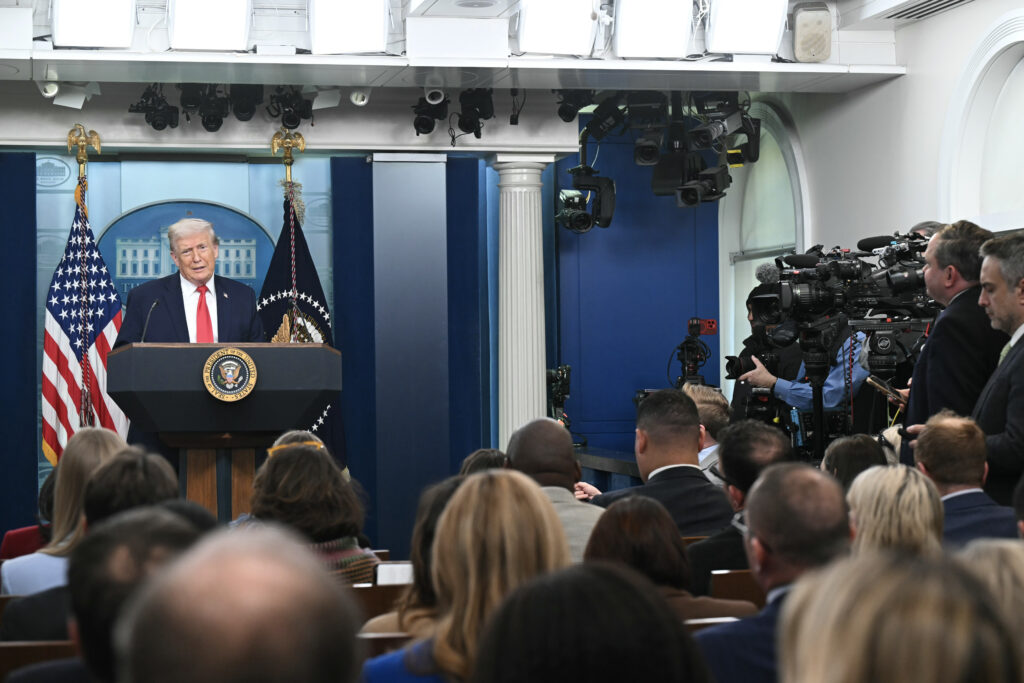
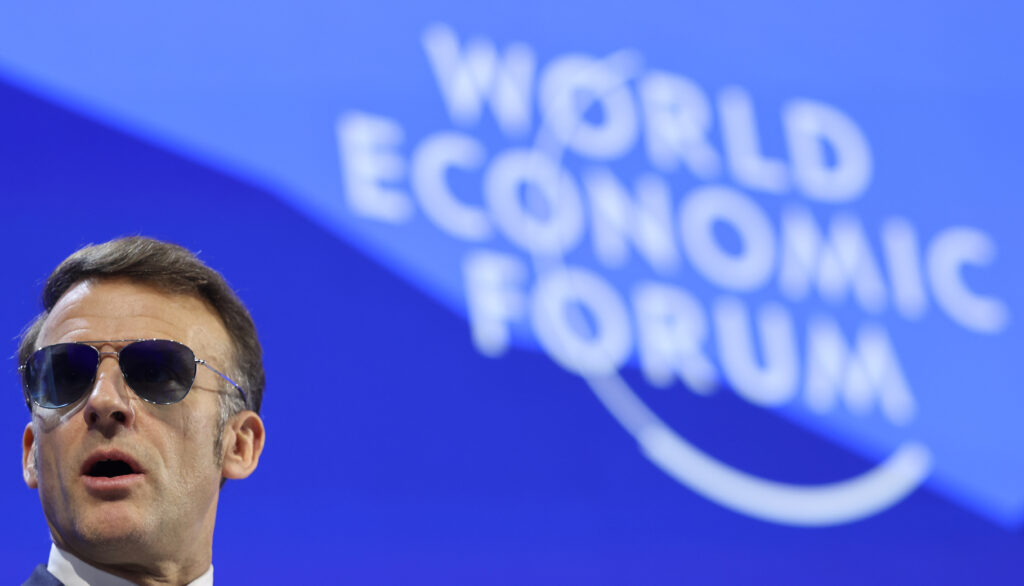
European leaders drew a clear line over Greenland Tuesday, vowing an “unflinching” response to Washington’s threats even as US President Donald Trump said he was ready to hold a meeting in Davos about his plans to take the autonomous Danish territory.Asked hours before he was to head to the World Economic Forum in Davos, Switzerland how far he would go, Trump replied only: “You’ll find out.””We have a lot of meetings scheduled on Greenland, and I think things are going to work out pretty well,” Trump told reporters about his Davos meetings.Leaders at the World Economic Forum (WEF) in the Swiss ski resort closed ranks against Trump’s increasingly aggressive America First agenda, while Greenland’s prime minister said his tiny population of 57,000 must be prepared for military force.European Commission President Ursula von der Leyen led the European rejoinder, cautioning that Trump risked plunging US ties with the European Union into a “downward spiral”.France’s Emmanuel Macron warned against US attempts to “subordinate Europe”, and blasted as “unacceptable” Trump’s threats to impose tariffs of up to 25 percent on countries opposed to his Greenland plans.Trump had earlier insisted Greenland was “imperative” for security. “There can be no going back — On that, everyone agrees!” he posted on his Truth Social platform. The US president, who will address the annual gathering of global elites on Wednesday, has put the transatlantic alliance to the test with his demand to take over Greenland.Europe is weighing countermeasures after he threatened levies on eight European countries, though Washington has said any retaliatory levies would be “unwise”.US Commerce Secretary Howard Lutnick told European countries “to keep the pressure and temperature low” with regards to threats of retaliatory tariffs, while the US trade envoy Jamieson Greer told journalists in Davos that it would “not be wise” for European nations to use its “bazooka” trade measures.Von der Leyen branded the US tariffs a “mistake”, telling the meeting of world business and political leaders they could start a spiral that would only aid Europe’s adversaries.”So our response will be unflinching, united and proportional,” she said.- NATO at stake -Trump has pressed on with his Greenland campaign on Truth Social, writing that he had a “very good” call with NATO secretary-general Mark Rutte in which he agreed to meet with “various parties” in Davos.Rutte’s predecessor Anders Fogh Rasmussen warned that the Republican’s Greenland gambit had ignited the biggest crisis in NATO’s history, and said the time for “flattering” the US leader was over.”It is the future of NATO and the future of the world order that are at stake,” he told AFP in an interview at Davos.Greenland’s Prime Minister Jens-Frederik Nielsen agreed, telling a press conference in Nuuk that while military force was “unlikely” it could not be ruled out.”That’s why we must be ready for all possibilities, but let’s emphasise this: Greenland is part of NATO and, if there were to be an escalation, it would also have consequences for the rest of the world.”Trump argues he wants to protect mineral-rich Greenland from perceived Russian and Chinese threats — although Washington already has a base there and security agreements through NATO, while analysts suggest Beijing is a small player in the region.EU leaders will hold an emergency summit on Greenland in Brussels on Thursday.- ‘Law of the jungle’ -Other prominent foreign leaders addressing the WEF on Tuesday included Chinese Vice Premier He Lifeng, whose country has been locked in a trade war with Trump.”A select few countries should not have privileges based on self-interest, and the world cannot revert to the law of the jungle where the strong prey on the weak,” He said, without naming names.Canadian Prime Minister Mark Carney, who has sought to reduce his country’s reliance on the United States in its own tariffs feud with Trump, also voiced his support for Greenland at Davos.Canada had benefitted from an era of “American hegemony”, he said, but now had to pivot to defend the existing international order.Other flashpoints on the WEF agenda include the crises in Venezuela, Gaza, Iran — and Ukraine.Europe, which is ramping up defence spending to break its security reliance on the United States, still needs Washington’s help to end the Ukraine war and deter the looming Russian threat to its east.But Ukraine’s President Volodymyr Zelensky warned Tuesday that he worried the furore over Greenland could divert attention, warning of a “loss of focus during a full-scale war”.Macron, wearing sunglasses because of a broken blood vessel, sent a message to Trump to propose a G7 summit in Paris on Thursday on Greenland as well as Ukraine, with Copenhagen, Moscow and Kyiv attending on the sidelines.But he later clarified to AFP that no such meeting was yet scheduled and Trump said that he wouldn’t join the meeting.The Kremlin said Russian envoy Kirill Dmitriev plans to meet members of the US delegation in Davos — the first to attend since Russians were excluded from the gathering following Moscow’s invasion of Ukraine in 2022.

Skeptical US Supreme Court hears challenge to Hawaii gun law

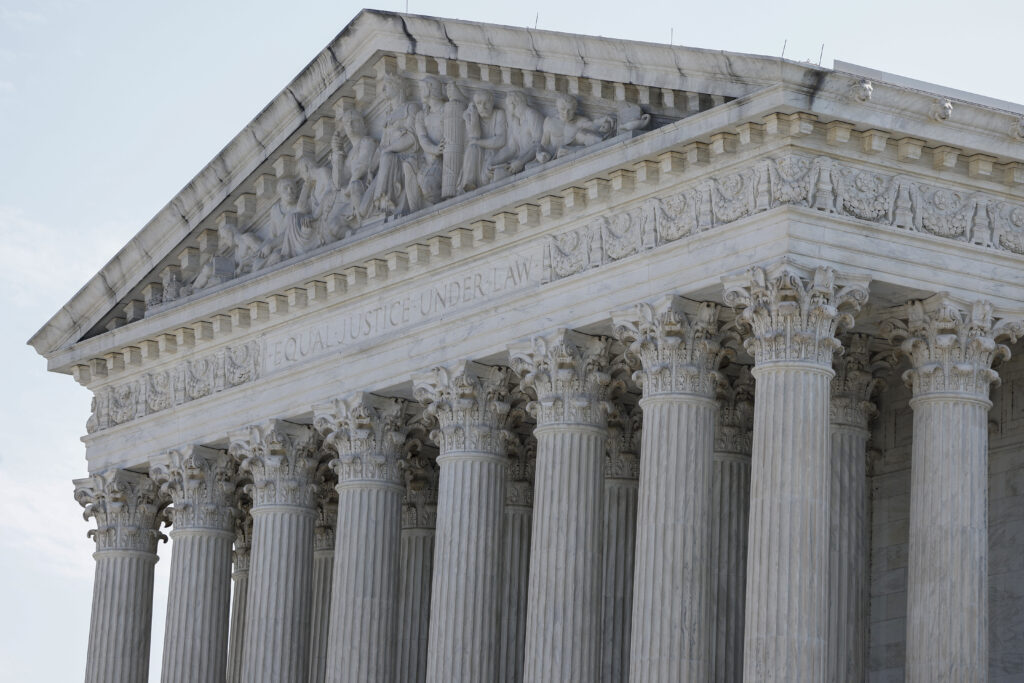
The US Supreme Court appeared likely on Tuesday to strike down a Hawaii law that bans the carrying of firearms on private property open to the public such as stores or restaurants.A majority of the justices on the conservative-dominated top court seemed skeptical of the state law, viewing it as a violation of the constitutional right to bear arms.The Hawaii law requires a gun owner with a concealed carry permit to get the explicit permission of a private property owner before bringing a firearm into their establishment.Four other Democratic-ruled states — California, Maryland, New Jersey and New York — have similar laws, which pit the rights of property owners against those of gun owners.The Supreme Court expanded gun rights in a landmark 2022 ruling and has been generally sympathetic to gun owners.”Our national tradition is that people are allowed to carry on private property that is open to the public,” Alan Beck, an attorney representing gun owners who are challenging the state law, told the justices.Beck accused Hawaii of “running roughshod” over the Second Amendment’s “right of the people to keep and bear arms.”Justice Samuel Alito, one of the six conservatives on the nine-member court, told Neal Katyal, the lawyer for Hawaii, that the state law was “relegating the Second Amendment to second-class status.””I don’t see how you can get away from that,” Alito said.Justice Neil Gorsuch, another conservative, dismissed suggestions the case was just about “property rights and has nothing to do with the Second Amendment.””We don’t allow governments to redefine property rights in other contexts that would infringe other constitutional rights,” Gorsuch said.President Donald Trump’s Justice Department is backing the challenge and was represented in court by Deputy Solicitor General Sarah Harris, who said the Hawaii law turns “property open to the public, like a gas station, into the equivalent of someone’s house.””You’re committing a crime under Hawaii law if you actually go onto it without consent,” Harris said.Arguing for the state, Katyal said the case is about “two fundamental rights, the right to bear arms and the property right to exclude.””Everyone agrees there’s a right to carry on private property if the owner wants guns on his property,” he said. “Everyone also agrees there’s also no such right if the owner doesn’t want guns.”There is no constitutional right to assume that every invitation to enter private property includes an invitation to bring a gun,” Katyal said.”The Constitution protects the right to keep and bear arms. It doesn’t create implied consent to bring arms onto another’s property.”The court is expected to rule in the case by the end of June or early July.

US finalizes rule for deep-sea mining beyond its waters

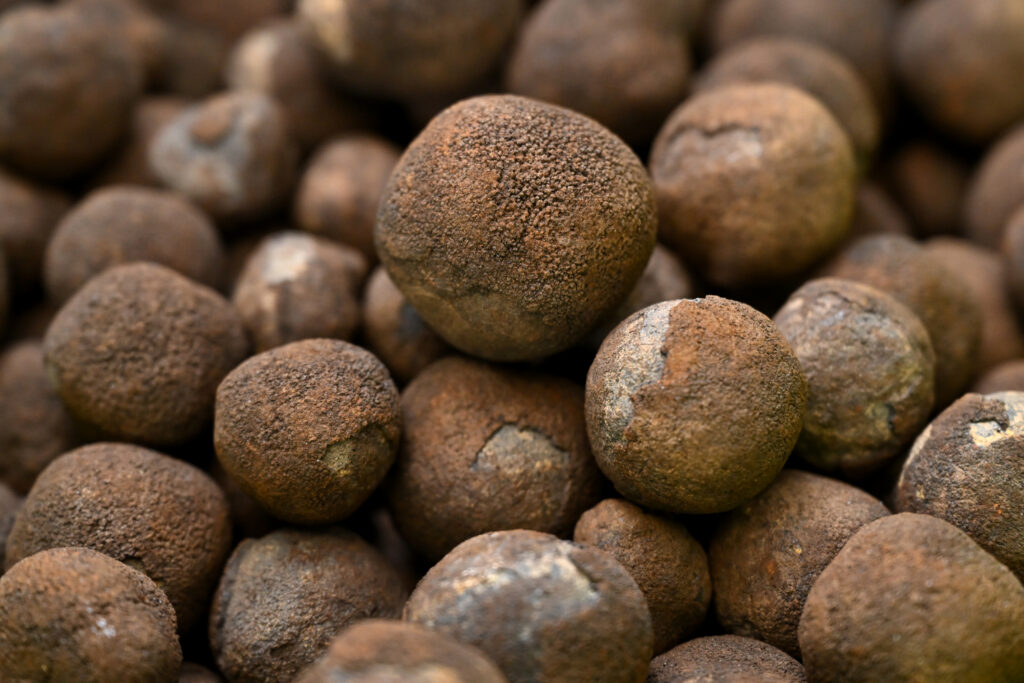
President Donald Trump’s administration on Tuesday issued a new rule to fast-track deep-sea mining in international waters, bringing the United States a step closer to unilaterally launching the controversial industry.The National Oceanic and Atmospheric Administration’s 113-page document consolidates what is currently a two-step permitting process — one for exploration and another for commercial recovery — into a single review, thus reducing environmental oversight.It claims authority under the 1980 Deep Seabed Hard Mineral Resources Act to govern harvesting of minerals in areas beyond US jurisdiction.”Over the past decades there has been a vast improvement in the technological capability for deep seabed mining, and the industry has obtained a substantial amount of information from deep seabed exploration activities,” a document posted to the Federal Register said, justifying the consolidation.But Emily Jeffers, a senior attorney at the Center for Biological Diversity, pushed back against the idea that scientific understanding of the deep ocean has advanced in leaps and bounds, adding the seabed remains one of the planet’s last largely unexplored frontiers, where scientists are only beginning to grasp how ecosystems function.”By issuing the permit simultaneously, they’re committing to exploitation without the information that you would need to evaluate its impacts,” she told AFP.The rule follows an executive order signed by President Donald Trump last April directing agencies to streamline processes in a push to harvest seabed minerals, including rare earth elements critical to clean energy and defense technologies.Teeming with mysterious species, the ocean floor has become a coveted frontier for companies and countries seeking access to minerals in high demand for technologies such as electric vehicles.Swathes of Pacific Ocean seabed are carpeted in potato-sized “polymetallic nodules” containing cobalt, nickel, copper and manganese.Scientists, however, worry that mining could smother species through sediment plumes or release heavy metals that move up the food chain.Canadian firm The Metals Company has emerged as a frontrunner in the race, seeking to explore for minerals in the Clarion-Clipperton Zone of the Pacific Ocean.That prospect has unsettled the United Nations’ International Seabed Authority, which issued a veiled warning about TMC’s potential activities last year.ISA-member countries are deeply divided over how to proceed, with a growing number calling for a moratorium. French President Emmanuel Macron has said it would be “madness to launch predatory economic action that will disrupt the deep seabed, disrupt biodiversity, destroy it and release irrecoverable carbon sinks — when we know nothing about it.”The United States is not party to the ISA or to the UN Convention on the Law of the Sea (UNCLOS), under which the authority was established in 1994.

What is Trump’s ‘Board of Peace’?

US President Donald Trump’s government has asked countries to pay $1 billion for a permanent spot on his “Board of Peace” aimed at resolving conflicts, according to its charter seen by AFP.The board was originally conceived to oversee the rebuilding of Gaza, but the charter does not appear to limit its role to the occupied Palestinian territory.- What will it do? -The Board of Peace will be chaired by Trump, according to its founding charter.It is “an international organization that seeks to promote stability, restore dependable and lawful governance, and secure enduring peace in areas affected or threatened by conflict”, reads the preamble of the charter sent to countries invited to participate. It will “undertake such peace-building functions in accordance with international law”, it adds.- Who will run it? -Trump will be chairman but also “separately serve as inaugural representative” of the United States.”The chairman shall have exclusive authority to create, modify, or dissolve subsidiary entities as necessary or appropriate to fulfil the Board of Peace’s mission,” the document states.He will pick members of an executive board to be “leaders of global stature” to “serve two-year terms, subject to removal by the chairman”.He may also, “acting on behalf of the Board of Peace”, “adopt resolutions or other directives”.The chairman can be replaced only in case of “voluntary resignation or as a result of incapacity”.- Who can be a member? -Member states must be invited by the US president, and will be represented by their head of state or government.Each member “shall serve a term of no more than three years”, the charter says.But “the three-year membership term shall not apply to member states that contribute more than USD $1,000,000,000 in cash funds to the Board of Peace within the first year of the charter’s entry into force”, it adds.The board will “convene voting meetings at least annually”, and “each member state shall have one vote”.But while all decisions require “a majority of member states present and voting”, they will also be “subject to the approval of the chairman, who may also cast a vote in his capacity as chairman in the event of a tie”.- Who’s on the executive board? -The executive board will “operationalise” the organisation’s mission, according to the White House, which said it would be chaired by Trump and include seven members:- US Secretary of State Marco Rubio- Steve Witkoff, Trump’s special negotiator- Jared Kushner, Trump’s son-in-law- Tony Blair, former UK prime minister- Marc Rowan, billionaire US financier- Ajay Banga, World Bank president – Robert Gabriel, loyal Trump aide on the National Security Council- Which countries are invited? -Dozens of countries and leaders have said they have received an invitation.They include China, India, Russia’s President Vladimir Putin, Ukraine’s Volodymyr Zelensky and Canada’s Prime Minister Mark Carney.Egypt’s President Abdel Fattah al-Sisi and Argentina’s President Javier Milei have also confirmed an invitation.Other countries to confirm invitations include Jordan, Brazil, Paraguay, Pakistan and a host of nations from Europe, Central Asia and the Middle East.- Who will join? -Countries from Albania to Vietnam have indicated a willingness to join the board.Hungarian Prime Minister Viktor Orban, Trump’s most ardent supporter in the European Union, is in.The top US ally in the Middle East, the United Arab Emirates, was also quick to join the initiative.Canada said it would take part, but explicitly ruled out paying the $1-billion fee for permanent membership.It is unclear whether any of the countries that have responded positively — a list including Armenia, Belarus, Kazakhstan and Morocco — would be willing to pay the $1 billion.- Who won’t be involved? -Long-time US ally France has indicated it will not join. The response sparked an immediate threat from Trump to slap sky-high tariffs on French wine.Zelensky said it would be “very hard” to be a member of a council alongside Russia, and diplomats were “working on it”.The UK echoed the sentiment, saying it was “concerned” that Putin had been invited.”Putin is the aggressor in an illegal war against Ukraine, and he has shown time and time again he is not serious about peace,” said a Downing Street spokesperson.- When does it start? -The charter says it enters into force “upon expression of consent to be bound by three States”.burs-jxb/yad/phz

Powell to attend US Supreme Court hearing on Fed governor

US Federal Reserve Chair Jerome Powell plans to attend a Supreme Court hearing Wednesday on President Donald Trump’s attempted firing of a central bank governor, a source familiar with the matter told AFP.Powell’s expected appearance comes as the Trump administration intensifies its pressure campaign targeting the central bank, including opening a criminal investigation into the Fed chief.Wednesday’s case involves Trump’s push last summer to fire Fed Governor Lisa Cook over claims of mortgage fraud. Cook, a key official serving on the Fed’s rate-setting committee, has challenged her ouster.The Supreme Court in October barred Trump from immediately removing Cook — allowing her to remain in her post at least until the case is heard.Powell’s anticipated attendance on Wednesday, which was first reported by US media and confirmed to AFP by a source with knowledge of the matter, would mark a more public show of support for Cook than before.Earlier this month, Powell revealed that US prosecutors had opened an inquiry into him over an ongoing renovation of the Fed’s headquarters. Prosecutors have sent the Fed subpoenas and threatened a criminal indictment relating to testimony he gave last summer about the remodeling.Powell has dismissed the investigation as a politically motivated attempt to influence the central bank’s interest rate setting.The heads of major central banks have also thrown their support behind Powell, saying it was critical to preserve the Fed’s independence.Asked about Powell’s planned attendance at the court, US Treasury Secretary Scott Bessent told CNBC: “If you’re trying not to politicize the Fed, for the Fed chair to be sitting there trying to put his thumb on the scale is a real mistake.”Bessent added that Trump could reach a decision on whom to name as Powell’s successor “as soon as next week,” with the Fed chief’s term due to expire in May.

Easier said than done for US to apply tariffs on single EU states

US President Donald Trump’s tariff threats on eight European states, most of which are part of the EU common market, raises the question: can he really target them individually? Technically yes, but in practice — it’s not so simple.When asked the same question, a smiling European Commission spokesman Olof Gill urged reporters to “take a deep breath” before spelling out his explanation.Trump stunned Europe at the weekend when he threatened levies of up to 25 percent on EU members Denmark, Finland, France, Germany, the Netherlands and Sweden, plus non-members Britain and Norway.But because the European Union functions as a single market with a customs union, Brussels explained, while it might be technically possible for Trump to slap sanctions on each, that could mean bureaucratic hell for US importers.- How does the single market work? -Denmark, Finland, France, Germany, the Netherlands and Sweden are part of the EU single market with 21 other countries, and a customs union, which allows the free flow of goods from one member state to another.This also means products made in the EU, which could be exported later to the United States, move around the union without their origin being tracked.Because of this free movement, many companies use products made from across the bloc. For example, a car might be assembled in Germany using parts made in Slovakia.This means any restrictions on trade aimed at one of the EU’s 27 countries could in theory be circumvented by moving goods to another member state before exporting them.”Exports of French wine, Dutch cheese and Danish pharmaceuticals from Budapest to the US might suddenly spike,” quipped an EU diplomat — in a nod to the warm ties linking Hungary’s Prime Minister Viktor Orban and the White House.”Let’s see if Trump is going to punish his friend Orban with a tariff,” the diplomat said.The situation is different for Norway and the United Kingdom.Norway is part of the European Economic Area that also includes the EU’s 27 states, but there is one major difference — it is not part of the bloc’s customs union and must fulfil extra border checks.When Britain left the EU, it opted to remain outside the single market.- So then, are individual tariffs feasible? -The above means that the United States would have a hard time trying to figure out where European goods actually come from.”From a customs and operational perspective, it is practically very difficult to attribute goods exclusively to a single member state, given that production and transformation processes are often distributed across the EU,” Gill said.While nothing prevents a third country from demanding more information about national provenance, under EU rules, goods manufactured in the bloc have only to be labelled as “EU origin”.”So to summarise, it is technically possible. It is immensely bureaucratically and procedurally complex to do so,” Gill said.

Time to stop ‘flattering’ Trump: ex-NATO chief on Greenland crisis

NATO is facing the biggest crisis in its history over Donald Trump’s Greenland threats, and the time for “flattering” the US leader is over, former alliance chief Anders Fogh Rasmussen told AFP Tuesday.”It’s not only a crisis for NATO, it’s a crisis for the transatlantic community at large, and a challenge to the world order as we have known it since World War Two,” he said in an interview from the World Economic Forum in Davos.”It is the future of NATO and the future of the world order that are at stake.”Rasmussen, a former Danish prime minister who led NATO from 2009 to 2014, urged the alliance’s current head, Mark Rutte, and other European leaders to start taking a tougher line with the US president after he threatened tariffs.”We have to change strategy and conclude that the only thing that Trump respects is force, strength and unity,” Rasmussen said.”That’s exactly what Europe should demonstrate. The time for flattering is over. Enough is enough.”Rasmussen’s comments came as European leaders — including Rutte — brace for meetings with Trump in Davos to try to talk him down.Rasmussen insisted the current crisis swirling around NATO could still be “fixed” and the alliance could emerge stronger in the Arctic region.But, he said, Trump’s actions had already created a “mental break” between Washington and its long-time European allies which benefited Russia and China. “This is a new situation that differs from all other disputes we have seen in the history of NATO,” he said.”If Trump would attack Greenland and take military action against Greenland, that would de facto mean the end of NATO.”- Distracting from Ukraine -Rasmussen, 72, said that the Greenland issue had become a “weapon of mass distraction” for Trump that was drawing attention away from Russia’s war in Ukraine.”Everybody’s now speaking about Greenland, which is not a real threat to North Atlantic security,” he said.”Russia’s attack against Ukraine is the real threat, and attention should not be distracted from this real threat.”The former Danish premier, who led his country from 2001 to 2009, said that there needed to be a “constructive dialogue” now with the United States on Greenland. He said Copenhagen and Washington could update their 1951 agreement governing troop deployments in Greenland, open the territory to US firms for mineral extraction and agree to keep Russia and China out. But there could be no compromise on the fundamental question of ceding territory to Trump. “We can accommodate all his wishes, except one,” Rasmussen said.”Greenland is not for sale and as a real estate expert he should know if an estate is not for sale you can’t purchase it.”

Moscow revels in Trump’s Greenland plans but keeps concerns quiet

As President Donald Trump intensifies his push to secure control of Greenland for the United States, Russia is revelling in the chaos while keeping its own position on US ownership over the island unclear.European countries have warned any US attempt to seize Greenland would rupture NATO, a transatlantic alliance that Russia has long seen as a security threat.But Moscow has also expressed concern about the West expanding its military foothold in the Arctic, an area where it has its own ambitions and which it sees as strategically important.Russian President Vladimir Putin has not spoken publicly about the dispute this year, while his spokesperson and foreign minister have called the situation “unusual” and denied Moscow has any intentions to seize the Arctic territory itself.Kremlin spokesman Dmitry Peskov said Monday that Trump would “go down in history” if he took control of the island, while declining to comment on whether this was “good or bad”.Trump says US ownership of Greenland is critical for his country’s national security.He and his aides have argued Denmark, a fellow NATO member, would be unable to defend Greenland should Russia or China ever seek to invade the vast island, a Danish autonomous territory.Greenland sits under the flight path between the United States and Russia, making it a potentially critical outpost for air defences.Without commenting on Trump’s claim, Russian Foreign Minister Sergei Lavrov told a news conference on Tuesday: “Greenland is not a natural part of Denmark, it is a colonial conquest.”He pointed to France’s control of Mayotte and Britain’s ownership of the Falkland Islands — which Lavrov referred to as the “Malvinas Islands”, as Argentina calls them — as examples of European powers retaining control of conquered territory.- ‘Close eye on situation’ -Peskov said last week Russia was “like the rest of the world, keeping a close eye on the situation.””We proceed from the premise that Greenland is a territory of the Kingdom of Denmark,” he added in remarks last Friday.”The situation is unusual, I would even say extraordinary, from the point of view of international law,” Peskov said, adding that Trump “as he has said himself, is not somebody for whom international law is some kind of priority”.Pro-Kremlin media outlets and Russian political analysts have meanwhile revelled in the dispute.The Moskovskiy Komsomolets tabloid said on Sunday it was watching with joy at Europe falling into “complete disarray” over the crisis.”Naturally, a split within NATO, a bloc hostile to Russia, is good news for Russia,” Vasily Kashin, an expert at Russia’s Higher School of Economics, told AFP.”Although it is not a given that this will have immediate positive consequences for Russian policy, for example in Ukraine, it is movement in the right direction,” he added.Moscow has not said whether it would oppose the United States taking control of the territory, but it has repeatedly warned NATO against deploying troops and equipment to the Arctic region.Last week, the Russian Embassy in Belgium — where NATO is headquartered — accused the alliance of embarking on an “accelerated militarisation of the North”.Putin has not commented publicly on the issue since it reemerged as a focus for the Trump administration in recent weeks.The Kremlin chief had in March 2025 said Trump had “serious plans regarding Greenland” that had “long-standing historical roots”, after the US President mooted the need for American control of the territory.At the time, Putin said the issue “concerns two specific nations and has nothing to do with us”, but that Russia was “concerned” about what he called increasing NATO activity in the Arctic.

Trump unloads on allies as Davos showdown looms

US President Donald Trump has made an astonishing series of attacks apparently designed to humiliate allies France, Britain and Canada as the row over Greenland threatens to engulf the Davos forum.In a flurry of Truth Social posts and comments to reporters a day before he leaves for the elite gathering on Wednesday, Trump leaked apparently private text messages from French President Emmanuel Macron and the head of NATO.His comments leave the transatlantic alliance in perhaps its most fragile state since World War II — and underscore that Trump is determined to make a show of power at the meeting in the Swiss ski resort.On the first anniversary of his inauguration for a second term that has already upended the global order, Trump took particular aim at Macron as their longstanding bromance appeared to implode.Trump first expressed his disdain for Macron’s refusal to join his so-called “Board of Peace” for resolving conflicts worldwide. “Nobody wants him because he’s going to be out of office very soon,” Trump told reporters as he prepared to board Air Force One in Florida, before threatening 200 percent tariffs on French wine and champagne.A number of Western leaders harbour worries that the body, originally designed for Gaza, would create a shadow UN, while the inclusion of Russian President Vladimir Putin has caused alarm.Shortly afterwards Trump posted a private text message from Macron in which the French leader said “I do not understand what you are doing on Greenland” and offered to organise a G7 summit in Paris with Russia attending on the sidelines.But Trump was far from finished.From Air Force One he posted an altered picture of him meeting European leaders in the Oval Office — with a picture of not only the United States but Canada and Greenland covered in the stars and stripes.The original photo, taken when European leaders rushed to the White House last August with Ukrainian President Zelensky to prop up US support for Kyiv, had already been mocked in some quarters as a sign of European weakness.- ‘Great stupidity’ -While Trump’s quest to take control of Greenland is the one that has shaken the world at the start of 2026, he has also called for Canada to become the 51st US state.He followed up on the posts with an image of himself holding the American flag on an icy landscape next to a sign saying “Greenland. US Territory, Est 2026”, accompanied by Vice President JD Vance and Secretary of State Marco Rubio.Next in Trump’s sights was Britain, whose pride in its “special relationship” with the United States has come under fresh strain from his designs on Greenland.Trump lashed out at what he called London’s “great stupidity” for its deal to give Mauritius the Chagos Islands, an Indian Ocean archipelago that is home to the key Diego Garcia US-UK military base.As recently as May, Trump had endorsed the deal after it was signed.He linked the British decision to his current obsession, saying it was “another in a very long line of National Security reasons why Greenland has to be acquired”.Trump still wasn’t finished — but for a change he had something complimentary to say.His final message unveiled a private text message from NATO Secretary General Mark Rutte, in which he thanked the former Dutch prime minister.Rutte, who famously referred to Trump as “Daddy” at a NATO summit last year, said in the message that he was “committed to finding a way forward on Greenland”.”Can’t wait to see you,” the NATO chief added. It was all in a night’s work for the US president — but it will leave the Europeans scrambling for ways to shore up the transatlantic alliance that has underpinned Western security for the past 80 years.

Dogsled diplomacy in Greenland proves elusive for US

Greenland’s biggest dogsled race is a cultural mainstay on the Arctic island but US envoys keep finding themselves disinvited, frustrating attempts by President Donald Trump’s team to wield soft power in the Danish autonomous territory.The annual Avannaata Qimussersua race is dear to Greenlanders as the most prestigious event of its kind, pitting around 30 teams against each other to decide the territory’s top dog sledders.That has piqued the interest of team Trump as the American president pushes to take over Greenland.In the space of a few days, Trump’s special envoy for Greenland, Louisiana Governor Jeff Landry, was first invited and then uninvited to this year’s race, to be held on March 28 in Qasigiannguit, a small community on the west coast.Last year, after Trump revived his ambition to acquire Greenland, Usha Vance, wife of US Vice President JD Vance, had also planned to attend the race, before her appearance was cancelled.”We’re looking at manoeuvres that, if not outright interference, are at least a form of soft diplomacy that involves meeting local populations with the intent of influencing them,” Mikaa Blugeon-Mered, a researcher on Arctic geopolitics, told AFP.The would-be visits are part of a broader push by Washington to get a feel for the Greenlandic population — which at this point is overwhelmingly opposed to joining the United States — and encourage pro-American sentiment in order to win hearts and minds, according to the researcher.In August, Danish public broadcaster DR reported that at least three Americans linked to Trump were conducting influence operations in Greenland.Their mission was to identify those favouring closer ties to the United States, as well as those in fierce opposition, according to DR.In May, the Wall Street Journal reported that US intelligence agencies had been ordered to gather information on Greenland’s independence movement and views on potential US exploitation of the island’s natural resources.- Identity marker -For many of Greenland’s 57,000 inhabitants, of whom nearly 90 percent are Inuit, the Avannaata Qimussersua is strongly tied to identity.The race, generally held at the end of the winter season, is part of the island’s “living culture”, said Manumina Lund Jensen, an associate professor in the Department of Cultural and Social History at the University of Greenland.”It’s very important for the Greenlanders, and it is a very emotional journey if you go there,” she told AFP.Amid renewed tension between Washington and Europe, the Greenland Dog Sledding Association (KNQK) recently announced that the invitation to Landry — which had been extended without its knowledge by a private tour operator — had been cancelled.”KNQK has been informed that the tourism company that invited Governor Jeff Landry from the United States has unilaterally withdrawn its invitation,” the organisation said in a statement.”This is reassuring,” it added.- ‘Political pressure’ -Greenlandic broadcaster KNR reported last week that Landry had been invited by tour operator Kristian Jeremiassen.Speaking to KNR, Jeremiassen said he had invited “many different people” to the race, without specifying whom, “to promote tourism in northern Greenland”.However, the Greenland Dog Sledding Association said it found it “unacceptable that political pressure is being exerted from outside” and called the invitation “wholly inappropriate”.According to Blugeon-Mered, alongside his work as a tour operator, Jeremiassen is a politician “on the wane… whose primary goal is to make himself a kind of go-between (with the United States) to boost his business”.A year ago, Usha Vance had planned to attend the race without an official invitation.”The US consulate had offered to fund most of the race,” Blugeon-Mered said.”They thought that by being the race’s main sponsor, they could buy the organisers and do whatever they wanted. It didn’t work.”JD Vance’s planned visit had sparked strong objections in Denmark, which saw it as “unacceptable pressure” and said it risked provoking demonstrations during the event.The US delegation ultimately changed its programme, and JD and Usha Vance instead visited an American air base at Pituffik, in the territory’s northwest.