AFP USA

EU, US eye greater energy ties amid Trump frictions

European and US policy makers are eyeing deeper ties around natural gas even as trade conflict boils and President Donald Trump challenges the long-running transatlantic alliance.EU officials appearing on public panels at the CERA Week energy gathering spoke optimistically about the potential for rising US liquefied natural gas exports to play an even bigger role after the fuel offset key supplies following the 2022 Russian invasion of Ukraine.”Hopefully by 2027, we will be down to zero (fossil fuel imports from Russia),” Jovita Neliupsiene, ambassador of the European Union Delegation to the United States, said on a panel Wednesday.Earlier this week, Dan Jorgensen, commissioner for energy and housing in the European Commission, said the bloc now gets 13 percent of its gas from Russia, down from 45 percent in February 2022.”Indirectly we have filled Putin’s war chest,” said Jorgensen, who described the goal as “100 percent free of molecules from Russia.”The statements come as supplies of US LNG exports appear poised to surge higher after Trump reversed a move by predecessor Joe Biden to freeze LNG export permitting. Trump administration officials have pointed to higher LNG exports as a way for Europe to address Trump’s focus on trade imbalances.At CERA, Trump’s Energy Secretary Chris Wright and Interior Secretary Doug Burgum both spoke of LNG exports as a way to bolster an ally.European officials did not comment on Trump’s friendly posture towards Russian President Vladimir Putin which has come as the White House has broadly distanced itself from traditional allies in Europe.On Wednesday, the European Union unveiled counter-tariffs on US goods after 25 percent US tariffs went into effect on steel and aluminum.- Europe’s dilemma -While EU officials set government policy, the decisions about fuel transactions are taken at the corporate level, a point alluded to Laurent Ruseckas of S&P Global, who moderated Wednesday’s panel, “Energy and the future of European Security.””It’s become sort of a cliche to say that the transatlantic relationship now has become transactional, but in the energy business, transactions are what we’re all about,” Ruseckas said.LNG is one place where the United States and Europe are still “potentially extremely well aligned,” said Ruseckas.The Trump administration’s positive stance towards fossil fuels is expected to roughly double the amount of US natural gas exported over the next five years, said Matthew Palmer, head of North American natural gas at S&P Global Commodity Insights.Much of the LNG in this growing “wave” has been through relatively short-term contracts between suppliers like Total and Shell and European utilities that may not want to lock themselves into long-term agreements, Palmer said.”We love the US because you have the cheapest gas of the planet,” TotalEnergies chief executive Patrick Pouyanne said this week in vowing more US LNG investment.Begun in 1983 by Daniel Yergin, author of The Prize, a Pulitzer Prize-winning history of the oil industry, CERAWeek is an annual Houston gathering that has expanded beyond its petroleum roots to include the power and renewable sectors.The conference also includes panels with geopolitical experts analyzing what the early days of the Trump administration portends for international alliances.Europe has realized “they have to go it on their own,” said Brookings Institution senior fellow Angela Stent.”I see now the beginning of a long term shift of the Europeans realizing that what they have had for these past nearly 80 years is really gone.”Some Europeans are privately discussing “why should I trade reliance on Vladimir Putin for reliance on Donald Trump?” said Chris Treanor, executive director of the Partnership to Address Global Emissions.But the current surge of US LNG investment means “there will be more gas available for European buyers, should they be interested in pursuing it.”
NATO’s ‘Trump whisperer’ heads to White House for tough talks

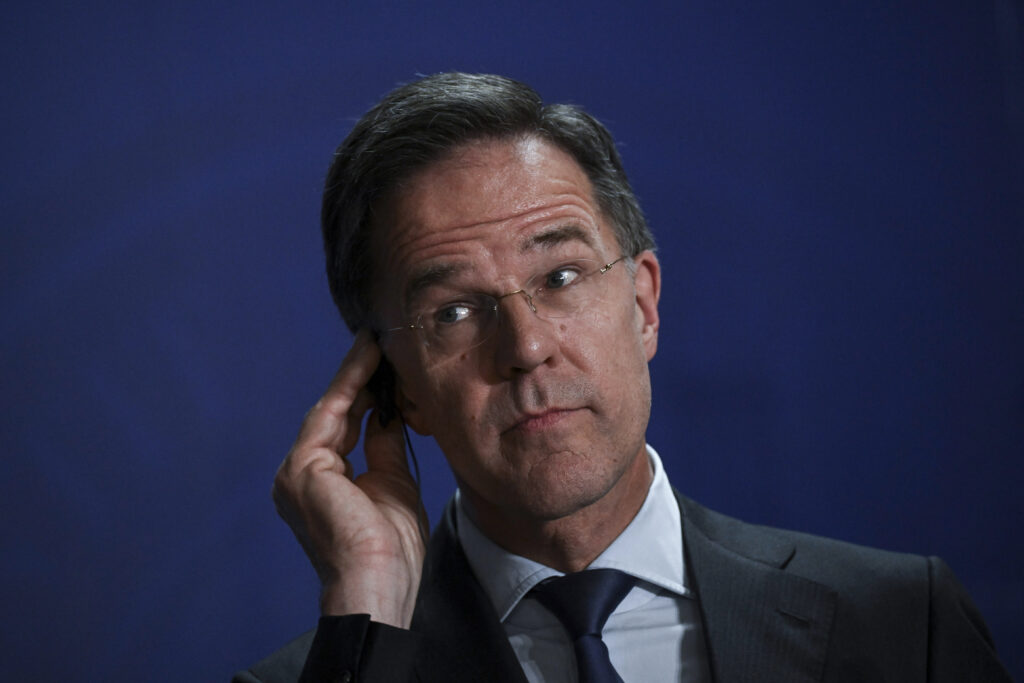
NATO Secretary General Mark Rutte visits the White House Thursday seeking to convince President Donald Trump to maintain US commitment to the transatlantic alliance and to Ukraine.Dubbed the “Trump whisperer” for his ability to manage the mercurial US leader, the former Dutch prime minister will face a tough job of convincing Trump that NATO allies are paying enough for their own defense.Trump has repeatedly called into question whether the United States would defend allies who do not boost their defense spending, causing major jitters as Europe faces an increasingly aggressive Russia on its doorstep.Rutte will also be trying to smooth over recent tensions between Trump and Ukraine, as a top US negotiator arrived in Moscow to deliver a ceasefire proposal following a swift pivot by Trump towards Russia.”I expect key messages will be around how much Europe is stepping up on spending, how we all need to do more on defense production, and welcoming progress in pursuit of peace for Ukraine,” Rutte’s spokeswoman said.Trump will host Rutte in the Oval Office before the pair have lunch at the White House. The NATO chief will also meet senior Trump administration officials and members of the US Congress.The visit is Rutte’s first meeting with Trump since the US president began his second term on January 20, and comes at a critical time.Trump is famously skeptical about whether the United States — by far the biggest military in the transatlantic alliance and ultimate guarantor of Europe’s security since World War II — should continue in that role.- Defense spending -The US president’s sudden decision to start talks with Russian counterpart Vladimir Putin in February on the Ukraine war further stunned and worried US allies about his commitment.He has continued to sow doubts in recent days, saying of allies a week ago that “if they don’t pay, I’m not going to defend them.”Trump has previously called for allies to lift annual defense spending to five percent of GDP from the current two-percent target, which NATO expected only 23 of 32 members to meet last year.He has also questioned whether allies would defend the United States — despite the fact that the only time NATO has invoked its Article 5 collective defense measure was after the 9/11 attacks on the United States in 2001.NATO allies will be looking to Rutte, a veteran of European diplomacy, to convince Trump that the alliance is worth sticking by.Rutte is widely credited with rescuing a 2018 NATO summit by talking Trump around on defense spending during his first term.He also showed typical Dutch directness by brazenly contradicting the president in a previous visit to the Oval Office that same year.In an exchange that later went viral, Trump claimed it would be “positive” whether or not the EU and the United States managed to clinch a trade deal.The visiting Rutte scoffed out loud and interjected: “No! It’s not positive. We have to work something out.”

US envoy in Moscow to present Ukraine truce plan

US envoy Steve Witkoff arrived in Moscow on Thursday to present Washington’s plan for a 30-day ceasefire in Ukraine, a source said, as the Kremlin warned against any “hasty” deal that would give Kyiv a respite from fighting.Ukraine agreed to the plan during talks with US officials in Saudi Arabia on Tuesday, as US President Donald Trump pushes for a speedy end to the more than three-year conflict.But even before meeting Witkoff, an aide to Russian President Vladimir Putin said the document only took Ukraine’s position into account, and that Russia needed input as well.”It will be necessary to work on it, think and take into account our position,” Yuri Ushakov told Russian state TV, saying Putin would probably give his verdict on the deal later.Russia has been grinding forward on the battlefield for over a year, and claimed on Thursday to have driven Ukrainian forces from the town of Sudzha in Russia’s Kursk region.Trump has expressed optimism that his team can secure a ceasefire, despite Moscow’s battlefield gains.”If we can get Russia to stop, then we have a full ceasefire. And I think it’ll never go back to war,” Trump told reporters on Wednesday.Ukrainian President Volodymyr Zelensky on Thursday said the fact Russia was yet to respond officially to the idea showed it did not want peace.”Regrettably, for more than a day already, the world has yet to hear a meaningful response from Russia to the proposals made,” he said on social media.”This once again demonstrates that Russia seeks to prolong the war and postpone peace for as long as possible.”- ‘Temporary breather’ -Setting out its red lines ahead of the talks, Russia ruled out foreign peacekeepers in Ukraine and raised the possibility of relief from sanctions imposed on it.Moscow wants any settlement to be long-term and to secure its interests, rather than a temporary deal that would give Ukraine a “breather”, Ushakov said.”That is what we are striving for. A peaceful settlement that takes into account the legitimate interests of our country,” he told a state TV reporter.Ushakov called the 30-day ceasefire proposal a “hasty” plan that “is not in favour of a long-term settlement”.”It would be nothing more than a temporary breather for the Ukrainian military,” he said following a call with US National Security Advisor Mike Waltz.Russia has also ruled out accepting foreign peacekeepers in Ukraine as part of a ceasefire or long-term security guarantee for Kyiv.That could go against an ask Ukraine has made of European allies to deploy military “contingents” on its territory once the conflict ends to protect against future attacks from Russia.”It is absolutely unacceptable to us that army units of other states are stationed in Ukraine under any flag,” Russian foreign ministry spokeswoman Maria Zakharova said in a briefing.”Be it a foreign contingent and a military base… all this would mean the involvement of these countries in a direct armed conflict with our country.”- Battle for Kursk -Russia, meanwhile, claimed rapid advances in the Kursk region — where Kyiv launched a cross-border assault last August and has held territory since.The Russian defence ministry said it had “liberated” Sudzha along with two other settlements in the border region.Sudzha, home to around 5,000 people before the fighting, was the largest settlement Kyiv seized after it launched its shock assault into Russia.The Kursk region was one of Kyiv’s few bargaining chips in swapping land with Russia, which has occupied around a fifth of Ukraine since it took Crimea in 2014 and launched its full-scale assault in February 2022.Ukraine now risks losing its grip on the border region entirely, ceding dozens of square kilometres (miles) in the past seven days, according to military bloggers.Ukraine’s commander-in-chief hinted late Wednesday some of its troops were pulling back in the region.Putin visited the region on Wednesday for the first time since Ukraine launched its incursion.Dressed in battle fatigues, he expressed hope his army would “fully liberate” areas under Kyiv’s control.Moscow’s rapid advances in the region came after the US paused intelligence sharing and security support for Ukraine, although analysts and officials cautioned against making a direct link.Washington said it had resumed its support for Kyiv ahead of the talks with Moscow.Both Moscow and Kyiv kept up hostilities into Thursday.Russia downed 77 Ukrainian drones overnight, its defence ministry said, while Ukraine’s air force said it downed dozens of drones fired at multiple regions.

Rubio meets Canadian FM as Ukraine, trade war dominate G7

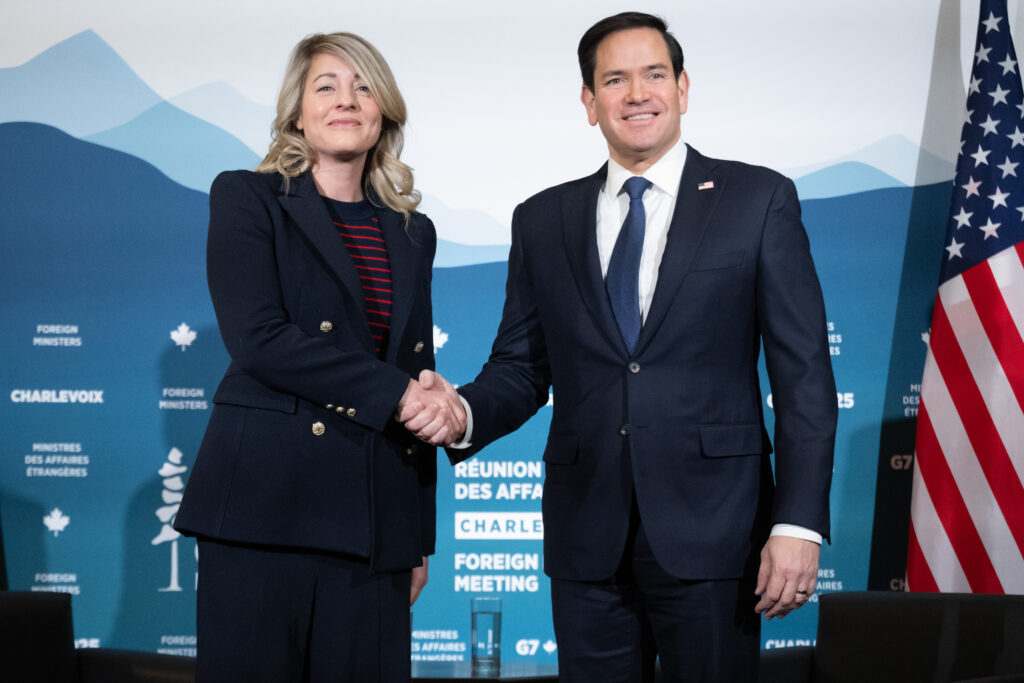
US Secretary of State Marco Rubio met his Canadian counterpart Thursday as part of the highest-level US visit to Washington’s northern neighbor since threats launched by President Donald Trump, whose trade war and bid for a Ukraine ceasefire dominated a Group of Seven meeting.Canada, the current president of the club of powerful economies, is gathering G7 foreign ministers for three days of talks inside a rustic hotel in snow-covered Charlevoix, on the banks of the St. Lawrence River in Quebec. Once broadly unified, the G7 — Britain, Canada, France, Germany, Italy, Japan and the United States — has been rattled since the return of Trump, who has reached out to Russia and slapped punishing trade tariffs on close allies.Before the full talks, Canadian Foreign Minister Melanie Joly met separately with Rubio. The two exchanged pecks on the cheek and shook hands before sitting next to US and Canadian flags standing at equal stature. They did not respond to questions.Trump has taunted Canada by saying it should be absorbed into his country as the 51st state. Joly, ahead of her meeting with Rubio, told reporters: “Canadian sovereignty is not negotiable.”Rubio on Wednesday defended Trump’s tone but said he was not planning to discuss “how we’re going to take over Canada” at the G7 talks.Rubio took a circuitous route to the United States’ northern neighbor from Jeddah in Saudi Arabia, where Ukraine agreed to a US proposal for a 30-day ceasefire with Russia.Rubio has said he will push the G7 to draft a statement that avoids “antagonistic” language toward Russia.Diplomats said that no other G7 country was aligned with the United States but that the group was looking at a formulation that could please all sides, such as endorsing the ceasefire proposal. Trump stunned allies, and led Europeans to ramp up discussion on a defense future without the United States, by berating Ukrainian President Volodymyr Zelensky as insufficiently grateful and cutting off aid vital to Kyiv since the Russian invasion of 2022.The United States restored assistance after the Jeddah agreement on Tuesday, with Rubio saying the ball was now in Moscow’s court.Russia appeared to throw cold water on the proposal on Thursday, with top Kremlin aide Yuri Ushakov saying it would only offer a “temporary breather” to Ukraine.British Foreign Minister David Lammy said the G7 needs to focus on “ensuring Ukraine is in the strongest possible position to secure a just and lasting peace.”Joly said she expected her talks with Rubio will be centered on “Ukraine and the ceasefire that’s on the table.”- Trade wars -The G7 meeting came just as Trump’s sweeping 25-percent tariffs on all steel and aluminum imports came into effect Wednesday, prompting immediate retaliation from major US trading partners. The European Union swiftly unveiled counter-tariffs hitting about $28 billion of US goods in stages from April, while Canada announced additional levies on $20.7 billion of American products from Thursday.Canada has previously imposed 25-percent tariffs on $20.8 billion of American goods in response to US levies on certain Canadian imports. Joly said she intends to raise the issue of tariffs in “every single meeting” at the G7. Rubio said he expected his counterparts to set aside any frustration over Trump’s trade policies to work on shared goals. The steel and aluminum tariffs are anchored to national security concerns, he said Wednesday. “Every country in the world we expect will act in their national interest,” he added. “I think it is quite possible that we could do these things and at the same time deal in a constructive way with our allies and friends,” Rubio said. “That’s what I expect out of the G7 and Canada.”The three-day meeting in Charlevoix will also touch on China and the Middle East, among other subjects. It comes ahead of a G7 leaders’ summit in the Canadian province of Alberta in June.

Trump threatens 200% tariff on wine, champagne from France, other EU countries

US President Donald Trump on Thursday threatened to impose 200-percent tariffs on wine, champagne and other alcoholic products from France and other European Union countries in retaliation against the bloc’s planned levies on US-produced whiskey.”If this Tariff is not removed immediately, the U.S. will shortly place a 200% Tariff on all WINES, CHAMPAGNES, & ALCOHOLIC PRODUCTS COMING OUT OF FRANCE AND OTHER E.U. REPRESENTED COUNTRIES,” he posted on his Truth Social platform.Trump has launched trade wars against competitors and partners alike since taking office, wielding tariffs as a tool to pressure countries on commerce and other policy issues.On Wednesday, the European Union unveiled tariffs countering US moves on steel and aluminum, hitting some $28 billion of US goods in stages from April. Trump on Thursday renewed his criticism of the bloc, singling out a 50-percent levy on US whiskey as being “nasty.”He termed the EU “one of the most hostile and abusive taxing and tariffing authorities in the World” and said it “was formed for the sole purpose of taking advantage of the United States.”Uncertainty over Trump’s trade plans and worries that they could trigger a recession have roiled financial markets. But US stocks regained some ground Wednesday even as some Asia markets retreated.US distillers have called the EU’s levy on American whiskey “deeply disappointing.””Reimposing these debilitating tariffs at a time when the spirits industry continues to face a slowdown in US marketplace will further curtail growth and negatively impact distillers and farmers in states across the country,” said Distilled Spirits Council head Chris Swonger in a statement on Wednesday.A 2018 imposition of similar tariffs led to a 20-percent drop in American whiskey exports to the European Union.The lifting of that measure in 2021 saw US whiskey exports surge by nearly 60 percent, industry data showed.It was not immediately clear what legal justification Trump would rely on to hike tariffs on European alcohol.Trump’s tariff wars have taken aim at Canada, Mexico and China over allegations they are not doing enough to curtail fentanyl smuggling or illegal immigration into the United States.He has also taken aim at specific commodities, including steel, aluminum and copper.Some countries, much like the EU, have imposed retaliatory tariffs on the United States in response to Trump’s moves to address what he terms unfair trade imbalances.China has vowed “all necessary measures” in response to US measures, and has already imposed duties of 10-percent and 15-percent targeting US agriculture products ranging from soybeans to chicken.European Commission chief Ursula von der Leyen on Wednesday maintained that the EU’s retaliation, affecting products ranging from bourbon to motorbikes, was “strong but proportionate.”

US negotiators to set out Ukraine truce plan to Russia

US negotiators travelled to Russia on Thursday to present their plan for a 30-day ceasefire in Ukraine, but Moscow warned in advance it would refuse any temporary deal that gave Kyiv a “breather”.Ukraine agreed to the plan during talks with US officials in Saudi Arabia on Tuesday, as US President Donald Trump pushes for a speedy end to the more than three-year conflict.Russia has been grinding forward on the battlefield for over a year, claiming on Thursday to have driven Ukraine from the town of Sudzha in its Kursk region.Russian President Vladimir Putin will likely give his assessment of the US and Ukrainian-backed proposal later on Thursday, Kremlin aide Yuri Ushakov said.A plane linked to Trump’s envoy Steve Witkoff landed earlier at Vnukovo-2, a Moscow airport terminal often used to receive foreign dignitaries, Russian news agencies reported.”Negotiators are flying in and indeed contacts are scheduled,” Kremlin spokesman Dmitry Peskov said, without saying who was part of the US team.Trump has expressed optimism that his team can secure a ceasefire, even as Kyiv and Moscow trade almost daily aerial attacks.”People are going to Russia right now as we speak. And hopefully we can get a ceasefire from Russia,” he told reporters on Wednesday.Ukrainian President Volodymyr Zelensky on Thursday said the fact Russia was yet to respond to the idea showed it did not want peace.”Regrettably, for more than a day already, the world has yet to hear a meaningful response from Russia to the proposals made,” he said on social media.”This once again demonstrates that Russia seeks to prolong the war and postpone peace for as long as possible.”- ‘Temporary breather’ -Setting out its red lines ahead of the talks, Russia ruled out foreign peacekeepers in Ukraine and mooted potential sanctions relief.Moscow wants any settlement to be long-term and secure its interests, rather than a temporary deal that would give Ukraine a “breather”, Ushakov said.”That is what we are striving for. A peaceful settlement that takes into account the legitimate interests of our country,” Kremlin aide Yuri Ushakov told a state TV reporter.Ushakov called the 30-day ceasefire proposal a “hasty” plan that “is not in favour of a long-term settlement”.”It would be nothing more than a temporary breather for the Ukrainian military,” he said following a call with Waltz.Russia has also ruled out foreign peacekeepers being deployed to Ukraine as part of a ceasefire or long-term security guarantee for Kyiv.Ukraine has asked its European allies to deploy military “contingents” on its territory once the conflict ends to protect against future attacks from Russia.”It is absolutely unacceptable to us that army units of other states are stationed in Ukraine under any flag,” Russian foreign ministry spokeswoman Maria Zakharova said in a briefing.”Be it a foreign contingent and a military base… all this would mean the involvement of these countries in a direct armed conflict with our country,” she added.- Battle for Kursk -Russia meanwhile claimed rapid advances in the Kursk region — where Kyiv launched a cross-border assault last August.The Russian defence ministry said it had “liberated” Sudzha along with two other settlements in the border region.Sudzha, home to around 5,000 people before the fighting, was the largest settlement Kyiv seized after it launched its shock assault into Russia.The Kursk region was one of Kyiv’s few bargaining chips in swapping land with Russia, which has occupied around a fifth of Ukraine since it took Crimea in 2014 and launched its full-scale assault in February 2022.Ukraine now risks losing its grip on the border region entirely, ceding dozens of square kilometres in the past seven days, according to military bloggers.Ukraine’s commander-in-chief hinted late Wednesday some of its troops were pulling back in the region.Putin visited the region on Wednesday for the first time since Ukraine launched its incursion.Dressed in battle fatigues, he expressed hope his army would “fully liberate” areas under Kyiv’s control.Moscow’s rapid advances in the region came after the US paused intelligence sharing and security support for Ukraine, although analysts and officials have cautioned against making a direct link.Washington resumed its support for Kyiv ahead of the talks with Moscow.Both Moscow and Kyiv kept up hostilities into Thursday.Russia downed 77 Ukrainian drones overnight, its defence ministry said, while Ukraine’s air force said it downed dozens of drones fired at multiple regions.

Trump slammed for using ‘Palestinian’ as slur against top Democrat

US President Donald Trump has been condemned by Jewish and Muslim groups for using the term “Palestinian” as a slur in an attack on the country’s highest-ranking elected Jewish official.In comments to reporters in the Oval Office on Wednesday, Trump said Democratic Senator Chuck Schumer had “become a Palestinian.””He used to be Jewish. He’s not Jewish anymore, he’s a Palestinian,” Trump said.Schumer, a long-serving Democratic senator from New York, has resisted Republican pressure this week to back their stopgap plan to avoid a government shutdown.The Senate minority leader is a longtime advocate for Israel who has voiced support for a two-state solution to the Israeli-Palestinian conflict and also criticized Israel’s conduct of the war in Gaza.Jewish and Muslim organizations both slammed  Trump’s comments as offensive.”A President has many powers, but none of them include deciding who is and isn’t Jewish. Doing so, and using ‘Palestinian’ as a slur, are both beneath any (US president),” the Jewish activist group, the Anti-Defamation League said in a statement on X.Nihad Awad, the executive director of the Council on American-Islamic Relations (CAIR), called on Trump to apologize, adding that his use of the term “Palestinian” as a racial slur was both “offensive and beneath the dignity of his office.”Halie Soifer, CEO of the Jewish Democratic Council of America, also condemned Trump’s statements, calling them “abhorrent.””Since taking office, he’s elevated antisemitic conspiracy theorists & attacked our democracy. His rhetoric, agenda, and alignment with right-wing extremists are endangering American Jews,” Soifer wrote on X.Schumer’s office did not immediately reply to an AFP request for comment.Last month, Trump also referred to Schumer as Palestinian when the president proposed a widely criticized plan for the United States to take over the Gaza Strip and relocate Palestinians.And ahead of last year’s election, Trump accused Schumer of being a “proud member of Hamas.”

Games industry still a hostile environment for many women

Five years on from a first wave of harassment scandals that rocked the world of gaming, multiple women working in the industry tell AFP they have seen or experienced sexism in the workplace, fearing economic hardship in the sector will lead to backsliding.”I have experienced circumstances of harassment, circumstances of disrespect, belittling, and even to the point of… getting shut down,” said Elaine Gomez, 34, a freelance developer from New Jersey.Big names in gaming such as France’s Ubisoft (publisher of the “Assassin’s Creed” saga) or US-based Activision Blizzard (“Call of Duty”) have seen women come forward about sexist behaviour in the workplace in recent years.Three former senior Ubisoft executives will face trial in France over harassment allegations in June.Two of them have already been fired for serious misconduct, while the group’s onetime number two, former creative director Serge Hascoet, resigned.Ubisoft told AFP it has “changed our HR organisation and misconduct handling processes”.Among these was “creating a specialised employee relations team dedicated to helping prevent and resolve incidents”.For its part, Activision Blizzard did not respond to AFP’s questions about anti-harassment measures by time of publication.”For all kinds of sexist behaviour, there’s still work to do in prevention and raising awareness,” said one harassment specialist at a major French studio who asked to remain anonymous.- ‘Tip of the iceberg’ -The specialist said she had seen employees come to her only “four or five times” in the space of a year, all of them concerning sexist incidents.But that represents “the tip of a much bigger iceberg”, she believes.Many women dare not speak up in an industry that remains largely dominated by men.Although women accounted for around half of gamers worldwide in 2023, according to gaming data specialists Newzoo, they made up only around one-quarter of studio staff according to the Women in Games collective.Game development employs more than 110,000 people in Europe, 105,000 people in the United States and 35,000 in Canada, according to the European Games Developer Federation (EGDF), the US Entertainment Software Association (ESA) and Canada’s trade body.”Things have got better,” said Morgane Falaize, who heads Women in Games’ French chapter.She points to the growth of women employees from just 15 percent in 2018 to 24 percent in 2023 in the country.The overall figure does mask imbalances in different departments, with women close to half of marketing and communications staff but less than 10 percent in so-called “technical” jobs like game design and coding.Among managers, the proportion of women was just 20 percent in 2022.”It’s not that we don’t want women, it’s that there are no female candidates” for senior roles, said Marianne Barousse, who runs a 200-strong team at mobile games developer Gameloft in Montreal.”I myself have been the victim of sexism from an employee who had trouble taking orders from a woman,” said Emma Delage, 35, head of independent game studio Camelia in southern French city Montpellier.Delage added that she now imposes “zero tolerance” for sexism.She remembered being compared to a prostitute when soliciting potential investors for an upcoming game — a comparison she was “not sure that male people who have raised money have faced”.In those same meetings with funders, “we’re taken less seriously than men,” said Marie Marquet, co-founder of French studio Splashteam, who has frequently encountered potential backers more comfortable addressing her male business partner in meetings.”Investors are reluctant to put money into businesses run by women,” said Tanya X. Short, head of Montreal-based independent studio Kitfox Games.The Canadian city, a global hub for games development, was also at the heart of the scandal that hit Ubisoft in summer 2020.Employees at the French group’s Montreal studio said they endured a “climate of terror” stemming from sexist behaviour and discrimination.”There are people in the industry who are still struggling to adjust, it’s palpable,” said Marie Marquet.But she saw hope in the “new generations” coming up in game development.- ‘Survival instinct’ -More immediately, the sugar rush stemming from coronavirus lockdowns has given way to an economic crisis that could sweep away some of the progress made on games industry sexism in recent years.”There’s almost no jobs being advertised any more,” said one woman working at a Paris games studio, speaking on condition of anonymity.”If I open my mouth too far and it backfires, there’s no fallback”.As the industry endures hard times, “women are over-represented in jobs at the bottom of the hierarchical ladder” and therefore often first in line when companies slash positions, said Thomas Rodriguez, a spokesman for French games industry union STJV.Belt-tightening at major groups could also mean less resources for diversity efforts, often targeted by the most conservative fringes of gamers on social networks like X.New Jersey-based Gomez said she was troubled by the rolling up of jobs and departments dealing with diversity, equity and inclusion (DEI) in the United States.Still a relatively compact industry — employing just 12-15,000 people in France, for example — games development is “a small world” where speaking out can ruin a reputation, Women in Games’ Falaize said.”I’ve already been told ‘careful what you do, because I can get you blacklisted,” said Marquet.”Most women don’t want to cause trouble” in the gaming industry, said one 29-year-old independent developer, speaking on condition of anonymity.”It’s a kind of survival instinct for us,” the woman added.She said she herself had chosen not to bring legal action over “derogatory language” and a non-consensual kiss while working at a major French studio.”I’m even thinking about quitting gaming to find better working conditions,” the developer added.

Ukraine ceasefire bid, trade war to dominate as G7 diplomats meet

US Secretary of State Marco Rubio is set to meet his Canadian counterpart at a G7 gathering Thursday, but discussion of American annexation threats has been ruled off-limits at talks expected to be dominated by efforts to agree a ceasefire in Ukraine. Rubio arrived in the town of Charlevoix on the banks of the St. Lawrence River on Wednesday for meetings with foreign ministers from the club of the world’s industrialized democracies. He is expected to brief on the US-led effort to pause three years of bloodshed in the Russia-Ukraine war, after meeting envoys from Kyiv in the Saudi port town of Jeddah earlier in the week. President Donald Trump has voiced hope that US negotiators in Moscow will be able to secure a ceasefire, with officials saying the United States wants Russia to agree to an unconditional halt to hostilities.The Kremlin has said it was awaiting details of a proposed truce, while Ukraine’s President Volodymyr Zelensky said his country was ready to embrace a deal, and the United States had indicated it would issue a “strong” response if Russia refuses an accord.British Foreign Minister David Lammy said the G7 needs to focus on “ensuring Ukraine is in the strongest possible position to secure a just and lasting peace.”Canadian Foreign Minister Melanie Joly said she expected her talks with Rubio will be centered on “Ukraine and the ceasefire that’s on the table.”- Canadian sovereignty ‘not negotiable’ -But when asked about Trump’s repeated comments about his desire to absorb Canada into the United States, Joly told reporters “Canadian sovereignty is not negotiable.” During a stop in Ireland en route to Canada, Rubio said the G7 “isn’t a meeting about how we’re going to take over Canada.”Trump’s actions since returning to power in January have shaken US relations with traditional allies. His sweeping 25 percent tariffs on all steel and aluminum imports came into effect Wednesday, prompting immediate retaliation from major US trading partners. The European Union swiftly unveiled counter-tariffs hitting about $28 billion of US goods in stages from April, while Canada announced additional levies on $20.7 billion of American products from Thursday.Canada has previously imposed 25 percent tariffs on $20.8 billion of American goods in response to US levies on certain Canadian imports. Joly said she intends to raise the issue of tariffs in “every single meeting” at the G7. Rubio said he expected his counterparts from Britain, Canada, France, Germany, Italy and Japan to set aside any frustration over Trump’s trade policies to work on shared goals. The steel and aluminum tariffs are anchored to national security concerns, he said Wednesday. “Every country in the world we expect will act in their national interest,” he added. “I think it is quite possible that we could do these things and at the same time deal in a constructive way with our allies and friends,” Rubio said. “That’s what I expect out of the G7 and Canada.”The three-day meeting in Charlevoix will also touch on the G7’s role in dealing with China and the Middle East, among other subjects. It comes ahead of a G7 leaders’ summit in the Canadian province of Alberta in June.

Trump optimistic about potential Ukraine ceasefire

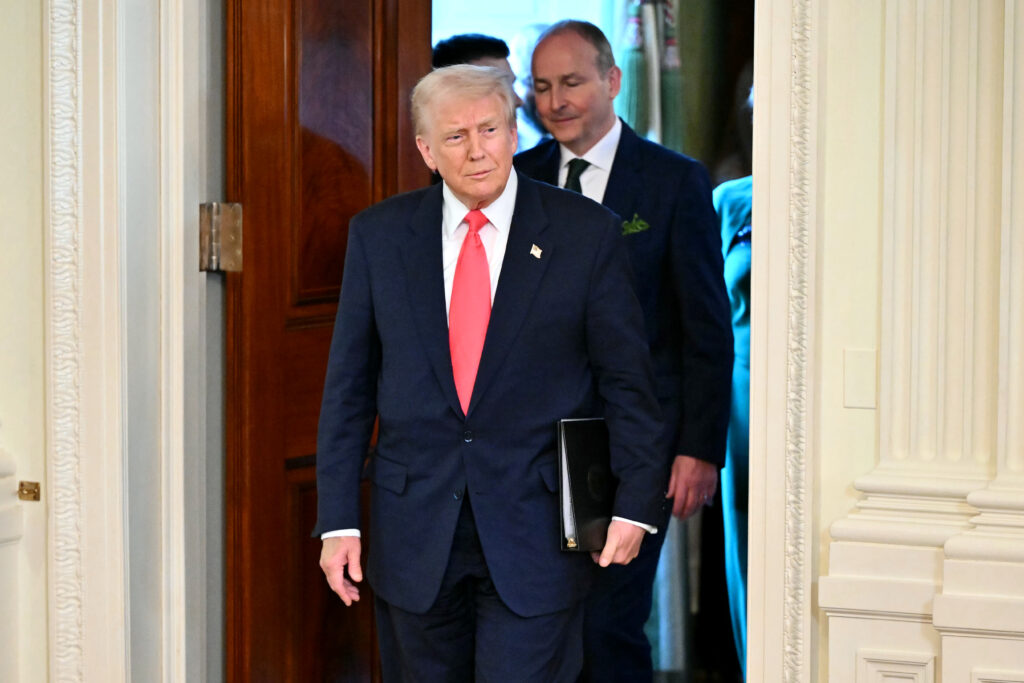
President Donald Trump expressed optimism that US negotiators could secure a ceasefire in the Ukraine war, even as Kyiv and Moscow launched fresh aerial attacks early Thursday.The United States wants Russia to agree to an unconditional halt to hostilities, officials said Wednesday. The Kremlin said it was awaiting details of a US-Ukrainian proposal agreed this week, and gave no indication of its readiness to stop fighting that has left tens of thousands dead in the past three years.President Vladimir Putin visited Russian troops who have made gains against Ukrainian forces battling to keep Russian territory seized in an offensive last year.Ukraine’s President Volodymyr Zelensky said his country was ready to embrace a deal, and the United States had indicated it would issue a “strong” response if Putin refuses an accord.”People are going to Russia right now as we speak. And hopefully we can get a ceasefire from Russia,” Trump told reporters during an Oval Office meeting with Ireland’s prime minister Micheal Martin.The White House said that Trump’s envoy Steve Witkoff, a mediator in the Gaza and Ukraine wars, would be in Moscow this week.Trump on Wednesday did not mention whether he would speak with Putin, but added that there had been “positive messages” from Moscow, saying: “I hope he’s going to have a ceasefire.”- ‘Horrible bloodbath’ -Trump said that if the fighting could be halted, “I think that would be 80 percent of the way to getting this horrible bloodbath finished.”US Secretary of State Marco Rubio said Washington wanted Moscow’s agreement with no strings attached. “That’s what we want to know — if they’re prepared to do it unconditionally,” Rubio said on a plane heading to a G7 meeting in Canada.”If the response is, ‘yes’, then we know we’ve made real progress, and there’s a real chance of peace. If their response is ‘no’, it would be highly unfortunate, and it’ll make their intentions clear,” he added.Russian news agencies reported earlier that the heads of the CIA and Russia’s SVR foreign intelligence agency had held their first phone call in several years.Rubio was to give an update on the initiative at the G7 meeting in Charlevoix, Canada. The defense ministers of France, Britain, Germany, Italy and Poland met in Paris to discuss how they could support Ukraine, and any ceasefire.While the Kremlin made no immediate comment on the US-Ukraine proposal — agreed at a meeting in Saudi Arabia on Tuesday — the Russian foreign ministry said earlier this month that a temporary ceasefire would be unacceptable.Trump said “devastating” sanctions were possible if Russia refused a deal.”I can do things financially that would be very bad for Russia. I don’t want to do that because I want to get peace,” Trump said.- ‘None of us trust the Russians’ -The latest dramatic diplomatic swing came less than two weeks after Trump kicked Zelensky out of the White House complaining about the Ukrainian leader’s lack of gratitude for US assistance.Trump halted military aid and intelligence sharing with Kyiv, but that resumed after the truce proposal was agreed on Tuesday.Trump had previously said he was ready to welcome Zelensky back to the White House and speculated he could speak with Putin this week.In Kyiv, Zelensky said the United States would pile pressure on Moscow if it did not accept a ceasefire.”I understand that we can count on strong steps. I don’t know the details yet but we are talking about sanctions and strengthening Ukraine,” Zelensky told reporters.”Everything depends on whether Russia wants a ceasefire and silence, or it wants to continue killing people,” the Ukrainian leader added.He said Ukrainians had no confidence that fighting would stop. “I have emphasized this many times, none of us trust the Russians.”Ukraine is increasingly suffering on the battlefield, losing ground in the east and south of the country, where officials said eight people were killed on Wednesday.Russia has also reclaimed territory in its western Kursk region, pushing back Ukrainian troops who staged a shock offensive last August.Putin was shown on Russian television visiting troops in Kursk on Wednesday.”I am counting on the fact that all the combat tasks facing our units will be fulfilled, and the territory of the Kursk region will soon be completely liberated from the enemy,” Putin said.Russian chief of staff General Valery Gerasimov said that 430 Ukrainian troops had been captured and Putin called them “terrorists.”Ukraine military commander-in-chief General Oleksandr Syrsky indicated that some forces in Kursk were pulling back to “more favorable positions.”Russia downed 77 Ukrainian drones overnight, its defence ministry said Thursday, two days after Kyiv carried out its largest direct strike on Moscow during the three-year war.  Multiple Ukrainian cities were also under attack Thursday morning, with a 42-year-old woman killed in Kherson, according to regional military administration head Roman Mrochko.Authorities in Kyiv and Dnipropetrovsk also reported coming under attack.burs-jc/tym/lb