AFP USA

US, Guyana denounce Venezuelan naval incursion

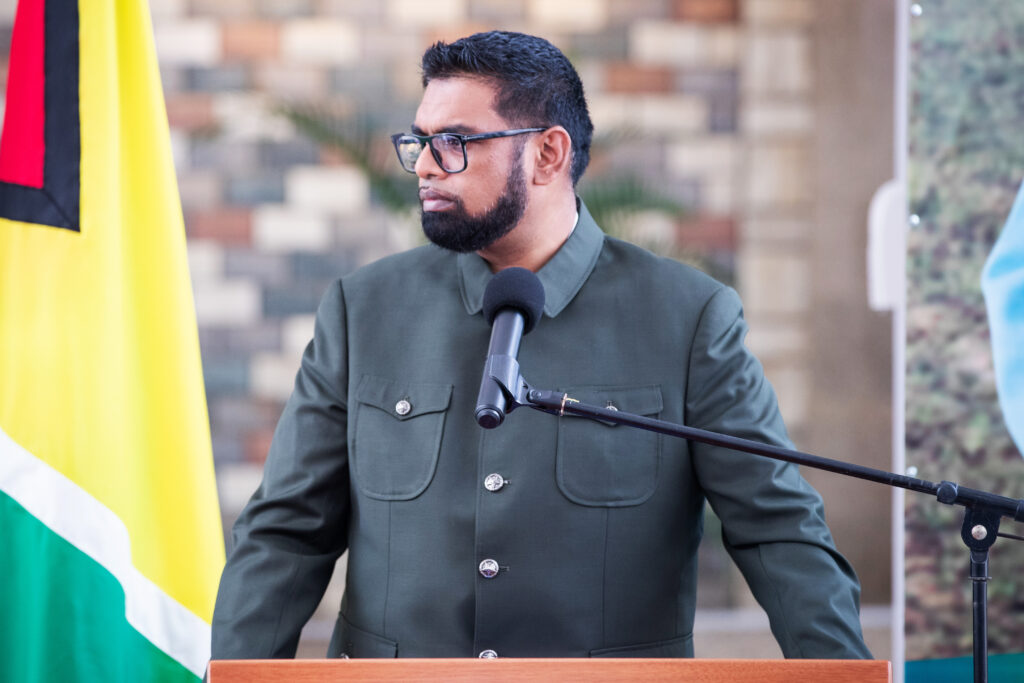
The United States on Saturday denounced what it said were Venezuelan naval vessels “threatening” an ExxonMobil unit in maritime territory claimed by Guyana.The statement, which warned of “consequences” if there were further provocation from Caracas, came hours after Guyanese President Irfaan Ali said a Venezuelan patrol boat had “approached various assets in our exclusive waters” around 7:00 am (1100 GMT).Guyana had “put its international partners on alert,” he said on Facebook.The US State Department warned against any further encroachment.”Venezuelan naval vessels threatening ExxonMobil’s floating production, storage and offloading (FPSO) unit is unacceptable and a clear violation of Guyana’s internationally recognized maritime territory,” said the statement from the department’s US Bureau of Western Hemisphere Affairs.”Further provocation will result in consequences for the Maduro regime,” it warned.English-speaking Guyana, long one of the poorest countries in Latin America, has seen heightened tensions with Venezuela over control of the disputed Essequibo territory, a sprawling region rich in natural resources.Tensions have flared since 2015, after petroleum giant ExxonMobil discovered enormous deposits that gave Guyana, a country of just 800,000 people and with a tiny military, the largest crude oil reserves in the world.The government in Georgetown granted a new contract in April 2024 to ExxonMobil, further fueling tensions.Ali said on Facebook that the floating production vessels were “operating legally within Guyana’s exclusive economic zone.””Guyana remains committed to peace and the rule of law,” he said in a later post.”We will continue to seek diplomatic solutions, but we will not tolerate threats to our territorial integrity.” Venezuela for its part said it “categorically repudiates the unfounded statements” by Ali, claiming he was “blatantly lying” by saying its navy had violated Guyana’s territory.”Those waters are not part of Guyanese territory, since it is a maritime zone pending delimitation in accordance with international law,” a foreign ministry statement said.- Soldiers wounded -Tensions were fanned on February 17 when Guyana said six of its soldiers were wounded when a supply transport was ambushed, allegedly by members of a Venezuelan criminal gang.That happened on the anniversary of the signing of a 1966 agreement between Venezuela and Britain, reached before Guyanese independence, which called for a negotiated solution to the territorial dispute.Guyana, however, insists that an earlier 1899 ruling has fixed the disputed border in its favor.In 2023, Venezuela’s socialist President Nicolas Maduro proposed declaring a Venezuelan province in the disputed territory. Ali and Maduro met amid the heightened tensions in December that year for talks on neutral ground, in Saint Vincent and the Grenadines.They agreed to avoid any use of force, “directly or indirectly.”Weeks after the meeting, Britain sent the patrol ship HMS Trent on a port visit to Georgetown, a gesture Maduro deemed a “provocation and threat by the United Kingdom.” Venezuela then launched a major military exercise in the border region, including more than 5,600 soldiers, F-14 fighter jets, amphibious vessels and patrol boats.
Zelensky defied Trump — and paid price

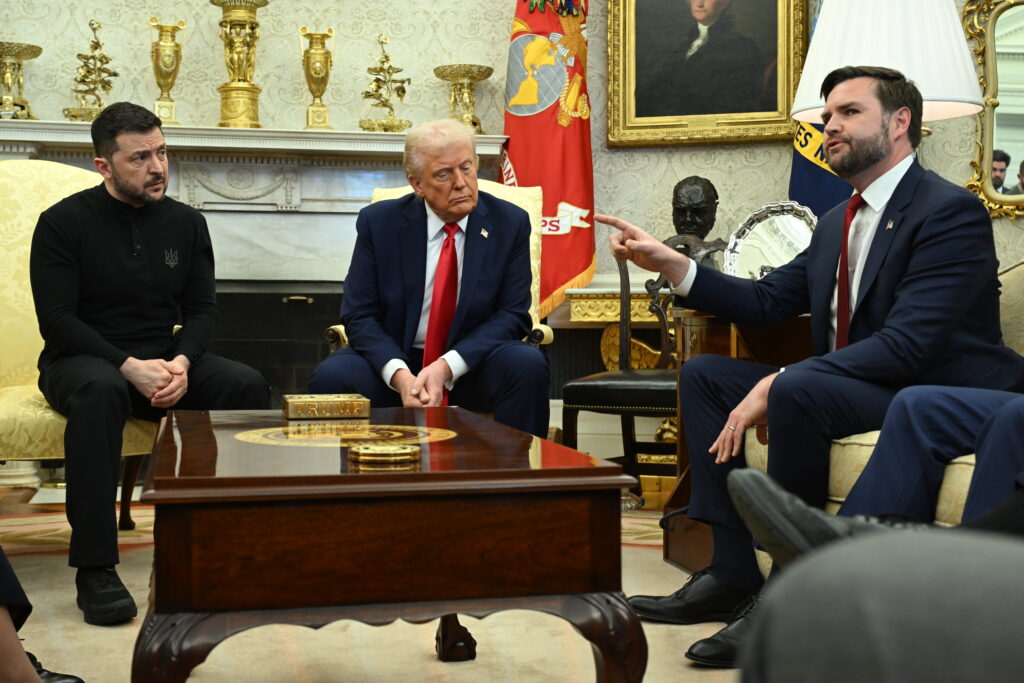
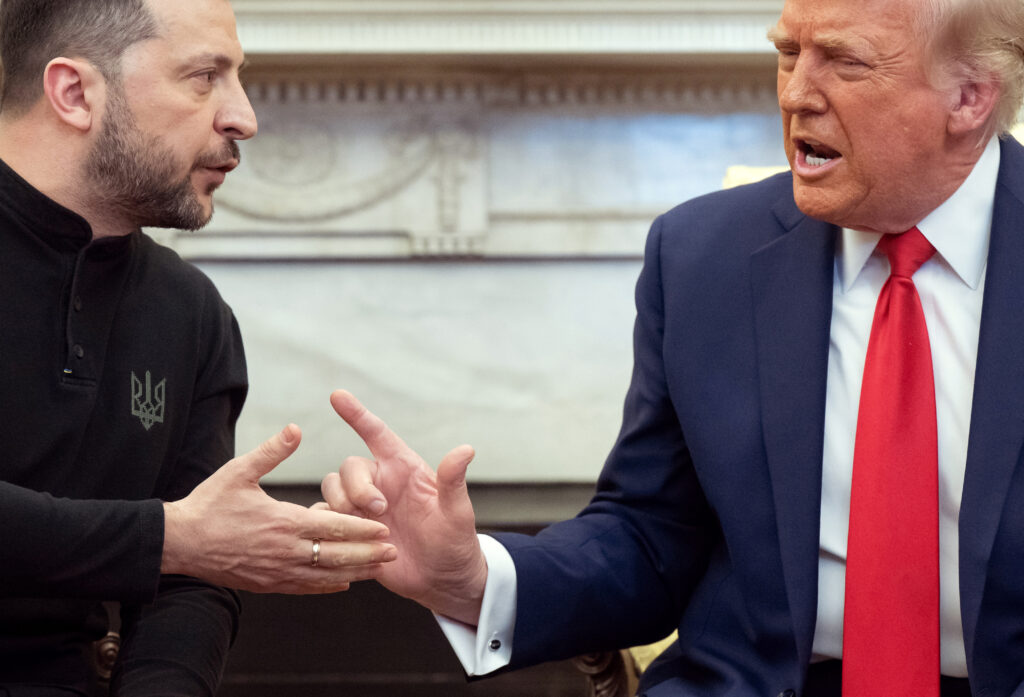
France’s president used charm to deal with Donald Trump. Britain’s prime minister pulled out a royal invitation.But when Ukraine’s Volodymyr Zelensky found himself disagreeing with the combustible US president, he tried bluntness instead — and paid a price.Friday’s shocking scene in the Oval Office blew up a years-long wartime alliance between pro-Western Ukraine and the United States.Zelensky, previously hailed in Washington as a Churchillian figure, was shouted at by Trump and Vice President JD Vance, then ejected from the White House without lunch.And also without signing a US-Ukraine minerals sharing deal, seen as key to American backing for a truce with Russia.Zelensky’s sin? Publicly contradicting Trump on facts of the Ukraine war, then refusing to back down.”He disrespected the United States of America in its cherished Oval Office,” Trump posted on social media.Since returning for a second term, Trump has stretched the norms and even legal boundaries of how much power a US president can wield at home.In foreign policy, he is also making clear that the days of consensus-building are over. Now, it’s whatever he says goes.Nowhere is that shift starker than on Ukraine.Trump’s U-turn — in which Russia is more partner than pariah and Ukraine more a client than ally — brought French President Emmanuel Macron and British PM Keir Starmer rushing to the White House this week.Like Zelensky, they worry that Trump wants to force Kyiv into a peace deal that gives Russian President Vladimir Putin what he wants, while leaving Ukraine broken and insecure.But they both knew they had to cater to Trump’s demand to be treated as a leader who shouldn’t be questioned.Macron engaged Trump in a series of handshakes, knee touching and back slapping that clearly pleased his host. This helped to soften the tension when the French president publicly corrected Trump after he repeated one of his most frequent falsehoods — that Europe gives far less money than Washington to Ukraine and will get it all back.Days later, Starmer heard the same disinformation and also corrected Trump. Yet Starmer already had delighted Trump with a signed invitation from King Charles III to visit Britain.- Angry tag-team -In Zelensky’s case, the stakes were entirely different.Rather than correcting Trump on the relatively minor issue of who’s paying what, he tried to push back on the White House’s entire embrace of an increasingly pro-Moscow narrative.Even before he arrived, Trump and his Republican allies had taken to calling Zelensky a dictator and echoing false Kremlin claims that Russia didn’t start the war.Then, in front of journalists invited for the occasion, Trump insisted to Zelensky that he would have to compromise with Putin and chided him for being hostile to the man Zelensky called a “killer.”When Vance chimed in, calling Zelensky ungrateful and an obstacle to diplomacy, the Ukrainian made his fateful decision to debate.”What kind of diplomacy, JD?” he asked Vance, enumerating diplomatic initiatives over the years that have failed to stop Moscow’s military encroachments.Vance angrily called Zelensky “disrespectful” and before long he and Trump were tag-teaming against their would-be ally.- Would flattery have worked? -Trump’s followers immediately blamed Zelensky.”What kind of dictator would insult President Trump and VP Vance while begging for money to fund a war he could never win?” wrote @GuntherEagleman, a far-right Trump supporter whose real name is David Freeman and has 1.3 million followers on X.Marjorie Taylor Greene, a hardcore Trump supporter in Congress, called Zelensky “arrogant.”Her boyfriend Brian Glenn, who was in the Oval Office as a reporter for right-wing Real America’s Voice television, mockingly asked Ukraine’s president why he wasn’t wearing a suit.”I will wear (a suit) after this war finishes,” Zelensky, who wears military-style outfits, answered wearily.Some analysts said Zelensky should have been more strategic.”The only thing Zelensky should have said in public — no matter what the question — was ‘Thank you, Mr President. Thank you, America,” Fox News commentator and retired general Jack Keane said. “Over and over.”CNN foreign policy expert Fareed Zakaria said Zelensky’s first words should have been that Trump was “a genius.”But for Democratic Senator Chris Murphy, no amount of diplomatic skills or flattery would have saved Zelensky, because Trump was pushing a settlement that “hands Ukraine to Putin” — and Zelensky knew it.The Oval Office was an “ambush,” Murphy wrote on X.

Former governor Cuomo says will run for mayor of New York City

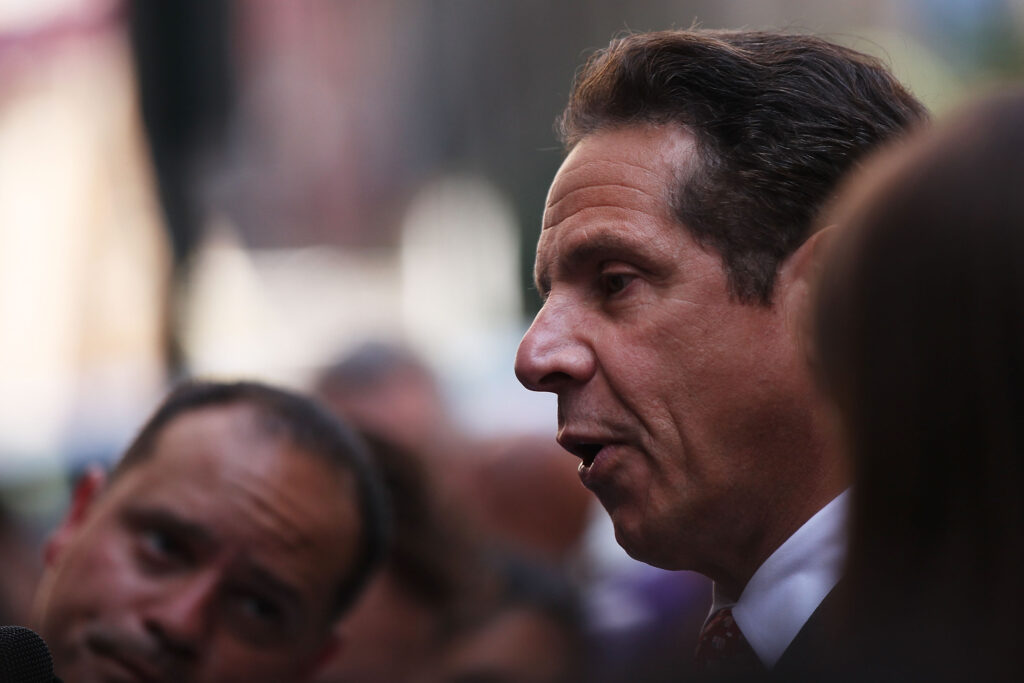
Andrew Cuomo, the former Democratic governor of New York and a man once thought to have his eye on the presidency, said Saturday he will run in November to be mayor of New York City.The current mayor of the largest US city, Eric Adams, is embattled — politically wounded by indictment on corruption charges. Cuomo himself resigned amid scandal in 2021 after 10 years as governor following accusations of sexual harassment. A prosecutor dropped charges against him in January 2022.”Did I make mistakes, some painfully? Definitely, and I believe I learned from them, and that I am a better person for it, and I hope to show you that every day,” the 67-year-old Cuomo said in announcing his candidacy in a video on X.”New York City is in trouble,” he declared, adding that was why he decided to run. “You see it in the empty storefronts, the graffiti, the grime, the migrant influx, the random violence — the city just feels threatening, out of control and in crisis.”He said he had frequently worked with then-New York real estate developer Donald Trump, adding, “I hope President Trump remembers his hometown and works with us to make it better.” The New York Times called Cuomo’s declared candidacy an “audacious comeback attempt” after he resigned in disgrace.Adams, a former police officer elected in 2021 on promises to make the city safer, has seen his popularity plummet as New York struggles with an influx of more than 200,000 migrants.He has promised to work more closely with the Trump administration on migrant issues. Trump’s Justice Department took the unusual step of suspending its corruption case against Adams, prompting suggestions — which both sides deny — of a quid pro quo.Cuomo, the son of New York governor Mario Cuomo, has a long history as one of the Democratic party’s most prominent liberals.He was secretary of housing and urban development under President Bill Clinton, and later served as New York attorney general.   As governor, he signed state legislation to legalize same-sex marriage and medical use of cannabis, as well as one of the country’s strictest gun control laws.

US to deploy nearly 3,000 additional troops to southern border

The United States will deploy nearly 3,000 additional troops to its border with Mexico, bringing the total number of active-duty personnel there to around 9,000, the US military said Saturday.Border security is a key priority for President Donald Trump, who declared a national emergency at the US frontier with Mexico on his first day in office.”Approximately 2,400 soldiers from elements of the 2nd Stryker Brigade Combat Team (SBCT), 4th Infantry Division” will be sent to the border, along with “approximately 500 soldiers from the 3rd Combat Aviation Brigade,” US Northern Command (NORTHCOM) said in a statement.The Stryker unit “will not conduct or be involved in interdiction or deportation operations,” it said, but rather will assist in detection and monitoring, administrative duties and transportation and engineering support, among other tasks.Troops from the aviation unit will meanwhile “assist in the movement of personnel, equipment, and supplies; and provide aerial medical evacuation capabilities,” NORTHCOM said.”These deployments will bring additional agility and capability to further efforts to stop the flow of illegal migrancy and drugs at the southern border,” its commander, General Gregory Guillot said.- Trump says ‘invasion’ is over -The Trump administration has launched what it cast as a major effort to combat illegal migration that has included immigration raids, arrests and deportations.Trump on Saturday hailed his administration’s border security efforts, posting on his Truth Social platform that “the Invasion of our Country is OVER.””Thanks to the Trump Administration Policies, the Border is CLOSED to all Illegal Immigrants. Anyone who tries to illegally enter the U.S.A. will face significant criminal penalties and immediate deportation,” the president wrote.Pentagon chief Pete Hegseth visited the southern frontier at the beginning of last month, vowing that “we are going to get control of this border.”He warned drug cartels that “all options are on the table,” after Trump signed an executive order in January that said they “constitute a national security threat beyond that posed by traditional organized crime.”Hegseth also said that “any assets necessary” from the Defense Department will be used to support “the expulsion and detention of those in our country illegally,” including the US base at Guantanamo Bay in Cuba.Trump unveiled a surprise plan last month to hold up to 30,000 migrants at the base — a facility notorious for abuses against terror suspects detained after the September 11, 2001 attacks — and US forces have held dozens of people there in recent weeks, many of whom have since been deported.

Two lunar landings in a week for NASA’s private Moon fleet

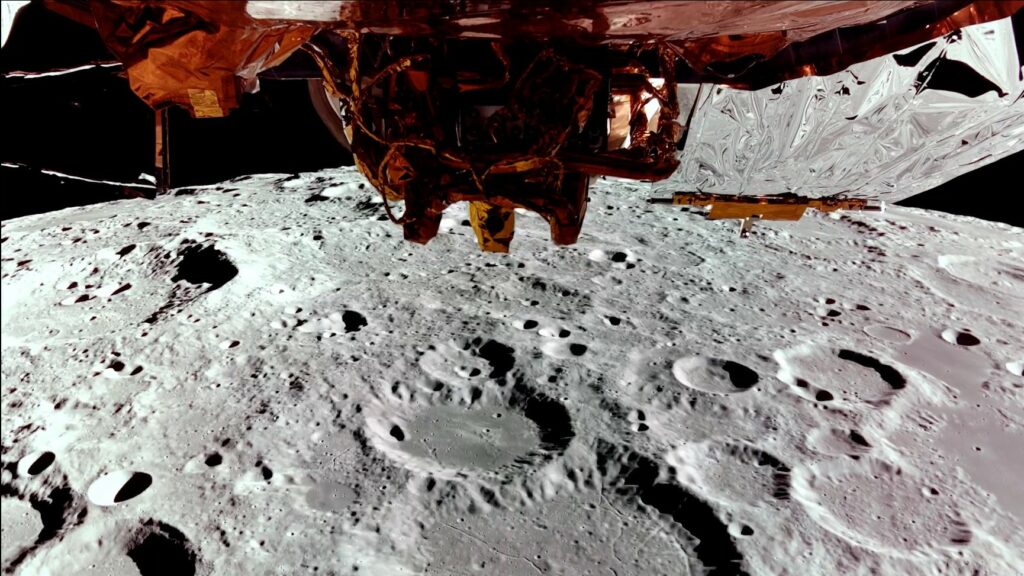
More than fifty years passed between the last Apollo mission and the United States’ return to the lunar surface, when the first-ever private lander touched down last February. Now, starting Sunday, two more missions are set to follow within a single week, marking a bold push by NASA and its industry partners to make Moon landings a routine part of space exploration.First up is Firefly Aerospace’s Blue Ghost Mission 1, nicknamed “Ghost Riders in the Sky.”After launching in January on a 45-day journey, it is targeting touchdown near Mons Latreille, a volcanic feature in Mare Crisium on the Moon’s northeastern near side, at 3:34 am US Eastern time (0834 GMT). Along the way, it has captured stunning footage of the Moon, coming as close as 60 miles (100 kilometers) above the surface.The golden lander, about the size of a hippopotamus, carries ten instruments, including one to analyze lunar soil, another to test radiation-tolerant computing, and a GPS-based navigation system. Designed to operate for a full lunar day (14 Earth days), Blue Ghost is expected to capture high-definition imagery of a total eclipse on March 14, when Earth blocks the Sun from the Moon’s horizon.On March 16, it will record a lunar sunset, offering insights into how dust levitates above the surface under solar influence — creating the mysterious lunar horizon glow first documented by Apollo astronaut Eugene Cernan.- Hopping drone – Blue Ghost’s arrival will be followed on March 6 by Intuitive Machines’ IM-2 mission, featuring its lander, Athena.Last year, Intuitive Machines made history as the first private company to achieve a soft landing on the Moon, though the moment was tempered by a mishap.Coming down too fast, one of the lander’s feet caught on the lunar surface, tipping it over and causing it to rest sideways — limiting its ability to generate solar power and cutting the mission short. This time, the company says it has made key improvements to the hexagonal-shaped lander, which has a taller, slimmer profile than Blue Ghost, and is around the height of an adult giraffe. Athena launched on Wednesday aboard a SpaceX rocket, taking a more direct route toward Mons Mouton — the southernmost lunar landing site ever attempted.It carries an ambitious set of payloads, including a unique hopping drone designed to explore the Moon’s underground passages carved by ancient lava flows, a drill capable of digging three feet beneath the surface in search of ice, and three rovers. The largest, about the size of a beagle, will connect to the lander and hopper using a Nokia cellular network in a first-of-its-kind demonstration.But “Grace,” the hopping drone — named after computing pioneer Grace Hopper — could well steal the show if it succeeds in showing it can navigate the Moon’s treacherous terrain in ways no rover can.- NASA’s private Moon fleet – Landing on the Moon presents unique challenges due to the absence of an atmosphere, making parachutes ineffective. Instead, spacecraft must rely on precisely controlled thruster burns to slow their descent while navigating hazardous terrain.Until Intuitive Machines’ first successful mission, only five national space agencies had accomplished this feat: the Soviet Union, the United States, China, India and Japan, in that order. Now, the United States is working to make private lunar missions routine through NASA’s $2.6 billion Commercial Lunar Payload Services (CLPS) program, a public-private initiative designed to deliver hardware to the surface at a fraction of traditional mission costs.These missions come at a pivotal moment for NASA, amid speculation that it may scale back or even cancel its Artemis lunar program in favor of prioritizing Mars exploration — a key goal of both President Donald Trump and his close advisor, SpaceX founder Elon Musk.

Zelensky says Trump relationship can be repaired after White House row

Volodymyr Zelensky said Friday that his relations with the United States can still be repaired, after President Donald Trump shouted at him in an angry White House meltdown accusing the Ukrainian leader of refusing to make peace with Russia.”Of course,” Zelensky said when asked in a Fox News interview if the relationship with Trump could be salvaged.US-Ukrainian ties are about “more than two presidents,” he said, adding that Ukraine badly needs Washington’s help in the fight against Russia’s far bigger and better-armed military.”It will be difficult without your support,” Zelensky said on Fox — Trump’s favorite news channel.Zelensky’s olive branch came hours after the extraordinary Oval Office scene where the years-long US policy of massive support for Ukraine’s fight against the Russian invasion collapsed in a shouting match.The row saw European leaders scramble to voice support for Ukraine after Zelensky was made to leave the White House early and without signing a minerals-sharing deal seen as vital to an eventual US-brokered truce.During the clash, played out in front of US and international media, Trump and Vice President JD Vance shouted at Zelensky, accusing him of not being “thankful” and refusing to accept their proposed truce terms.”You don’t have the cards right now,” Trump said. “You’re either going to make a deal or we’re out, and if we’re out, you’ll fight it out and I don’t think it’s going to be pretty.”Zelensky departed shortly after, with Trump posting on social media that “he can come back when he is ready for peace.””They were asked to leave the room. Then they had to be asked to leave the building,” Treasury Secretary Scott Bessent, who had been in the Oval Office for the row, told Fox News of the Ukrainians.The president told journalists later Friday that Zelensky was “overplaying his hand” and should agree to end fighting “immediately.”Zelensky, however, refused to apologize, telling Fox News, “I’m not sure that we did something bad.” He did, however, say he wished the exchange had not taken place in front of reporters. US Secretary of State Marco Rubio later on CNN called for Zelensky to “apologize for wasting our time.” – ‘Not alone’ -US allies in Europe — already worried that Trump will force Ukraine to effectively hand victory to Russian President Vladimir Putin — rushed to back Zelensky.”You are not alone,” Polish Prime Minister Donald Tusk said.British Prime Minister Keir Starmer, fresh off his own visit to the White House, said he had spoken to both Trump and Zelensky by phone following the clash and vowed “unwavering support” for Kyiv.Far-right Italian Prime Minister Giorgia Meloni called for a summit “without delay” between the United States, Europe and allies on Ukraine.Trump and Vance are “doing Putin’s dirty work,” top US Senate Democrat Chuck Schumer posted.But Russia was delighted.Former Russian president Dmitry Medvedev called Zelensky an “insolent pig” who had received “a proper slap down in the Oval Office.”Trump’s Republican Party echoed the Russians in blaming Zelensky.Ukraine appeared united behind Zelensky, with its army chief vowing to stand with him while the foreign minister praised his “bravery.” “He did what he must,” 26-year-old Valentyn Burianov told AFP in Kyiv, echoing others in the streets of the Ukrainian capital.- Compromise with ‘killer’? -The meltdown came after Trump said Ukraine will have to make “compromises” in a truce with Russia.Zelensky said there should be “no compromises with a killer on our territory.”After he pointed out that previous Western-backed peace efforts had failed to deter Russian aggression, Vance interrupted and called him “disrespectful.”The session then boiled over, with the Ukrainian leader sitting in evident discomfort as Trump and Vance berated him.Trump has alarmed Kyiv and European allies with his abrupt U-turn in US policy, casting himself as a mediator between Putin and Zelensky and refusing to condemn the Russian invasion.He said in the Oval Office that he had “spoken on numerous occasions” to Putin — more than has been publicly reported.Trump called Zelensky a “dictator” last week and has said he trusts Putin to “keep his word” over a ceasefire.He told Zelensky that as a mediator he could not criticize one of the main sides.However, speaking to Fox News, Zelensky said he wished Trump was “really more on our side.”Meanwhile, Russia’s assault on Ukraine continued.Russian infantry were on Friday storming the Ukrainian border from the Russian region of Kursk, Kyiv said.burs-sms/sw/st/tym

In Zelensky duel, Vance throws fuel to advance ‘America First’

In lighting the match that set off an extraordinary public clash with Ukraine’s leader Volodymyr Zelensky, US Vice President JD Vance has again shown his steely determination in pushing his “America First” worldview.The Oval Office meeting between Donald Trump and Zelensky was bound to be awkward due to the two presidents’ tense history and opposing views, but started off on comparatively civil terms, as they discussed plans for a minerals deal.More than half an hour after media started recording, Vance spoke up and urged a turn to diplomacy over war — moving Zelensky to explain how Russia has violated earlier deals.Vance, speaking with sangfroid from the facing couch, then told Zelensky that he was being “disrespectful” and that he should have come to the White House to thank Trump.Trump, not one to tolerate questioning of his authority, soon raised his voice with Zelensky and warned him that he had to accept a deal with Russia or be abandoned by the United States.Zelensky in a later interview on Fox News voiced hope at ending the rift. But he made clear how he felt about Vance’s role.The two presidents can answer questions but “with all due respect to the vice president, I mean, he has his (own) interviews,” Zelensky said.- ‘Too radical’ -Vance as a senator famously said he did not care what happened to Ukraine. After Trump picked him as his running mate, Zelensky told The New Yorker that Vance was “too radical.”The clash with Zelensky was the latest bold foray by Vance into pushing US foreign policy sharply away from internationalism.Vance, who at 40 is one of the youngest vice presidents in US history and almost half the age of Trump, made his international debut with a February speech urging Germany to break its taboo of dealing with the far-right, whose leader he met.Speaking at the Munich Security Conference, Vance stunned the audience by urging restrictions on immigration and declared of Trump, “There is a new sheriff in town.”One day before the Zelensky meeting, in a far more cordial meeting with British Prime Minister Keir Starmer, Vance complained about “infringements on free speech” by the bedrock US ally — repeating criticism he made in Munich about restrictions on disinformation and other tech regulation. Starmer politely replied that Britain had a “very proud” history of free speech.- Rising star -With Trump constitutionally prohibited from seeking another term, Vance was the strong favorite to succeed him in a straw poll a week ago at the Conservative Political Action Conference.Vance, who rose from poverty to Yale Law School, gained national prominence with a book on the struggles of working-class white Americans before heading to Silicon Valley.”There’s been this effort to put Trumpism on a more rigorous academic footing, and Vance is well placed to do that,” said Aaron Mannes, an expert at the University of Maryland School of Public Policy on the national security role of the vice president.The most effective vice presidents, he said, know not to air any disagreements with the president publicly.”He is probably following that model. Plus, Trump likes loyalty, so Vance is going the extra mile on that,” Mannes said.Vance has quickly taken a different role than Trump’s vice president from his first term, Mike Pence, a mild-mannered conservative Christian who starred in memes showing him sitting silently as Trump spoke.Pence also showed loyalty to Trump — until January 6, 2021, when the then-vice president refused to throw out results of their election defeat, prompting Trump to berate him and pro-Trump rioters to threaten to kill him.One of the most influential vice presidents on foreign policy was Dick Cheney, who under George W. Bush championed a sweeping “war on terror” and the invasion of Iraq.Many Bush critics saw him as manipulated by Cheney, who had decades of experience in Washington, although Bush called himself “the decider.”Lawmakers on both sides of the political spectrum saw Vance as key to the confrontation with Zelensky.Senator Mark Kelly, who alongside fellow Democrats met Zelensky earlier Friday, told MSNBC that the United States does not “gain anything by acting like bullies.””It seemed to me it was just JD Vance saying, ‘Hey, look what I can do, Dad.'” 

Does Mexico’s capo handover mark new phase in anti-drug fight?

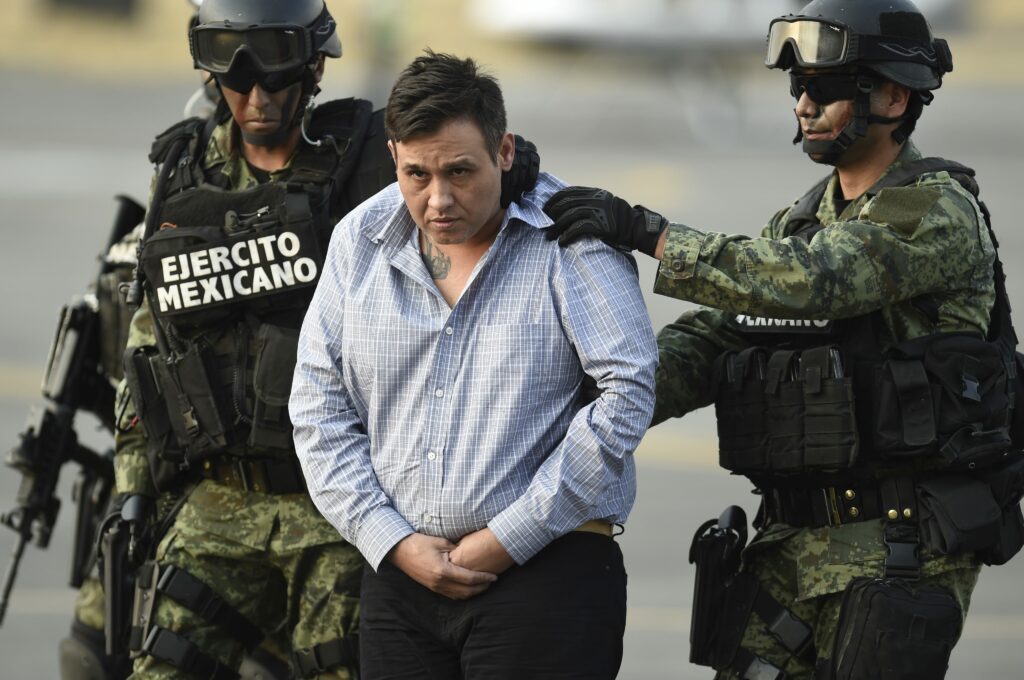
Mexico’s handover of some of its most notorious imprisoned drug lords to the United States is part of a more confrontational approach by President Claudia Sheinbaum against ultra-violent cartels, experts say.The mass transfer of 29 alleged drug traffickers has sparked concerns of a potential violent backlash from some of the world’s most powerful criminal organizations. It comes as Mexico seeks to avert sweeping tariffs that US President Donald Trump has vowed to impose on its exports next week.What are the implications of the surprise delivery to US authorities of senior figures in several drug cartels, a number of which have been designated terrorist organizations by Trump?- Turning point in anti-drug fight? -While she ruled out declaring “war” on drug cartels after taking office in October, Sheinbaum has quietly dropped her predecessor’s “hugs not bullets” strategy, which prioritized tackling the root causes of criminal violence over security operations.Mexican authorities have recently announced a series of major drug seizures and the capture of suspects including two prominent members of the Sinaloa Cartel, which is gripped by bloody internal fighting.”The number of arrests, drug seizures and now extraditions is increasing significantly. There is a strategy of absolute confrontation with the cartels,” said David Saucedo, a security consultant.The increased pressure from Washington represents an “ideal moment” for Sheinbaum to shape her own security policy, since it is a “frankly critical” problem, said Javier Oliva, a defense and security specialist at the National Autonomous University of Mexico.In November, outgoing US ambassador Ken Salazar said former president Andres Manuel Lopez Obrador’s “hugs not bullets” policy strategy had failed.Spiraling criminal violence, much of it linked to drug trafficking and gangs, has seen around 480,000 people murdered across Mexico since 2006.- How will cartels react? -Mexican cartels have a history of violent responses to detentions or extraditions of their leaders, and experts fear this time may be no different.”It’s highly likely that there will be a furious reaction. It’s not the same for a drug lord to be imprisoned in Mexico as it is to be in a high-security prison in the United States,” Saucedo said.In Mexico, many drug lords are able to run their organizations from behind bars.”High-security prisons quickly become comfortable prisons for drug traffickers,” Saucedo said.The prospect of life imprisonment in a US jail could also make it harder to capture more drug lords, he said.”They will shoot until the last bullet and spill the last drop of blood to avoid being taken to the United States,” Saucedo warned.The fall of kingpins could also further fragment their organizations, said Oliva, leading to bloody turf wars.- Politicians exposed? -The possibility of the suspects becoming protected witnesses in the United States has raised speculation that they could lift the lid on high-level corruption in Mexico.Their testimonies could expose not only their own organizations, but also “the circles of political, police and military protection that support the cartels,” Saucedo said.Such revelations would allow Trump to increase his demands on the Mexican government, which he has accused without proof of colluding with drug trafficking, Oliva said.”The pressure will continue” both to capture criminals and to expose “complicity in political power,” he added