AFP USA

Delta plane flips upside down in Toronto crash, at least 17 injured

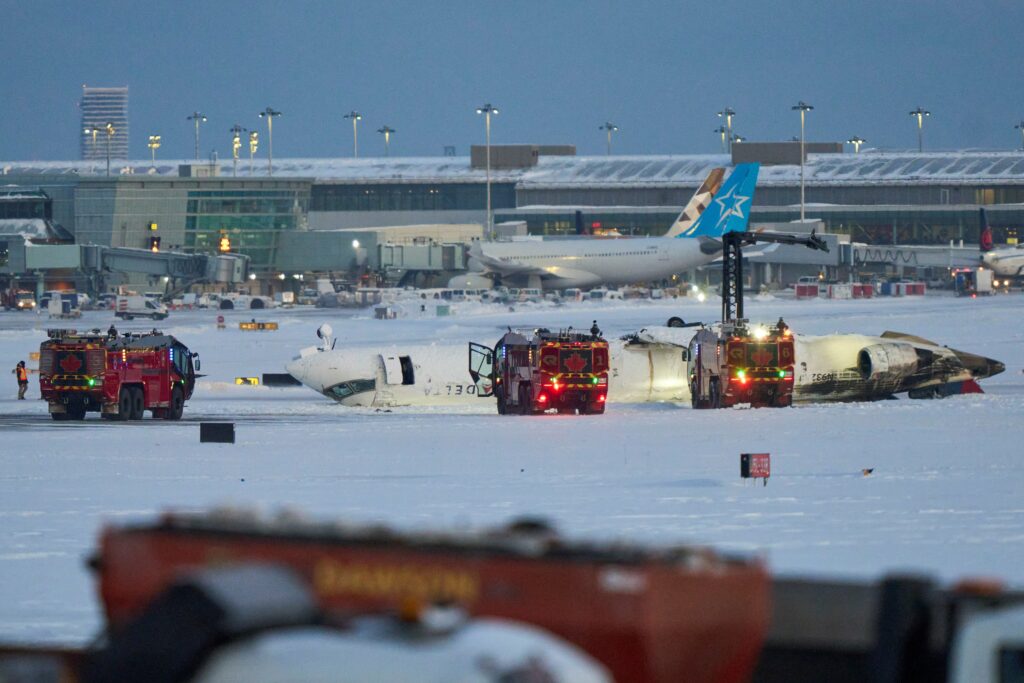
A Delta Air Lines jet with 80 people onboard crash landed Monday at the Toronto airport, officials said, flipping upside down and leaving at least 17 people injured but causing no fatalities.The Endeavor Air flight 4819 with 76 passengers and four crew was landing in the afternoon in Canada’s biggest metropolis, having flown from Minneapolis in the US state of Minnesota, the airline said.Paramedic services told AFP 17 people were injured including three critically — a child, a man in his 60s and a woman in her 40s. Delta said 18 people suffered injuries.All wounded, including those with minor injuries, were taken to area hospitals either by ambulance or helicopter, said the paramedic services’ Lawrence Saindon.No explanation of the cause of the accident, or how the plane ended up on its back with its wings clipped, has been provided.Dramatic images on local broadcasts and shared on social media showed people stumbling away from the upside down CRJ-900 plane, shielding their faces from strong gusts of wind and blowing snow.Fire crews appeared to douse the aircraft with water as smoke wafted from the fuselage and as passengers were still exiting the plane.Toronto airport authority chief executive Deborah Flint told a news conference the incident did not involve any other planes.Emergency crews were “heroic” in their response, she said, “reaching the site within minutes and quickly evacuating the passengers.”Some of them “have already been reunited with their friends and their families,” she added.The airport suspended all flights after the incident, before resuming them at around 5:00 pm local time, more than two hours later. It said passengers should expect long delays.- ‘It’s upside down’ -Facebook user John Nelson, who said he was a passenger on the flight, posted a video from the tarmac showing the overturned aircraft and narrated: “Our plane crashed. It’s upside down.””Most people appear to be okay. We’re all getting off,” he added.Delta said the connection flight operated by its subsidiary Endeavor had been “involved in an incident.””Initial reports were that there are no fatalities,” the airline said through a spokesperson’s statement.”The hearts of the entire global Delta family are with those affected by today’s incident at Toronto-Pearson International Airport,” Delta chief executive Ed Bastian said.A massive snow storm hit eastern Canada on Sunday. Strong winds and bone-chilling temperatures could still be felt in Toronto on Monday when airlines added flights to make up for weekend cancellations due to the storm.”The snow has stopped coming down, but frigid temperatures and high winds are moving in,” the airport warned earlier, adding that it was “expecting a busy day in our terminals with over 130,000 travellers on board around 1,000 flights.”Federal Transport Minister Anita Anand confirmed there were 80 people on the flight. “I’m closely following the serious incident at the Pearson Airport involving Delta Airlines flight 4819 from Minneapolis,” she posted on X.Ontario Premier Doug Ford said he was “relieved there are no casualties after the incident.”Canada’s Transportation Safety Board, meanwhile, deployed a team of investigators to the site of the crash.They will be assisted by the US Federal Aviation Administration, which also sent a team to the scene, according to US Secretary of Transportation Sean Duffy.The crash comes after other recent air incidents in North America including a mid-air collision between a US Army helicopter and a passenger jet in Washington that killed 67 people, and a medical transport plane crash in Philadelphia that left seven dead.
Delta plane flips upside down in Toronto crash, 15 wounded

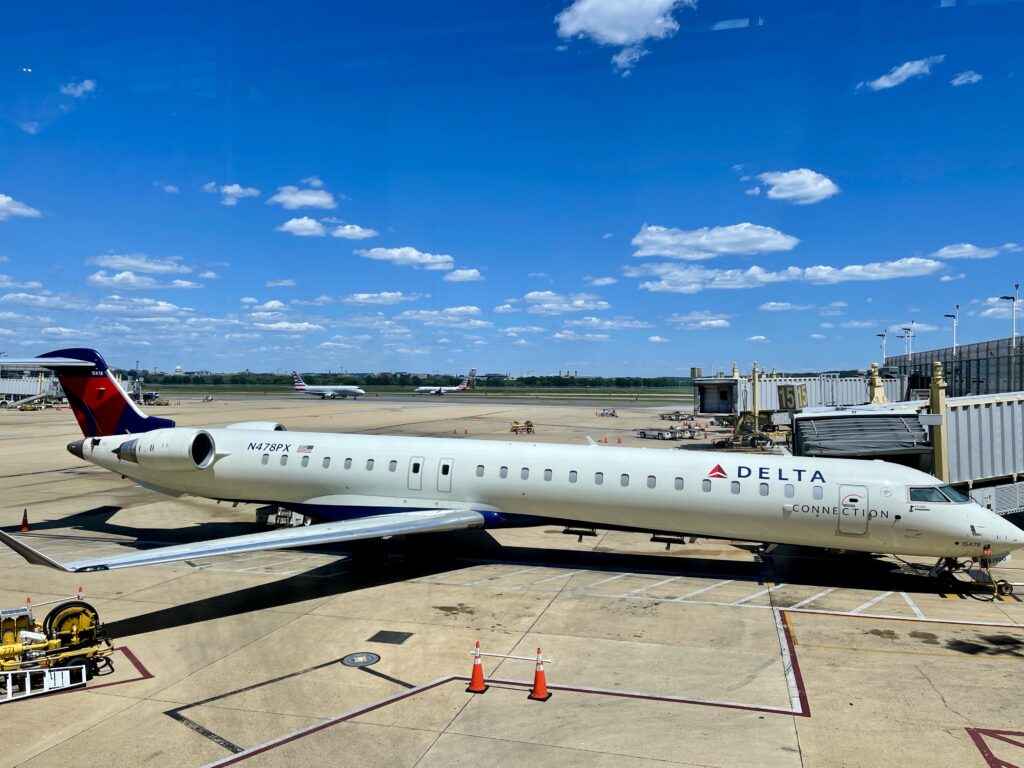
A Delta Air Lines jet with 80 people onboard crash landed Monday at the Toronto airport, officials said, flipping upside down and leaving at least 15 people injured but causing no fatalities.The Endeavor Air flight 4819 with 76 passengers and four crew was landing at around 3:30 pm in Canada’s biggest metropolis, having flown from Minneapolis in the US state of Minnesota, the airline said.Paramedic services told AFP 15 people were injured including three critically — a child, a man in his 60s and a woman in her 40s.All wounded, including those with minor injuries, were taken to area hospitals either by ambulance or helicopter, the paramedic service said.Dramatic images on local broadcasts and shared on social media showed people stumbling away from the upside down CRJ-900 plane, shielding their faces from wind gusts.Fire crews appeared to be dousing the aircraft with water as smoke wafted from the jetliner.”Toronto Pearson is aware of an incident upon landing involving a Delta Air Lines plane arriving from Minneapolis. Emergency teams are responding. All passengers and crew are accounted for,” the airport authority posted on X. The airport suspended all flights after the incident.Facebook user John Nelson, who said he was a passenger on the flight, posted a video showing the crashed aircraft and wrote: “Our plane crashed. It’s upside down.””Most people appear to be okay. We’re all getting off,” he added.Delta said its connection flight operated by Endeavor had been “involved in an incident,” and promised to share further details as it confirmed them.”Initial reports were that there are no fatalities,” the airline said through a spokesperson’s statement.A massive snow storm hit eastern Canada on Sunday. Strong winds and bone-chilling temperatures could still be felt in Toronto on Monday when airlines added flights to make up for weekend cancellations due to the storm.”The snow has stopped coming down, but frigid temperatures and high winds are moving in,” the airport warned earlier, adding that it was “expecting a busy day in our terminals with over 130,000 travellers on board around 1,000 flights.”Federal Transport Minister Anita Anand confirmed there were 80 people on the flight. “I’m closely following the serious incident at the Pearson Airport involving Delta Airlines flight 4819 from Minneapolis,” she posted on X.Ontario Premier Doug Ford, meanwhile, said he was “relieved there are no casualties after the incident at Toronto Pearson,” adding that airport and local authorities were providing help.Canada’s Transportation Safety Board said it was deploying a team of investigators to the site of the crash.This comes after other recent air incidents in North America including a mid-air collision between a US Army helicopter and a passenger jet in Washington that killed 67 people, and a medical transport plane crash in Philadelphia that left seven dead.
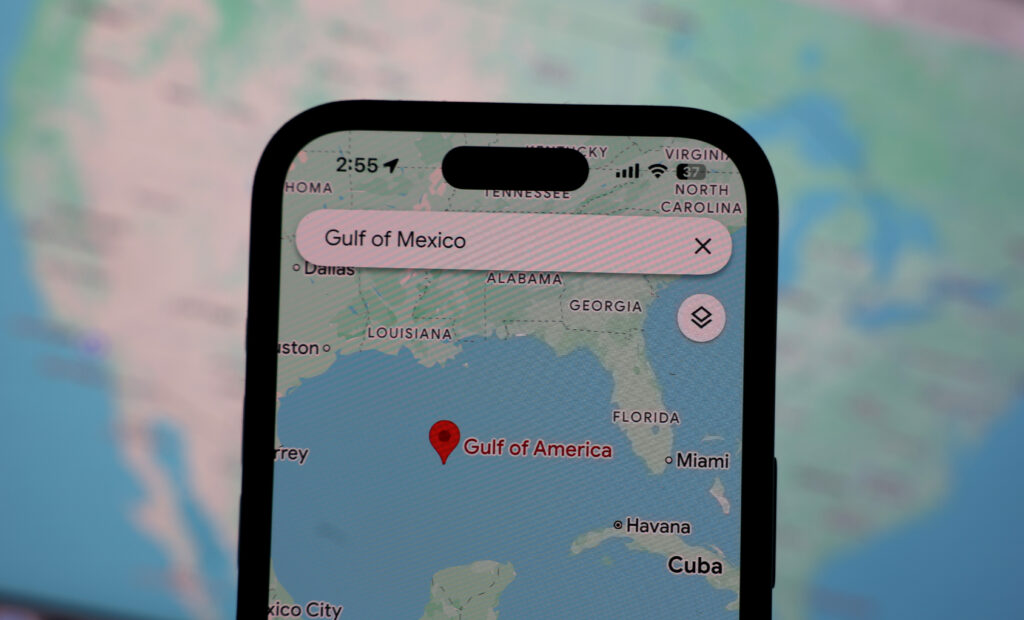
Mexico says to sue Google if it insists on using ‘Gulf of America’

Mexico will take Google to court if it insists on changing the Gulf of Mexico’s name to “Gulf of America” for Maps users in the United States, President Claudia Sheinbaum said Monday.She said her government had written again to the US company arguing that President Donald Trump’s executive order on the subject only applies to the part of the continental shelf belonging to the United States.”Google has no right to rename Mexico’s continental shelf, nor does it have any right to rename Cuba’s continental shelf, because the Gulf of Mexico is divided among the three countries,” Sheinbaum said at her daily news conference.The letter informs Google that “under no circumstances does Mexico accept the renaming of any geographic area that includes part of its national territory and that is under its jurisdiction,” she said.”We will wait for Google’s response and, if not, we will proceed in court,” Sheinbaum added.Sheinbaum had announced on Friday that her government was considering legal action against Google, saying: “If necessary, we will file a civil suit.”Trump signed an executive order renaming the Gulf of Mexico soon after his January 20 inauguration.In response, Sheinbaum cheekily suggested calling the United States “Mexican America,” pointing to a map dating back to before 1848, when one-third of her country was seized by the United States.Google, which is part of tech giant Alphabet, said that users of its Maps app in Mexico would continue to see the name “Gulf of Mexico” while those in third countries would see both names.Sheinbaum presented a letter she said Google had sent to her Foreign Minister Juan Ramon de la Fuente explaining its position and offering to pursue a “constructive dialogue” about the issue, including through a potential face-to-face meeting.It said the name change was “consistent with our normal operating procedure to reflect on our platforms geographic names prescribed by different authoritative, government sources, including reflecting where authoritative sources may differ.”Apple has also renamed the body of water the “Gulf of America” for US users of its mapping application to comply with Trump’s order.

Europe leaders battle for unity after Trump shock

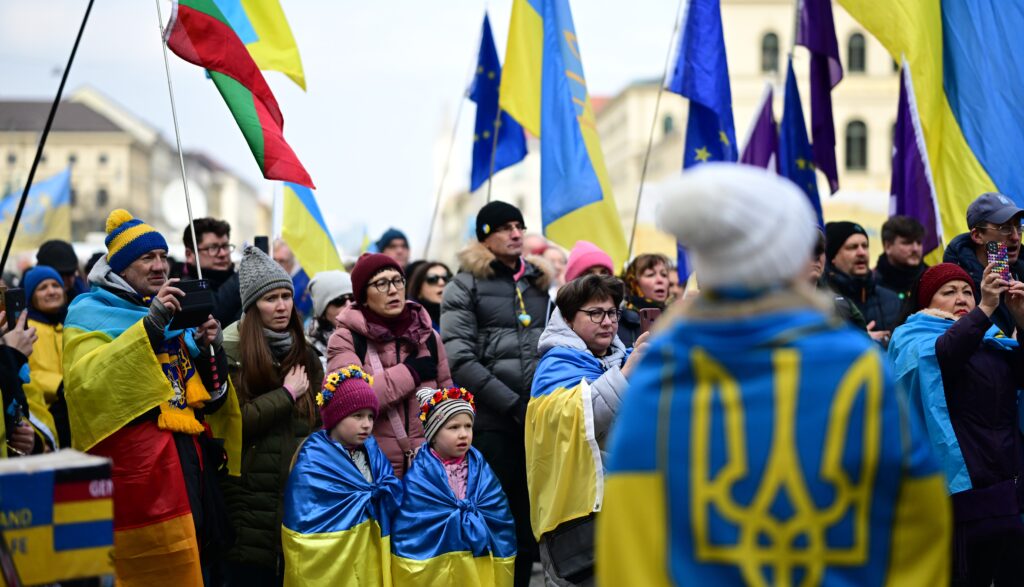
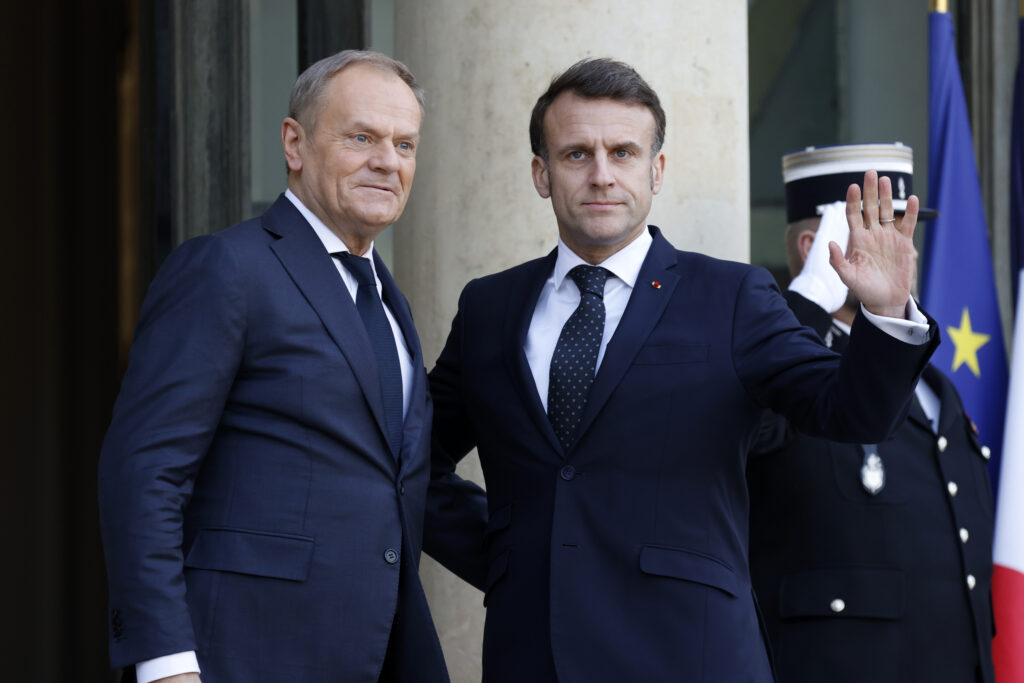
European leaders Monday sought to overcome differences at emergency Paris talks on responding to a shock policy shift on the war in Ukraine by the new US administration of Donald Trump, as Germany bristled at suggestions troops could be deployed.With European policymakers still reeling from US Vice President JD Vance’s withering attack on the European Union at the annual Munich Security Forum, key leaders attended the meeting at the Elysee Palace called at the last minute by President Emmanuel Macron.In the most concrete sign yet of the US policy shift, Washington and Moscow’s top diplomats on Tuesday were due to have the first such face-to-face meeting since Russia invaded Ukraine in February 2022, a clear sign that Trump wants to bring Russian President Vladimir Putin in from the cold.Facing one of their biggest challenges in years, European leaders fear that Trump wants to make peace with Russia in talks that will not even involve Kyiv, let alone the European Union.They now need to weigh measures including ramping up defence spending to be less dependent on the US, to sending troops to Ukraine as peacekeepers when a ceasefire is agreed.Macron held telephone talks with Trump just before the summit, the French presidency said.”Europe’s security is at a turning point,” EU commission chief Ursula von der Leyen wrote on X.”Yes, it is about Ukraine — but it is also about us,” she said, calling for a “surge” on defence spending.- ‘A little irritated’ -UK Prime Minister Keir Starmer, aware of the importance of London showing commitment to European security after Brexit, on Sunday said that he was willing to put “our own troops on the ground if necessary” in response to what he called “a once-in-a-generation moment for the collective security of our continent”.But after the talks German Chancellor Olaf Scholz said that any debate now on sending peacekeepers to Ukraine was “completely premature” and “highly inappropriate” while the war is ongoing.Scholz said he was “a little irritated” about the debate “at the wrong time and on the wrong topic”.Spain’s foreign minister, Jose Manuel Albares, said that, while it was necessary for Europeans to meet and prepare decisions, “nobody is currently planning to send troops to Ukraine, especially because peace is still far off”. – ‘Take practical steps’ -Macron has described Trump’s return for a second term in the White House as an “electroshock” but also warned against any peace deal that could amount to “capitulation”.Polish Prime Minister Donald Tusk, another key participant, on Monday said that he would urge European leaders at the emergency summit to “immediately” boost Europe’s defences, warning that they do not match Russia’s.”We will not be able to effectively help Ukraine if we do not immediately take practical steps regarding our own defence capabilities,” Tusk told reporters before the talks. French newspaper Le Monde said the rupture between Europe and the United States was “historic”, but added that Europe had to show its capacity to ensure its own defence.”European blindness came to an abrupt end in Munich. From now on, the security of the continent depends essentially on the Europeans themselves, and on their ability to maintain their unity,” it added.- ‘Process to peace’ -The Paris talks come as Washington said that Secretary of State Marco Rubio, National Security Advisor Mike Waltz and Special Envoy Steve Witkoff on Tuesday would meet a Russian delegation including Foreign Minister Sergei Lavrov in Riyadh, ahead of a future meeting between Trump and Putin in the Saudi capital.Rubio had earlier sought to play down expectations of any breakthrough at upcoming talks with Russian officials.”A process towards peace is not a one-meeting thing,” he told the CBS network.Ukrainian President Volodymyr Zelensky was to visit Saudi Arabia on Wednesday, one day after the meeting between top US and Russian officials.Zelensky last week had announced the trip along with stops in the United Arab Emirates and Turkey without giving dates, adding that he had no plans to meet Russian or US officials.”There must be no division of security and responsibility between Europe and the United States,” Scholz said in Paris.”NATO is based on us always acting together and sharing the risk, thereby guaranteeing our security. This must not be called into question.”

Musk sends SpaceX team to visit key US air traffic command center

A team from Elon Musk’s SpaceX was set to visit the command center of the US federal aviation regulator on Monday with a brief for suggesting safety improvements in the wake of a deadly crash in Washington last month.The visit, announced on Sunday by Transportation Secretary Sean Duffy, has raised some eyebrows given the Federal Aviation Administration (FAA) has investigated and fined SpaceX on numerous occasions -– sometimes over safety issues.US President Donald Trump, who has tapped top ally and donor Musk to slash the size of the federal government, has taken particular aim at the FAA over its hiring policies. “America deserves safe, state-of-the-art air travel, and President Trump has ordered that I deliver a new, world-class air traffic control system that will be the envy of the world,” Duffy said.He added that SpaceX staff will take a “firsthand look” around when they visit the Air Traffic Control System Command Center, which works to balance demand for flights in the United States with the capacity to handle them.It is also home to a team that tracks data about commercial space launches and re-entries and the status of various space missions, according to its website. “The safety of air travel is a non-partisan matter,” said Musk, whose federal cost-cutting drive has raised concerns about conflicts of interest with his companies, several of which — such as SpaceX — hold major government contracts. “SpaceX engineers will help make air travel safer,” he wrote on social platform X, which he also owns.An aviation safety specialists union said that the Trump administration had begun firing “hundreds” of FAA employees over the long holiday weekend.- ‘Draconian’ -Trump has tapped billionaire Musk to wage a scorched earth campaign on the federal government, slashing workers and cutting programs — such as aid to the world’s poorest countries — that he says do not align with his America First policies.The president has accused the FAA of prioritizing “diversity, equity and inclusion” hiring policies — meant to combat racism and other forms of discrimination — over safety and efficiency. “Several hundred” FAA employees began receiving notices that they had been fired late Friday, according to David Spero, president of the Professional Aviation Safety Specialists union.”This draconian action will increase the workload and place new responsibilities on a workforce that is already stretched thin,” Spero warned in a statement.”Staffing decisions should be based on an individual agency’s mission-critical needs. To do otherwise is dangerous when it comes to public safety.”He said the “hastily made” decision was “especially unconscionable” in the aftermath of the deadly crash last month. The accident at Ronald Reagan Washington National Airport saw 67 people killed as an army helicopter collided with a passenger jet coming in for landing.It was the deadliest air disaster in the United States in two decades. Trump has also, repeatedly and without evidence, blamed the Washington crash on DEI programs.Flight safety experts investigating the crash have said that faulty instruments and communication problems may have been behind the disaster.

European leaders meet on response to US Ukraine shift

European leaders met on Monday for emergency talks in Paris called by French President Emmanuel Macron to agree a coordinated response to a shock policy shift on the war in Ukraine by the new US administration of Donald Trump.With European policymakers leaving the annual Munich Security Forum dazed by Vice President JD Vance’s withering attack on the European Union, key EU leaders, as well as UK Premier Sir Keir Starmer, were in Paris for the summit.In the most concrete sign yet of the US policy shift, the top diplomats of the United States and Russia were Tuesday due to have the first such face-to-face meeting since Russia invaded Ukraine in February 2022, a clear sign Trump wants to bring President Vladimir Putin in from the cold.Facing one of their biggest challenges in years, European leaders fear that Trump wants to make peace with Russia in talks that will not even involve Kyiv, let alone the European Union. Trump sidelined Kyiv and its European backers last week when he called Putin to talk about starting negotiations to end the conflict and said he could meet the Kremlin chief “very soon”.Other key participants in the summit include NATO chief Mark Rutte, Danish Premier Mette Frederiksen — who has in the last weeks battled to rebuff Trump’s territorial claim to Greenland — and German Chancellor Olaf Scholz.Macron held telephone talks with Trump just before the summit, the French presidency said.- ‘Take practical steps’ -Macron has described Trump’s return for a second term in the White House as an “electroshock” and there are initial signs some of his counterparts are being stung into action.Britain’s Starmer, aware of the importance of London showing commitment to European security after Brexit, said Sunday that he was willing to put “our own troops on the ground if necessary” in response to what he called “a once-in-a-generation moment for the collective security of our continent”.Polish Prime Minister Donald Tusk, another key participant, said on Monday he would urge European leaders at the emergency summit to “immediately” boost Europe’s defences, warning they do not match Russia’s.”We will not be able to effectively help Ukraine if we do not immediately take practical steps regarding our own defence capabilities,” Tusk told reporters. Trump’s special envoy to Ukraine, Keith Kellogg, has said Europe would not be directly involved in talks on Ukraine, though it would still have “input”.French Foreign Minister Jean-Noel Barrot said Sunday it would fall to Europe to guarantee any peace deal in Ukraine, adding he expected the United States to “revise their level of commitment to NATO, including in terms of geography”.The American policy shift “requires that we truly wake up, and even take a leap forward, to take our place for the security of the European continent”, Barrot said. – ‘Peace is still far off’ -But the notion of sending European troops to Ukraine — even after a ceasefire — was already causing friction within the European Union.Spain’s foreign minister, Jose Manuel Albares, however said that, while it was necessary for Europeans to meet and prepare decisions, “nobody is currently planning to send troops to Ukraine, especially because peace is still far off”. Germany on Monday agreed, with deputy government spokeswoman Christiane Hoffmann telling reporters it was “premature” to talk about sending troops to Ukraine.  Chancellor Olaf Scholz had said late Sunday that negotiations on Ukraine’s future could not be successful without European guarantees “that we will have created and accepted”.Meanwhile Hungary, whose Prime Minister Viktor Orban is close to both Trump and Putin, said that Monday’s conference was an effort to “prevent” peace.”Today, in Paris, pro-war, anti-Trump, frustrated European leaders are gathering to prevent a peace agreement in Ukraine,” said Foreign Minister Peter Szijjarto.- ‘Process to peace’ -The Paris talks come as Washington said Secretary of State Marco Rubio, National Security Advisor Mike Waltz and Special Envoy Steve Witkoff would on Tuesday meet with a Russian delegation including Foreign Minister Sergei Lavrov in Riyadh ahead of a future meeting between Trump and Putin in the Saudi capital.Rubio had earlier sought to play down expectations of any breakthrough at upcoming talks with Russian officials.”A process towards peace is not a one-meeting thing,” he told the CBS network.Ukrainian President Volodymyr Zelensky was to visit Saudi Arabia on Wednesday, one day after the meeting between top US and Russian officials.Zelensky had announced the trip along with stops the United Arab Emirates and Turkey last week without giving dates, adding he had no plans to meet Russian or US officials.

WHO chief urges pandemic accord action after US withdrawal

The head of the World Health Organization insisted on Monday it was “now or never” to strike a landmark global accord on tackling future pandemics, after the United States withdrew from negotiations.WHO director-general Tedros Adhanom Ghebreyesus said no country could protect itself from the next pandemic on its own — three days after US President Donald Trump’s administration told the UN health agency it was leaving the pandemic agreement talks.”We are at a crucial point as you move to finalise the pandemic agreement in time for the World Health Assembly” in May, Tedros told WHO members at the opening of the week-long 13th round of negotiations in Geneva.”It really is a case of now or never. But I am confident that you will choose ‘now’ because you know what is at stake.”You remember the hard-won lessons of Covid-19, which left an estimated 20 million of our brothers and sisters dead, and which continues to kill.”A further one-week session is planned before the WHO’s annual assembly.The process began in December 2021, when, fearing a repeat of Covid-19 — which killed millions of people, crippled health systems and crashed economies — countries decided to draft an accord on pandemic prevention, preparedness and response.- Next pandemic ‘when, not if’ -After returning to office on January 20, Trump signed an executive order to start the one-year process of withdrawing from the WHO, an organisation he has repeatedly criticised over its handling of Covid-19.The order added that Washington would “cease negotiations” on the pandemic agreement.Tedros said Washington had formally notified the WHO on Friday of its withdrawal from the talks.”The next pandemic is a matter of when, not if. There are reminders all around us — Ebola, Marburg, measles, mpox, influenza and the threat of the next disease X,” he said.”No country can protect itself by itself. Bilateral agreements will only get you so far,” Tedros added.”Like the decision to withdraw from WHO, we regret this decision and we hope the US will reconsider,” he said.- System ‘under siege’ -Non-governmental organisations following the pandemic agreement process urged remaining member states to get the accord finished.Pandemic Action Network said: “Despite geopolitical and policy challenges, do not walk away from this vital mission.”Spark Street Advisors, a health sector consultancy, said the world had changed since the last negotiations in December, with the global multilateral system “under siege”.”This is why member states cannot afford to fail this week. In this new reality meant to reverse decades of progress, the pandemic agreement is a concrete action against this great dismantling,” it said.While much of the draft text has been agreed, disputes remain over sharing access to pathogens with pandemic potential and the sharing of benefits derived from them — vaccines, tests and treatments.Talks co-chair Precious Matsoso expressed hoped that proposed new wording would ensure a breakthrough. “Let’s make sure that the three years that we’ve spent does not end up being regretted — that we wasted three years of our time,” she said.

European leaders meet on response to US shift on Ukraine

European leaders were due to meet in Paris on Monday to address Washington’s shock policy shift on the war in Ukraine, as top US and Russian diplomats geared up for their first talks aimed at ending the three-year conflict.US President Donald Trump sidelined Kyiv and its European backers last week when he called his Russian counterpart Vladimir Putin to talk about starting negotiations to end the conflict.The hastily convened Paris informal summit of European leaders set to start at 4:00 pm (1500 GMT) comes after Trump said he could meet Putin “very soon”.The Paris talks come as Washington said Secretary of State Marco Rubio, National Security Advisor Mike Waltz and Special Envoy Steve Witkoff would on Tuesday meet with a Russian delegation including Foreign Minister Sergei Lavrov in Riyadh ahead of a future meeting between Trump and Putin in the Saudi capital.Rubio had earlier sought to play down expectations of any breakthrough at upcoming talks with Russian officials.”A process towards peace is not a one-meeting thing,” he told the CBS network.Hosted by President Emmanuel Macron at the Elysee palace, the European meeting will gather the leaders of France, Germany, Britain, Italy, Poland, Spain, the Netherlands and Denmark, as well as the heads of the European Council, the European Commission and NATO.The war in Ukraine is days short of its third anniversary on February 24.British Prime Minister Keir Starmer said Sunday that he was willing to put “our own troops on the ground if necessary” in response to what he called “a once-in-a-generation moment for the collective security of our continent”.Starmer also said he would meet with Trump in the coming days.Ukrainian President Volodymyr Zelensky was to visit Saudi Arabia on Wednesday, one day after the meeting between top US and Russian officials.Zelensky had announced the trip along with stops the United Arab Emirates and Turkey last week without giving dates, adding he had no plans to meet Russian or US officials.- ‘Take a leap forward’ -The Paris meeting will address “the situation in Ukraine” and “security in Europe”, the French presidency said.”Because of the acceleration of the Ukrainian issue, and as a result of what US leaders are saying, there is a need for Europeans to do more, better and in a coherent way, for our collective security,” an adviser in Macron’s office said.Trump’s special envoy to Ukraine, Keith Kellogg, has said Europe would not be directly involved in talks on Ukraine, though it would still have “input”.French Foreign Minister Jean-Noel Barrot said Sunday it would fall to Europe to guarantee any peace deal in Ukraine, adding he expected the United States to “revise their level of commitment to NATO, including in terms of geography”.The American policy shift “requires that we truly wake up, and even take a leap forward, to take our place for the security of the European continent”, Barrot said. He told the LCI news channel that talks were already underway, involving notably France, Britain and Poland, to guarantee a future ceasefire and “lasting peace” in Ukraine.- ‘Peace is still far off’ -Spain’s foreign minister, Jose Manuel Albares, however said that, while it was necessary for Europeans to meet and prepare decisions, “nobody is currently planning to send troops to Ukraine, especially because peace is still far off”. Germany on Monday agreed, with deputy government spokeswoman Christiane Hoffmann telling reporters it was “premature” to talk about sending troops to Ukraine.  Chancellor Olaf Scholz had said late Sunday that negotiations on Ukraine’s future could not be successful without European guarantees “that we will have created and accepted”.Meanwhile Hungary, whose Prime Minister Viktor Orban is close to both Trump and Putin, said that Monday’s conference was an effort to “prevent” peace.”Today, in Paris, pro-war, anti-Trump, frustrated European leaders are gathering to prevent a peace agreement in Ukraine,” said Foreign Minister Peter Szijjarto.Lavrov said Europeans want to “continue war in Ukraine”.burs-jh/ah/jm

‘Now or never’ for pandemic accord, says WHO chief after US pulls out

The head of the World Health Organization insisted on Monday it was “now or never” to strike a landmark global accord on tackling future pandemics, despite the United States withdrawing from negotiations.WHO director-general Tedros Adhanom Ghebreyesus said no country could protect itself from the next pandemic on its own — three days after US President Donald Trump’s administration formally told the United Nations health agency it would play no further part in the pandemic agreement talks.”We are at a crucial point as you move to finalise the pandemic agreement in time for the World Health Assembly” in May, Tedros told WHO member states at the opening of the week-long 13th round of negotiations at the organisation’s Geneva headquarters.”It really is a case of now or never. But I am confident that you will choose “now” because you know what is at stake.”A further one-week session is planned to finalise the agreement before the WHO’s annual decision-making assembly.In December 2021, fearing a repeat of the devastation wrought by Covid-19 — which killed millions of people, crippled health systems and crashed economies — countries decided to draft a new accord on pandemic prevention, preparedness and response.While much of the draft text has been agreed, disputes remain over some key provisions, notably over sharing access to pathogens with pandemic potential and then equitably sharing the benefits derived from them, such as vaccines, tests and treatments.- ‘Protect future generations’ -“You remember the hard-won lessons of Covid-19, which left an estimated 20 million of our brothers and sisters dead, and which continues to kill. “They are why we are here — to protect future generations from the impact of future pandemics,” said Tedros.”The next pandemic is a matter of when, not if. There are reminders all around us — Ebola, Marburg, measles, mpox, influenza and the threat of the next disease X.”Hours after returning to office on January 20, Trump signed an executive order to start the one-year process of withdrawing from the WHO, an organisation he has repeatedly criticised over its handling of Covid-19.The order also said that during the withdrawal process, Washington would “cease negotiations” on the pandemic agreement.Tedros said Washington had formally notified the WHO on Friday of its withdrawal from the agreement talks.”No country can protect itself by itself. Bilateral agreements will only get you so far,” Tedros said, adding that prevention, preparedness and response was the responsibility of all countries.”Like the decision to withdraw from WHO, we regret this decision and we hope the US will reconsider,” he said.

Musk’s DOGE seeks access to US tax system: reports

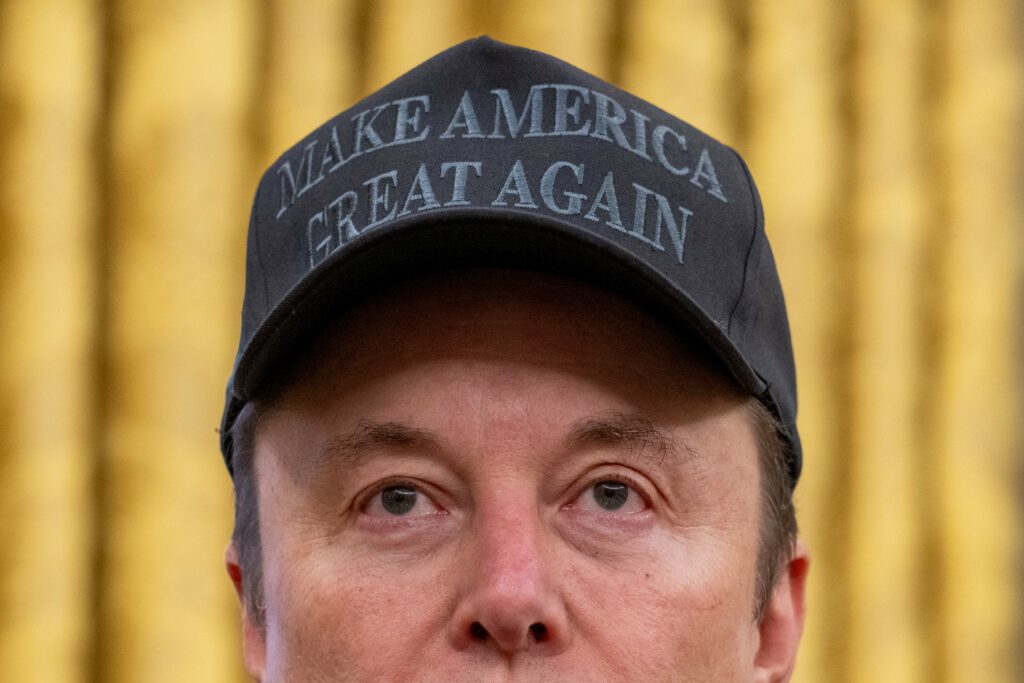
Elon Musk’s Department of Government Efficiency (DOGE) has sparked alarm by seeking access to a system with the US tax office that has detailed financial data about millions of Americans, US media reported.Spearheaded by Musk, the world’s richest man, US President Donald Trump has embarked on a campaign to slash public spending deemed wasteful or contrary to his policies.The Washington Post and others reported that the latest request is for DOGE officials to have broad access to Internal Revenue Service (IRS) systems, property and datasets.This includes the Integrated Data Retrieval System (IDRS), access to which is usually extremely limited and which offers “instantaneous visual access to certain taxpayer accounts”, according to the IRS.As of Sunday evening, the request had not been granted, the reports said.But it has sparked alarm within the government and among privacy experts who say granting Musk access to private taxpayer data could be extraordinarily dangerous, according to ABC News.”People who share their most sensitive information with the federal government do so under the understanding that not only will it be used legally, but also handled securely and in ways that minimize risks like identity theft and personal invasion, which this reporting brings into serious question,” Elizabeth Laird, a former state privacy officer now with the Center for Democracy and Technology, told ABC.”Waste, fraud, and abuse have been deeply entrenched in our broken system for far too long,” White House spokesperson Harrison Fields said when asked about the employee’s potential access to the sensitive system, NBC News reported.”It takes direct access to the system to identify and fix it.”DOGE will continue to shine a light on the fraud they uncover as the American people deserve to know what their government has been spending their hard-earned tax dollars on,” Fields added.US media reported on Friday that the IRS is preparing to lay off thousands of employees as soon as this week as part of Trump and Musk’s drive to shrink the federal workforce.