AFP USA

Trump orders planning for ‘Iron Dome’ missile shield for US

President Donald Trump on Monday signed an executive order to start planning for an “Iron Dome” air defense system for the United States, like the one that Israel has used to intercept thousands of rockets.Trump ordered the defense secretary to submit within 60 days an implementation plan for the “next-generation missile defense shield” designed to guard against ballistic, hypersonic and advanced cruise missiles, including by the development of space-based interceptors.During the 2024 election campaign Trump repeatedly promised to build a version of Israel’s Iron Dome system for the United States.However, he ignored the fact that the system is designed for short-range threats, making it ill-suited to defending against intercontinental missiles that are the main danger to the United States.”Over the past 40 years, rather than lessening, the threat from next-generation strategic weapons has become more intense and complex,” Monday’s executive order said, citing unnamed adversaries’ development of missile launch capabilities.Trump had earlier told a Republican congressional retreat in Miami that the system would be built in the United States. Israel has used its “Iron Dome” system to shoot down rockets fired by its regional foes Hamas in Gaza and Hezbollah in Lebanon during the war sparked by the October 7 Hamas attack on Israel.”They knock down just about every one of them,” Trump said at the Miami meeting. “So I think the United States is entitled to that.”The president signed several other orders related to the US military on Monday, including one setting the path for transgender people to be banned from the armed forces.

Trump signs order to get ‘transgender ideology’ out of military

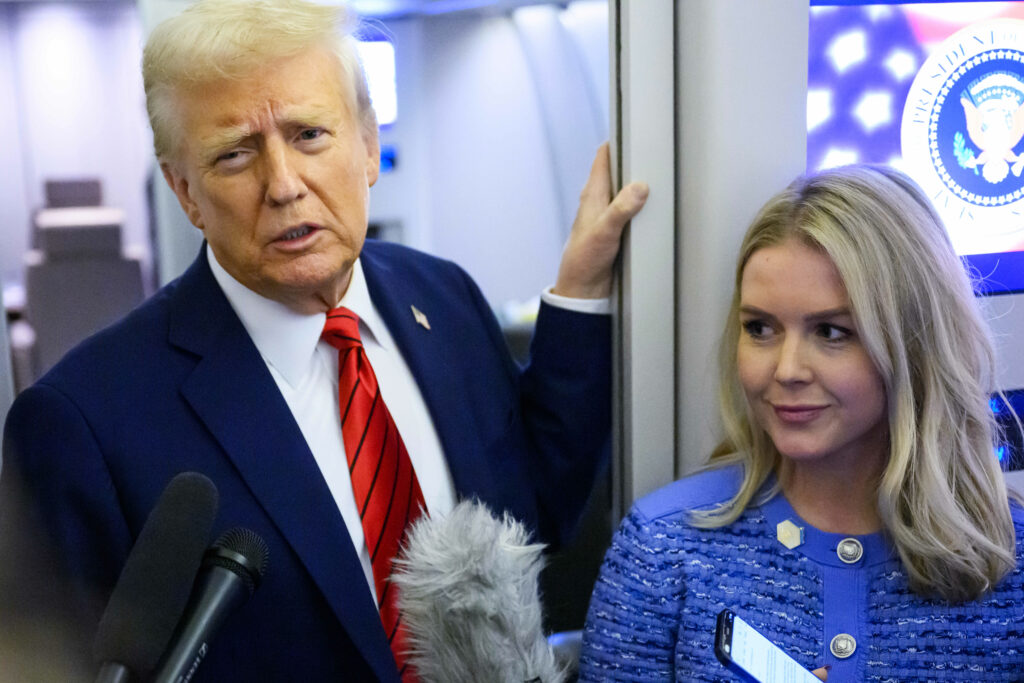
US President Donald Trump said Monday he had signed an executive order ridding the military of what he called “transgender ideology,” in a potentially major setback for LGBTQ rights.In a series of orders related to the military that Trump told reporters he had signed on Air Force One, he also called for the building of a US version of Israel’s Iron Dome missile defense system.The Republican signed further orders reinstating service members dismissed for refusing to take the Covid vaccine, and extending a wider government crackdown on diversity programs to the armed forces.”To ensure that we have the most lethal fighting force in the world, we will get transgender ideology the hell out of our military,” Trump told a Republican congressional retreat earlier in Miami.Trump has previously promised to bring back a ban on transgender troops, but it was not immediately clear what specific steps were contained in the new order, which has not yet been published.A White House official with him said the order involved “eliminating gender radicalism in the military.”Trump’s orders came at the start of his second week back in the White House and on the day a welcome ceremony was held at the Pentagon for his new defense secretary, military veteran and Fox News personality Pete Hegseth.”Thank you for your leadership Mr. President. We will execute!” Hegseth — who was confirmed last week despite concerns over his inexperience, and alleged record of heavy drinking and domestic violence — said on X.Transgender Americans have faced a roller coaster of changing policies on military service in recent years, with Democratic administrations seeking to permit them to serve openly while Trump has repeatedly sought to keep them out of the ranks.The US military lifted a ban on transgender troops serving in the armed forces in 2016, during Democrat Barack Obama’s second term as president.Under that policy, trans troops already serving were permitted to do so openly, and transgender recruits were set to start being accepted by July 1, 2017.- ‘Patriots’ -But the first Trump administration postponed that date to 2018 before deciding to reverse the policy entirely, sparking criticism from rights groups.Trump claimed that transgender service members were disruptive, expensive and eroded military readiness and camaraderie among troops.Trump’s Democratic successor Joe Biden moved to reverse the restrictions just days after he took office in 2021, saying all Americans qualified to serve should be able to do so.While the number of transgender troops in the American military is fairly small — with estimates of some 15,000 out of more than two million uniformed service members — their dismissal would reduce US forces at a time when the country is already facing difficulties recruiting new personnel.Biden’s outgoing defense secretary Lloyd Austin appeared to criticize Trump’s plans during a farewell address earlier this month, saying: “Any military that turns away qualified patriots who are eager to serve is just making itself smaller and weaker.”Transgender issues have roiled US politics in recent years, as states controlled by Democrats and Republicans have moved in opposite directions on policies ranging from medical treatment to what books on the topic are allowed in public or school libraries.Trump has meanwhile repeatedly promised to build a version of the Iron Dome system that Israel has used to shoot down missiles fired by Hamas from Gaza and Hezbollah in Lebanon.But he ignored the fact that the system is designed for short-range threats, making it ill-suited to defending against intercontinental missiles that are the main danger to the United States.”We need to immediately begin the construction of a state-of-the-art Iron Dome missile defense shield,” Trump said in Miami, adding that it would be “made right here in the USA.”

How Donald Trump weaponized tariffs

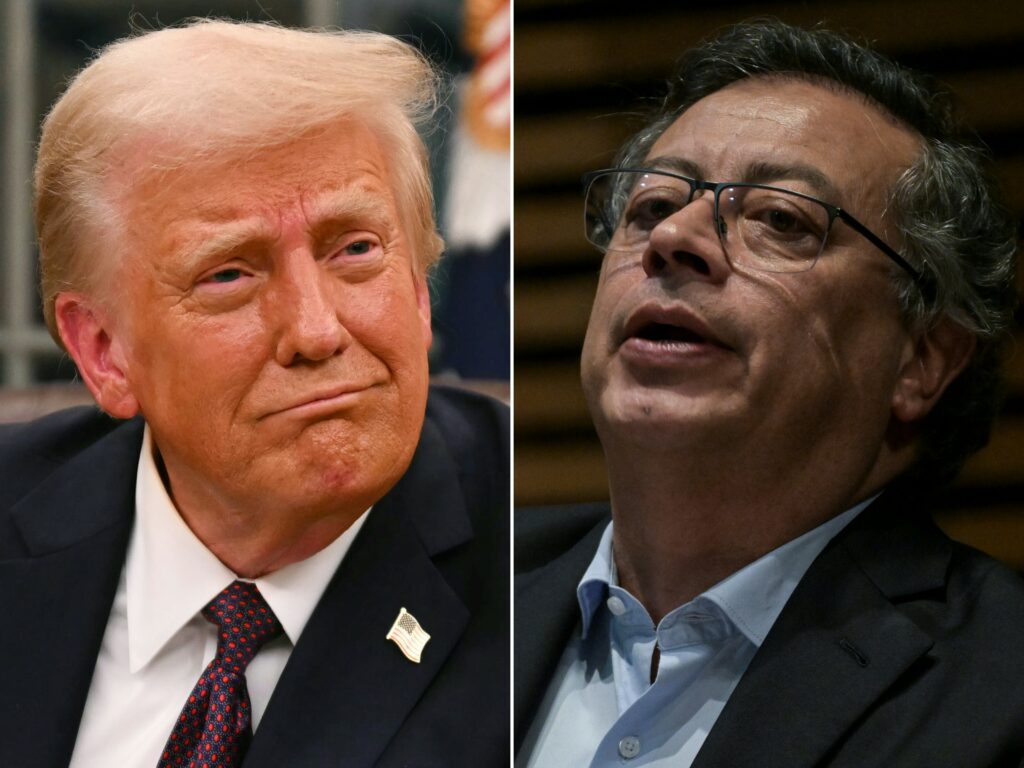
When President Donald Trump learned Colombia had pushed back on US deportations, his threat of a massive trade war laid out the stakes: cooperate, or else.Tariffs, just as they were during his first term from 2017 to 2021, are Trump’s weapon of choice on the global stage.While it may be too early to tell how successful of a tactic they are against both US allies and rivals such as China, it shows how Trump — who prides himself on his negotiating skills — will not hesitate to take a hard line to get what he wants.- ‘Leverage’ -After a rollercoaster Sunday with dueling tariff threats between Washington and Bogota, the White House said Colombian President Gustavo Petro had backed down and accepted the terms of repatriating immigrants from the United States.Trump had first threatened to levy 25 percent tariffs on all imported Colombian goods in a heated response to Petro refusing to accept two military planes carrying deported migrants.It was not clear whether leftist Petro had conceded his demand that the migrants be treated “with dignity.”Planes sent by Bogota to ferry the migrants would nonetheless return by Monday or Tuesday “at the latest,” according to Daniel Garcia Pena, Colombia’s ambassador to the United States.Eddy Acevedo, chief of staff at the nonpartisan Woodrow Wilson Center think tank, said Petro “quickly became aware of the amount of leverage the United States has with Colombia and that his reckless decision could jeopardize.””Last year alone, Petro had no problem allowing in 14,000 Colombians that were deported from the United States back to Colombia,” Acevedo said. – ‘America First’ in action -White House spokeswoman Karoline Leavitt was quick to declare victory Sunday, saying: “Today’s events make clear to the world that America is respected again.”Trump himself echoed the sentiment on Monday, telling reporters on Air Force One that “it serves the world well to look at” the Colombia spat.Trump’s plan for mass deportations of migrants has put him on a potential collision course with governments across Latin America, the original home of most of the United States’ estimated 11 million undocumented migrants.”The message that’s being sent is how willing the Trump administration is to use these tools, and the fact that they got the opportunity to make that point in the first week of the administration, I’m sure, is quite pleasing for them,” said Kevin Whitaker, the former US ambassador to Colombia who now serves as a non-resident fellow at the Atlantic Council.True to the promises he made on the campaign trail, Trump spent his first week back in power working to implement his “America First” diplomatic credo.In doing so, he has also threatened to levy tariffs against Canada and Mexico if they did not comply with his immigration demands.He also announced the United States’ withdrawal from the Paris climate agreement and the World Health Organization (WHO) during a slew of executive orders he signed.In addition, Trump ordered a pause to US foreign aid — except for Egypt, Israel and emergency food aid — until a complete review is performed to see if it aligns with his agenda.Trump has also threatened to “take back” control of the Panama Canal, claimed it was in Canada’s best interest to become the 51st state, and reaffirmed his desire to annex Greenland, an autonomous territory of Denmark.In the latter case, Trump has brandished tariffs against a fellow NATO ally.And at the Davos forum last week, Trump in a videocall told the audience of business leaders to be prepared to come and produce goods in the United States, or else get ready to pay tariffs.

Trump warns of ‘wake-up call’ as low-cost Chinese AI jolts Silicon Valley

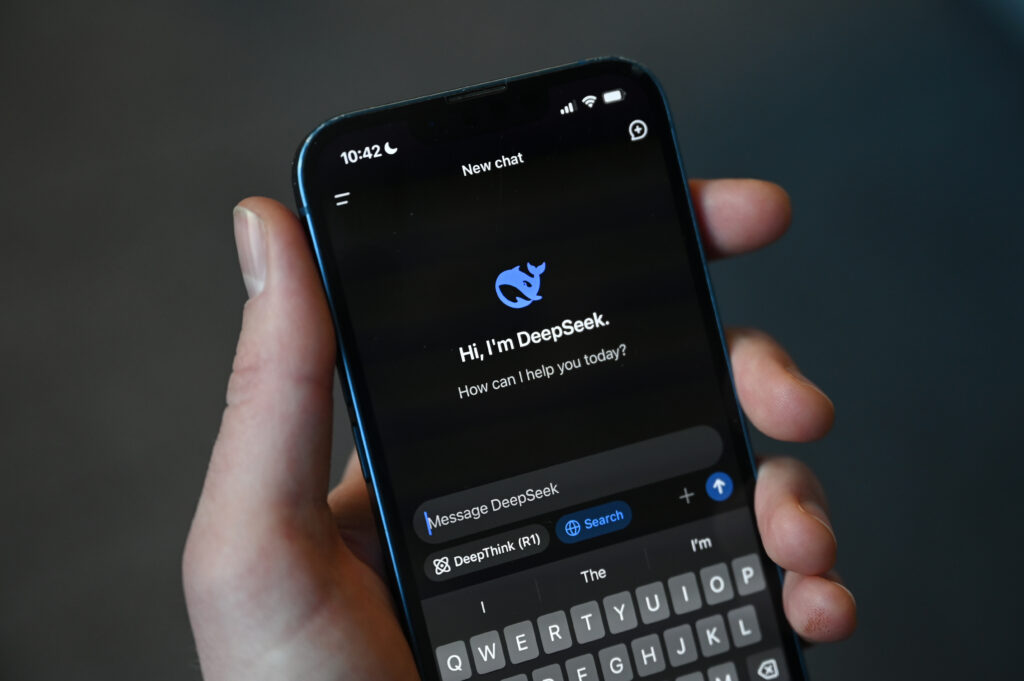
Fears of upheaval in the AI gold rush rocked Wall Street on Monday following the emergence of a popular ChatGPT-like model from China, with US President Donald Trump saying it was a “wake-up call” for Silicon Valley.Last week’s release of the latest DeepSeek model initially received limited attention, overshadowed by the inauguration of Trump on the same day.However, over the weekend, the Chinese artificial intelligence startup’s chatbot surged to become the most downloaded free app on Apple’s US App Store, displacing OpenAI’s ChatGPT.What truly rattled the industry was DeepSeek’s claim that it developed its latest model, the R1, at a fraction of the cost that major companies are investing in AI development, primarily on expensive Nvidia chips and software.The development is significant given the AI boom, ignited by ChatGPT’s release in late 2022, has propelled Nvidia to become one of the world’s most valuable companies.The news sent shockwaves through the US tech sector, exposing a critical concern: should tech giants continue to pour hundreds of billions of dollars into AI investment when a Chinese company can apparently produce a comparable model so economically?DeepSeek’s apparent advances were a poke in the eye to Washington and its priority of thwarting China by maintaining American technological dominance.Trump reacted quickly on Monday, saying the DeepSeek release “should be a wake-up call for our industries that we need to be laser-focused on competing to win.”He argued that it could be a “positive” for US tech giants, adding: “instead of spending billions and billions, you’ll spend less, and you’ll come up with hopefully the same solution.”The development also comes against a background of a US government push to ban Chinese-owned TikTok in the United States or force its sale.David Sacks, Trump’s AI advisor and prominent tech investor, said DeepSeek’s success justified the White House’s decision to reverse executive orders, issued under Joe Biden, that established safety standards for AI development.The regulations “would have hamstrung American AI companies without any guarantee that China would follow suit,” Sacks wrote on X.Adam Kovacevich, CEO of the tech industry trade group Chamber of Progress, echoed the sentiment: “Now the top AI concern has to be ensuring (the United States) wins.”Tech investor and Trump ally Marc Andreessen declared “Deepseek R1 is AI’s Sputnik moment,” referencing the 1957 launch of Earth’s first artificial satellite by the Soviet Union that stunned the Western world. “If China is catching up quickly to the US in the AI race, then the economics of AI will be turned on its head,” warned Kathleen Brooks, research director at XTB, in a note to clients.Microsoft CEO Satya Nadella took to social media hours before markets opened to argue less expensive AI was good for everyone.But last week at the World Economic Forum in Davos, Nadella warned: “We should take the developments out of China very, very seriously.”Microsoft, an eager adopter of generative AI, plans to invest $80 billion in AI this year, while Meta announced at least $60 billion in investments on Friday.- ‘Outplayed’ -Much of that investment goes into the coffers of Nvidia, whose shares plunged a staggering 17 percent on Monday.The situation is particularly remarkable since DeepSeek, as a Chinese company, lacks easy access to Nvidia’s state-of-the-art chips after the US government placed export restrictions on them.The esteemed Stratechery tech newsletter and others suggested that DeepSeek’s innovations stemmed from necessity, as lacking access to powerful Nvidia-designed chips forced them to develop novel methods.The export controls are “driving startups like DeepSeek to innovate in ways that prioritize efficiency, resource-pooling, and collaboration,” wrote the MIT Technology Review.Elon Musk, who has invested heavily in Nvidia chips for his company xAI, suspects DeepSeek of secretly accessing banned H100 chips — an accusation also made by the CEO of ScaleAI, a prominent Silicon Valley startup backed by Amazon and Meta.But such accusations “sound like a rich kids team got outplayed by a poor kids team,” wrote Hong Kong-based investor Jen Zhu Scott on X.In a statement, Nvidia said DeepSeek’s technology was “fully export control compliant.” 

Trump ‘not 100% sure’ he’s barred from third term

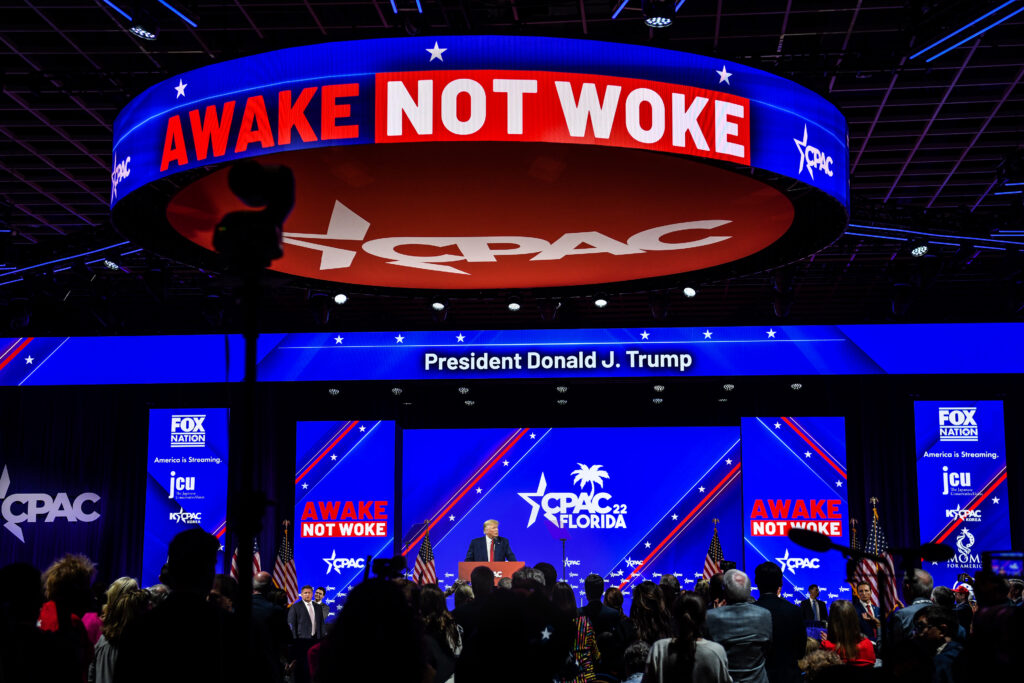
US President Donald Trump once again hinted at the idea of serving a third term, saying he was “not 100 percent sure” he was barred from doing so under the Constitution, which forbids it.Trump has repeatedly alluded to the possibility that he might go beyond the current two-term limit for US presidents — but while he often strikes a light-hearted tone the remarks remain provocative.”I’ve raised a lot of money for the next race that I assume I can’t use for myself, but I’m not 100 percent sure, because I don’t know… I think I’m not allowed to run again,” Trump told an audience of Congressional Republicans in Miami.To laughter, Trump turned to Republican House Leader Mike Johnson and added: “I’m not sure, am I allowed to run again? Mike? I better not get you involved in that argument.”Trump was inaugurated for his second spell in the White House a week ago, becoming just the second president in US history to serve two non-consecutive terms.US presidents are limited to two terms in office by the 22nd Amendment to the Constitution, which was ratified in 1951 — partly as a response to Franklin D. Roosevelt’s unprecedented four terms as president from 1933-1945.A Republican in the US House introduced a super-long-shot resolution last week to change the constitution to allow Trump to get another term.Trump has alluded to extending his stay on a number of occasions and joked about it as recently Saturday, during a rally in Nevada.”It will be the greatest honor my life to serve not once, but twice — or three times or four times,” he said with a laugh, before adding to cheers from the audience: “Headlines for the fake news.”In November, in another speech to House Republicans shortly after his election win, Trump said: “I suspect I won’t be running again unless you say, ‘He’s good, we got to figure something else.'”Trump told an audience of conservative Christians in July: “Christians, get out and vote. Just this time… Four more years, it’ll be fixed, it’ll be fine, you won’t have to vote anymore.”

Do or DEI: Trump’s assault on diversity divides America

For President Donald Trump’s allies, his crackdown on the “illegal and immoral discrimination” of equal opportunities programs reflects a shifting US electorate that has lost patience with ineffective and performative political correctness.For Trump critics, however, it is a frontal assault on civil rights that will chill efforts to create a fairer country, dismantling decades of affirmative action that they argue led to a more skilled, representative workforce. Trump repeatedly previewed his plan to stamp out diversity, equity and inclusion (DEI) during his election campaign, but the breakneck pace of the changes — and the extent of their reach — has caught many off guard.  Since his return to office last week, administration officials have been racing to prosecute Trump’s war on DEI across the federal bureaucracy — dismantling training initiatives, scrapping grants and sidelining hundreds of workers.”Woke is not inevitable. It is not invincible. It is not indestructible. The counter-revolution is coming,” anti-DEI crusader Christopher Rufo wrote on X in a post marking Trump’s first week in office.The evil of DEI is an article of faith in Trump’s “Make America Great Again” (MAGA) movement, but the Republican leader is banking on growing skepticism in the broader public over cultural liberalism in government, education and business.  The enmity is premised on the suspicion that people employed through DEI do not merit their success, and are depriving more deserving candidates who are denied opportunity because they are not in a minority.- Virtue-signaling -DEI came to the fore during mass protests against the 2020 murder of African American George Floyd by a white police officer, as institutions scrambled to signal that they were on-message when it came to racism.Largely focused on hiring practices and corporate culture, DEI has gone from being a marker of professionalism before the Trump era to a bogeyman, held up as an example of counterproductive virtue-signaling. Rufo was celebrating after websites and social media accounts related to diversity went dark last week, while officials directed agencies to close their DEI offices and place staffers on paid leave, in advance of being laid off. Federal workers have also been ordered to report colleagues who hide DEI efforts with “coded or imprecise language,” and the State Department is freezing passport applications with “X” designated as the gender instead of “M” or “F.” Among the casualties of the new regime was Coast Guard Commandant Linda Fagan, the first woman to lead a branch of the US military, who was fired after being accused of an “excessive focus” on DEI. There were further ructions in the Bureau of Alcohol, Tobacco, Firearms and Explosives, which was accused of quietly changing the job title of its “chief diversity officer” to “senior executive” in a bid to save her job.In the corporate world, top brands from Target and Walmart to Meta, Harley-Davidson and Jack Daniel’s have taken similar measures since Trump’s election as they face pressure from conservatives to roll back DEI efforts.- ‘Old-boys’ network’ -In education, Trump has instructed federal officials to investigate DEI programs at schools with endowments of more than $1 billion — which includes Harvard, Stanford, Yale and dozens of other institutions.Last month, the University of Michigan — facing accusations that it had wasted a quarter of a billion dollars in failed DEI initiatives — announced that it would no longer demand diversity statements as a part of hiring, promotion and tenure decisions.Although DEI hate didn’t start with Trump, he made it a popular applause line at campaign events, vowing to purge the military of generals he accused of being overly focused on social justice, and planning a crackdown on transgender recruitment.Liberals argue that diversity and inclusion policies — such as a 2022 FBI recruitment drive at historically black universities — help ensure the best and brightest rise to the top when they might otherwise be denied the opportunity. “DEI programs, of course, do not do what Trump imagines,” Elie Mystal, bestselling author of “Allow Me to Retort: A Black Guy’s Guide to the Constitution,” said in a commentary for progressive magazine The Nation.”If anything, the country is beset by mediocre white men who got their positions through an old-boys’ network of family, friends, connections, and frat buddies who now gum up and dumb down the system at every level.”

‘Tell the world’: Holocaust survivors entrust memories to AI

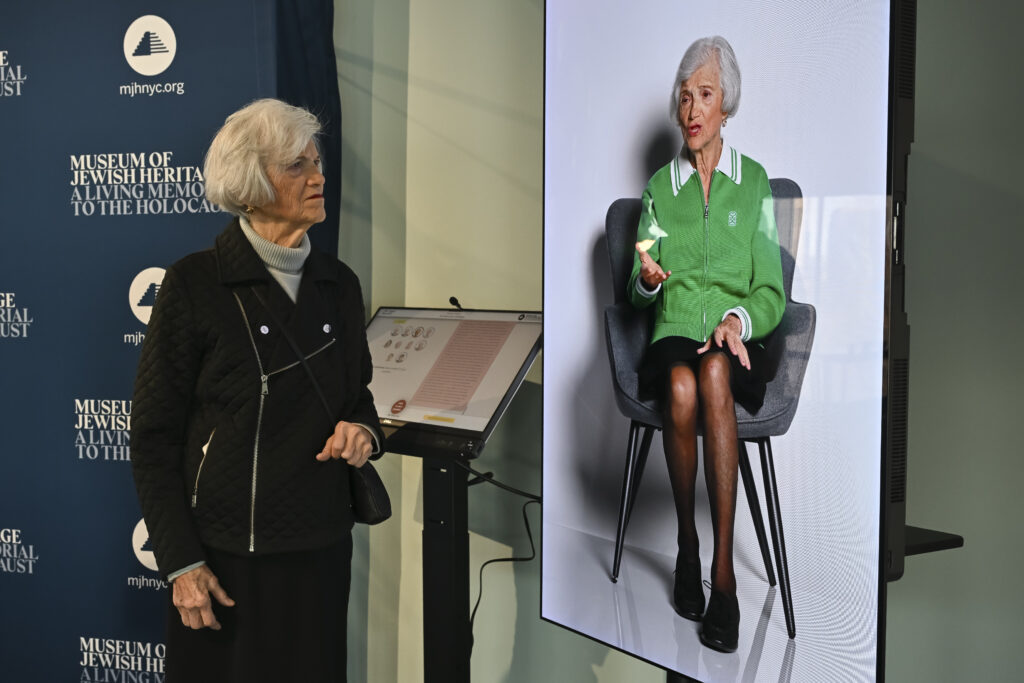
Survivors of the Holocaust have entrusted their memories of the Nazi death camps to artificial intelligence to ensure that generations to come can access recollections of the genocide of six million Jews.The project at the Museum of Jewish Heritage (MJH) in New York saw 10 survivors undertake interviews on a range of topics to allow future visitors to question their virtual likenesses about their experiences.Artificial intelligence will be used to interpret questions from members of the public, who will be played a fixed set of pre-recorded responses to “answer” their questions.”Somebody will survive because we have to tell the world what happened — and maybe it’s us,” said Toby Levy, in her 90s, who was born in a region of Poland in 1933 that is now Ukraine.”I remembered (my father’s) words, ‘you will be the one who will have to tell the world.’ Seventy-five years later, here I am in the United States.”Levy looked at herself on a screen as the technology was demonstrated at the museum, located on Manhattan’s southern tip, in view of Ellis Island where many Holocaust survivors first arrived in the United States by sea.She was among 200 Holocaust survivors who gathered Monday to commemorate the 80th anniversary of the liberation of the Nazi death camp at Auschwitz.They assembled to watch the live commemoration ceremony in front of the entrance to the Auschwitz-Birkenau camp in Poland, and several denounced the resurgence of anti-Semitic hatred around the world.- ‘Man’s inhumanity to man’ -“We all survived,” said Levy, who arrived first in New Orleans before building a life in New York. “Let’s do our share, what we have to do.”The project will protect the memories of the survivors forever, said Mike Jones, the brains behind the project, a collaboration between the University of Southern California Libraries and the MJH. “There’s a timelessness that it’s always going to be important and urgent until the day that there’s simply just peace on Earth,” he said.The ten survivors underwent extensive video interviews in the summer of 2024, touching on their childhoods prior to the Holocaust, survival in the camps, and their recollection of liberation and resettlement.Visitors to the museum or its website can then “converse” with them on screen, and the survivors respond interactively according to the pre-recorded answers.Alice Ginsburg, born in 1933 in what was then Czechoslovakia, now Hungary, recounted her deportation in 1944 to Auschwitz where she almost died from hunger and forced labor before the camp was liberated on January 27, 1945. She arrived in the United States two years later.”It’s important to publicize it so it should never happen again,” she told AFP. “This is man’s inhumanity to man.”Eighty years on from the horrors of the Holocaust, Ginsburg said she worried about the increase “of Holocaust deniers, which is a form of anti-Semitism.”Jerry Lindenstraus, who was born in Germany in the early 1930s and has lived in New York since 1953 after exile in Shanghai and South America, said he wanted to speak out “so that we never forget what happened.””I give talks here to high school students who have no idea what happened,” he said.

Colombia sends plane for migrants after Trump clash

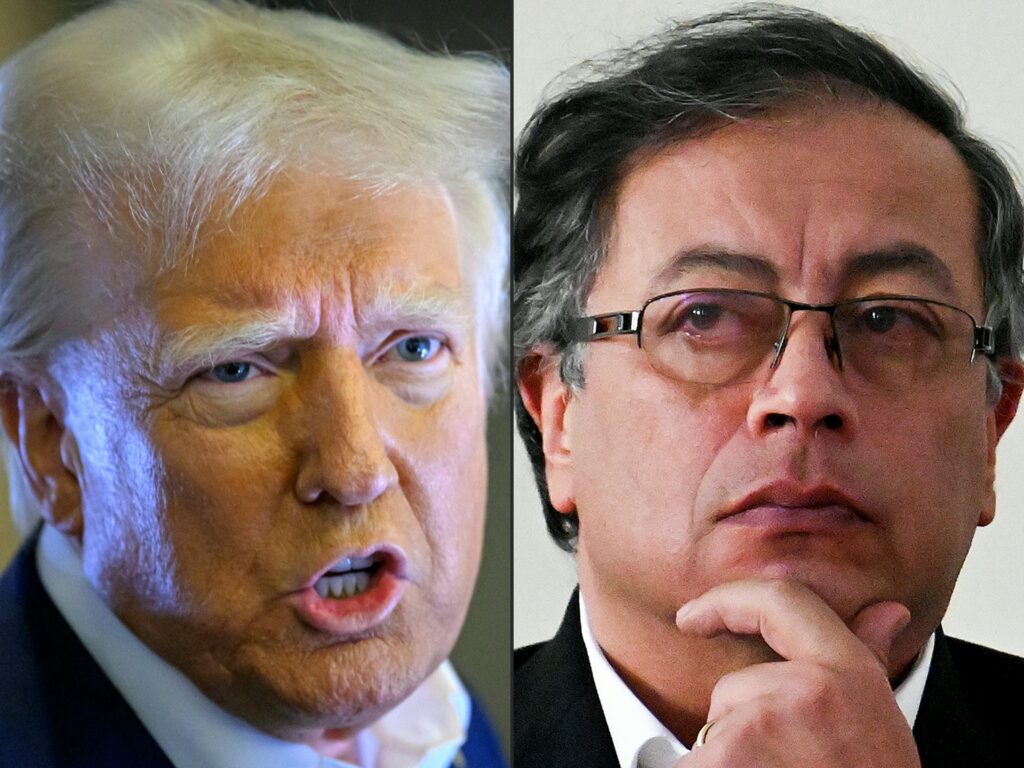
Colombia on Monday sent two military aircraft to repatriate migrants from the United States after being forced to back down in a blazing row over deportations with President Donald Trump.President Gustavo Petro on Sunday stepped back from the brink of a full-blown trade war with the United States after Trump threatened Colombia with sanctions and massive tariffs for turning back two US military planeloads of deported migrants.The foreign ministry said Monday that a Colombian Air Force plane left Bogota in the afternoon with medical staff on board for the US city of San Diego to repatriate 110 Colombians. Shortly after, it announced another had left for Houston, Texas.Petro, a former guerrilla, was the first Latin American leader to defy Trump over his plans for mass deportations, vowing he would only accept migrants returned on civilian flights who were not treated “like criminals.”His announcement came amid an outcry in left-wing ally Brazil over the treatment of dozens of migrants who were flown home in handcuffs last week, prompting Brasilia to summon Washington’s top envoy Monday to explain their treatment.But the resistance of Colombia’s president quickly fizzled in the face of Trump’s threats to impose tariffs on Colombian imports — despite the two countries having a free-trade agreement — and the suspension of US visa applications.Trump claimed victory Monday, telling the congressional Republicans’ annual retreat in Miami that “America is respected again.” At the event, held at a Trump-owned golf club, the president insisted that “as you saw yesterday, we’ve made it clear to every country that they will be taking back our people, that we’re sending out the criminals… the illegal aliens coming from their countries.”If countries don’t accept their migrants back “fast,” added Trump, “they’ll pay a very high economic price, and we’re going to immediately install massive tariffs, and it’ll be placed on them and other sanctions.”Petro, for his part, wrote on X that Colombians were being brought home “without being handcuffed,” adding: “This provision: dignity for deportees, will be applied to all countries that send deportations to us.”Trump’s plan for mass deportations of migrants has put him on a potential collision course with governments in Latin America, the original home of most of the United States’ estimated 11 million undocumented migrants.Since he took office a week ago, thousands of migrants have been sent back to Central and South America — but in most cases the deportations stemmed from agreements predating his return to power.- ‘Tremendous irresponsibility’ -Petro’s standoff with Trump caused an outcry in Colombia — one of the United States’ closest allies in Latin America — over what many saw as his reckless provocation of the country’s biggest trading partner.Former right-wing president Ivan Duque accused the 64-year-old of “an act of tremendous irresponsibility.”Cristian Espinal, a student who flew to Bogota from the city of Medellin for a visa appointment at the US embassy that was cancelled over the spat, told AFP he felt frustrated by Petro’s “hasty, imprudent” behavior.Trump has called off his threatened tariff hikes but said the visa measures would stay in place until the first planeload of deportees returned.While previous US administrations also routinely sent home illegal migrants, Trump has vowed to carry out the biggest deportation wave in history.In a break with his predecessors, he has also begun using military aircraft, with at least one landing in Guatemala this week.Mexican President Claudia Sheinbaum downplayed the impact of the operations, saying Monday that 4,000 migrants sent back over the southern US border during Trump’s first week back in office was “not a substantial increase” on the usual rate.Just over 190,000 people were deported to Mexico from January to November 2024, according to government figures, representing around 17,200 per month.Sheinbaum too is trying to avert a trade war after Trump renewed his threat to impose 25 percent tariffs on imports from both Mexico and Canada unless they halted the flow of migrants and drugs into the United States.Honduras has called for an urgent meeting of leaders from the Community of Latin American and Caribbean States (CELAC) Thursday in its capital Tegucigalpa to discuss migration issues.

Billionaire financier Bessent confirmed as Trump’s treasury chief

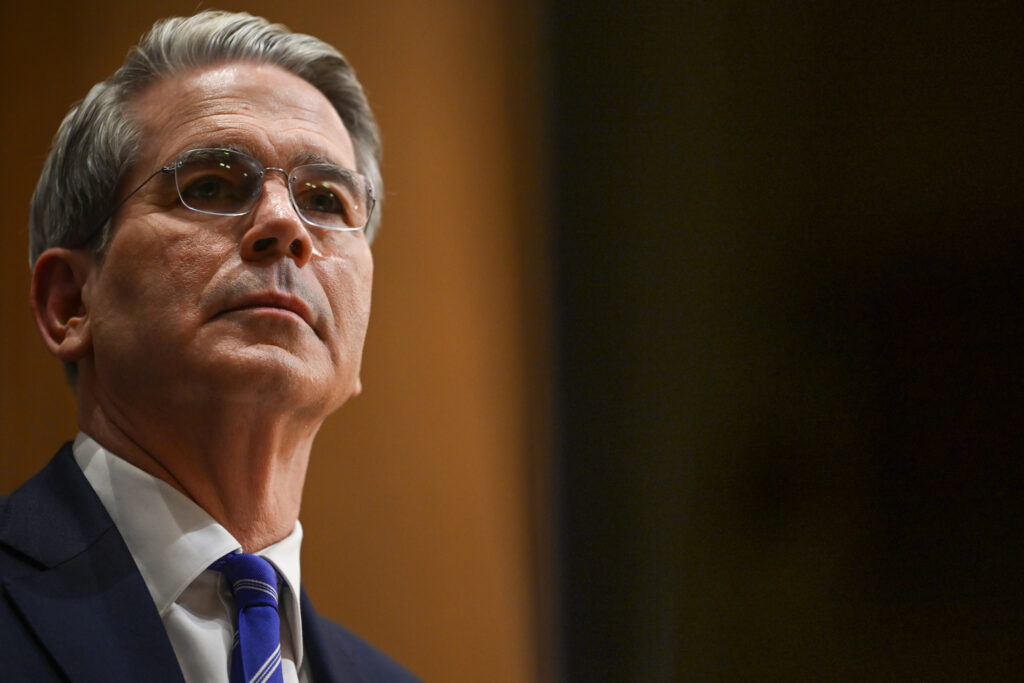
Billionaire hedge fund manager Scott Bessent won Senate approval Monday to become US Treasury secretary, placing him at the forefront of implementing Donald Trump’s economic agenda -– which is already triggering global jitters.Bessent, a Wall Street veteran who was born and raised in South Carolina, has defended the Republican president’s tax cutting and tariff proposals while urging efforts to secure supply chains and the dollar’s global status.On Monday, he cleared a confirmation vote with a comfortable margin of 68-29, with bipartisan support.As Treasury chief, Bessent will have a hand in the administration’s tax policies and its budget, confronting the debt limit and steering plans that could lead to fresh tariffs. Mike Crapo, who chairs the Senate Finance Committee, said Monday that Bessent was “committed to restoring the prosperity and opportunity” seen under Trump’s leadership.But Ron Wyden, the top Democrat on the committee, warned it was unclear that Bessent would serve as a check on Trump’s economic plans, which could weigh on consumers and small businesses.Bessent, 62, has said he would back tougher sanctions on Russian oil majors as a way to end the war in Ukraine, while signaling a hawkish approach on China.Trump returned to the White House this month vowing lower taxes to aid Americans squeezed by high costs of living, and tariffs to pressure other countries to align on US concerns.The president has warned of tariffs on allies and adversaries — including major trading partners Mexico and Canada on February 1.Now all eyes are on how his Treasury chief walks the line between supporting these efforts and avoiding tensions that may roil the world economy.At his hearing, Bessent disagreed that Trump’s proposed duties on imports would be paid for domestically, noting that levies can be used in negotiations, to remedy unfair trade practices or to boost revenues.He also took aim at government spending and high budget deficits.He will have to grapple with Trump’s promised tax cuts — alongside their consequences for the US economy — as he begins his role.The Treasury Department has oversight across areas from federal finances to bank supervision. It also oversees US sanctions.- Family friend -Bessent is the first Senate-confirmed openly gay cabinet official in a Republican administration.He has been based in Charleston, South Carolina, with his husband and their two children.Bessent has known the Trump family for three decades and was friends with the president’s late brother Robert, he previously said.”I was all-in for President Trump,” he said on Trump ally Roger Stone’s radio show.Bessent attended Yale University and served as chief investment officer of Soros Fund Management, the macroeconomic investment firm of liberal billionaire George Soros.In 2015, he raised capital, including $2 billion from Soros, to start his own hedge fund.More recently, Bessent said he had not spoken to Soros in years.Bessent is chief executive at Key Square Group, but has committed to resigning from the position at the hedge fund and divesting his partnership share upon confirmation.- ‘Only-in-America’ -During his confirmation hearing, Bessent recounted taking an internship in finance — a job that came with an office pullout sofa, allowing him to live in New York rent-free.”I’ve been involved in the financial markets ever since,” he told lawmakers. “My life has been the only-in-America story that I am determined to preserve for future generations.”Urging for all tools to be used “to realign the economic system to better serve the interests of working Americans,” Bessent has criticized “unfair distortions” in global trade.He previously floated the idea of Trump nominating a “shadow Fed chair” to dilute the influence of Federal Reserve chief Jerome Powell.But he has since dropped the idea and stated that he supports the central bank’s independence in policymaking.”President Trump is going to make his views known, as many senators did,” Bessent said in his hearing on January 16.He added that on monetary policy, the Fed’s rate-setting committee “should be independent.”

US Justice Dept officials involved in Trump prosecutions fired

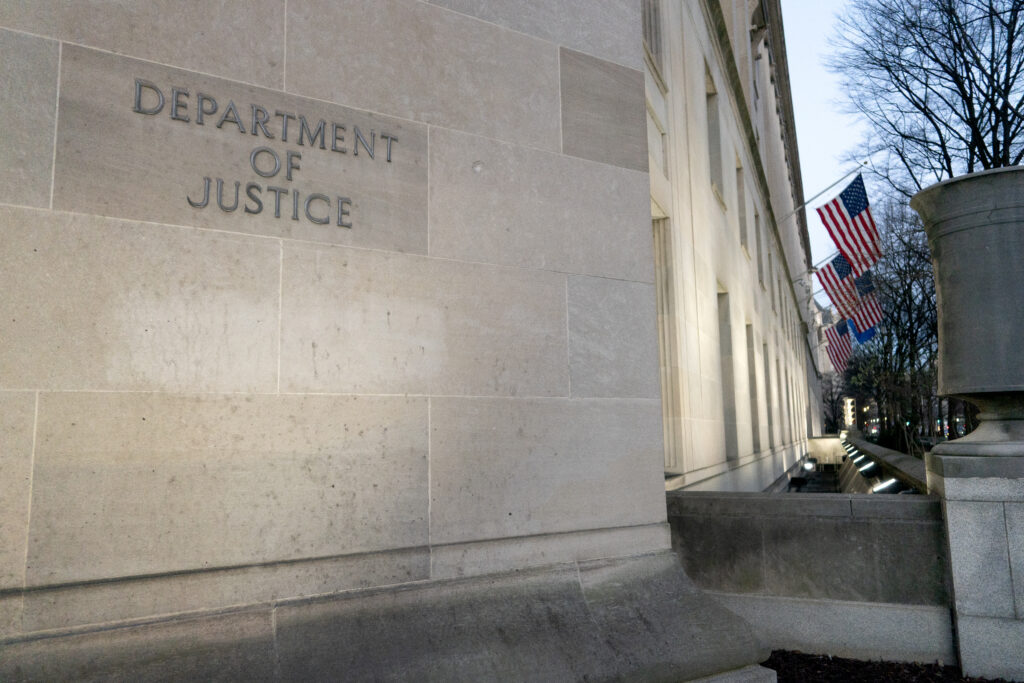
The US Justice Department fired a number of officials on Monday who were involved in the criminal prosecutions of President Donald Trump.”Acting attorney general James McHenry made this decision because he did not believe these officials could be trusted to faithfully implement the president’s agenda because of their significant role in prosecuting the president,” a Justice Department official said.The official did not specify now many people had their employment terminated, but US media outlets said it was more than a dozen and several were career prosecutors with the Justice Department.Special Counsel Jack Smith, who brought two federal cases against Trump, resigned earlier this month.Smith charged Trump with plotting to overturn the results of the 2020 election and mishandling classified documents after leaving the White House.Neither case came to trial and Smith — in line with a long-standing Justice Department policy of not prosecuting a sitting president — dropped them both after the Republican won November’s presidential election.The firing of the Justice Department officials involved in prosecuting Trump was not unexpected.Trump had vowed before the election to fire Smith “on day one” and accused the Justice Department under Democratic president Joe Biden of conducting a “political witchhunt” against him.In his inauguration speech, Trump said he would end the “vicious, violent, and unfair weaponization of the Justice Department and our government.”In his final report, Smith said Trump would have been convicted for his “criminal efforts” to retain power after the 2020 election if the case had not been dropped.Trump was charged with conspiracy to defraud the United States and conspiracy to obstruct an official proceeding — the session of Congress held to certify Biden’s win that was violently attacked on January 6, 2021 by a mob of Trump supporters.Smith also prepared a report into Trump’s alleged mishandling of classified documents but it is being withheld because charges are pending against two of his former co-defendants.Trump faces separate racketeering charges in Georgia over his efforts to subvert the election results in the southern state, but the case will likely be frozen while he is in office.Trump was convicted in New York in May of falsifying business records to cover up hush money payments to a porn star. The judge who presided over the case gave him an “unconditional discharge” which carries no jail time, fine or probation.