AFP USA

G7 to launch ‘alliance’ countering China’s critical mineral dominance

G7 energy ministers meeting in Canada on Thursday planned to launch a new alliance to counter China’s critical mineral dominance, in a push for more reliable access to the resources that power advanced technologies.The two-day Group of Seven meeting in Toronto opened hours after US President Donald Trump and Chinese counterpart Xi Jinping signed an extendable one-year deal on China’s supply of rare earths.Germany’s Minister for Economic Affairs and Energy, Katherina Reiche, told reporters the Trump-Xi deal marked “a good sign,” noting German reliance on Chinese critical mineral exports.But she stressed the agreement “can’t prevent us” from moving forward on broadening supply chains for the materials used in everything from solar panels and mobile phones to precision missiles.”We need diversification of our import routes on raw materials,” Reiche said.- Production alliance -With concern growing about China’s overwhelming dominance in rare earth refining and processing, G7 leaders announced a “Critical Minerals Action Plan” at a summit in western Canada in June.Canada’s Energy Minister Tim Hodgson said the Toronto meeting will aim to formally launch a new initiative designed to curb China’s market influence.The Critical Minerals Production Alliance will “secure transparent, democratic, and sustainable critical mineral supply chains across the G7,” he said.Under the alliance, the governments of Britain, Canada, France, Germany, Italy, Japan, and the United States would mobilize private investment to expand critical mineral production that bypasses China.The head of the critical minerals division at the International Energy Agency, Tae-Yoon Kim, told AFP the Toronto meeting offers “a major opportunity… to start shifting market power.””The high concentration of critical minerals refining in a single country creates economic and national security risks,” Kim said in an email ahead of the G7 talks.- Distorted markets -A central complaint about China’s conduct is that it does not adhere to market principles.Since a high proportion of material moves through Chinese-controlled businesses, Beijing can build stockpiles and control global supply.”For decades, we’ve been facing a competitor who has very consistently distorted free markets, used industrial subsidies, created overcapacity, and undermined fair trade,” said Abigail Hunter, executive director of the Washington-based Center for Critical Minerals Strategy.Hunter noted that within the G7 there are contrasting energy policy priorities.The Trump administration, in particular, is seen as less concerned about the transition to clean energy.G7 unity on critical minerals may also be undermined by Trump’s protectionist trade policies, which have caused global economic upheaval.But given G7 alignment on “security of supply,” Hunter said she saw space for cooperation.”I’m an optimist. I have to be, because this sector is very painful at times.” For her, progress at the Toronto meeting would include concrete action on the issue of traceability — tracking raw materials from mining to refinement and ensuring suppliers follow global market rules.Hunter said that “opaque” Chinese-controlled companies exist across the supply chain, which the G7 should strive to “box out of the market” with new policies on traceability and transparency.”I’m really interested to see what they do on that,” she said, adding that processing still includes a “spider web of entities” where Chinese officials maintain outsized control.”We have a short window of opportunity to fix this. The window is still open — it’s just very, very small,” Hunter said.

Fentanyl, beans and Ukraine: takeaways from Trump-Xi’s ‘great meeting’

From a crippling trade conflict to the Ukraine war, here’s what Beijing and Washington say was achieved during Donald Trump and Xi Jinping’s first face-to-face talks in six years:- Fentanyl, tariffs -The fentanyl trade has long been a sore point: Washington accuses Beijing of turning a blind eye to exports of chemicals used to make the drug, a charge China denies.Trump hit China with a 20-percent levy early this year over fentanyl, but said it would be reduced to 10 percent after Xi agreed at their Busan summit to “work very hard to stop the flow” of the powerful opioid, which has killed thousands of Americans.The reduction would bring average US tariffs on China to 47 percent.Washington would also suspend for a year steeper “reciprocal” tariffs that targeted China, Beijing’s commerce ministry said, ahead of a trade truce set to expire next month. China will make corresponding adjustments.- Hill of beans -Beijing has retaliated against the US tariffs with levies on American agricultural products, including soybeans, hurting a key source of Trump’s political support: farmers.More than half of US soybean exports went to China last year, but Beijing halted all orders as the trade dispute deepened.Trump said China had now agreed to purchase “tremendous” amounts of soybeans and other farm products.US Treasury Secretary Scott Bessent told Fox Business that China agreed to buy 12 million metric tons of the crop “during this season”.- Rare earths, ships -A strategic field dominated by China that is essential for manufacturing in defence, automobiles and consumer electronics, rare earths were expected to occupy a central role in the Busan talks.Beijing imposed sweeping export controls on the materials and related technology this month. Trump swiftly announced retaliatory tariffs of 100 percent on all Chinese goods, which he threatened would start this weekend.But the US leader insisted Thursday that “that whole situation, that roadblock is gone now”.China’s commerce ministry confirmed the rare earths restrictions had been suspended “for one year”.Washington in turn agreed to suspend for one year a move imposing “Entity List” export restrictions on affiliates of blacklisted foreign companies in which they had at least a 50 percent stake, a Chinese spokesperson said.The United States also agreed to halt for a year measures targeting China’s shipbuilding industry that led to both sides applying port fees against each other’s ships, they said.China would suspend its “countermeasures” after the US action, they added, for one year too.- Ukraine – Trump said the United States and China agreed to cooperate more on seeking an end to war in Ukraine.China says it is a neutral party, but Kyiv and Western governments have long accused Beijing of providing political and economic support to Moscow.Trump told reporters the subject came up “very strongly” during his talks with Xi.”He’s going to help us, and we’re going to work together on Ukraine,” Trump said.- Chips -Beijing has ramped up its chip industry to beat Washington’s export restrictions on the critical component used to power artificial intelligence systems.US chip giant Nvidia has been caught in the geopolitical tussle. Nvidia’s chips are currently not sold in China due to a combination of Beijing government bans, US national security concerns and ongoing trade tensions.Nvidia chief executive Jensen Huang has urged the United States to allow the sale of US-made AI chips in China to ensure Silicon Valley companies remain a global powerhouse in AI development.”We did discuss chips,” Trump said, adding that Huang would speak to Beijing about the dispute. “We’re sort of the arbitrator or the referee.”- TikTok -The talks failed to result in a final deal for TikTok’s US operations to be transferred to American ownership, despite Bessent saying beforehand that Xi and Trump may “consummate” an agreement in Busan.Washington has sought to wrest the popular social media app’s US operations from the hands of Chinese parent company ByteDance, citing national security concerns.aue-oho-mya-bys/des

Trump stirs tensions with surprise order to test nuclear weapons

President Donald Trump landed back in the United States Thursday after a surprise directive to begin nuclear weapons testing that raised the specter of renewed superpower tensions.The announcement on social media was issued right as Trump was going into a summit with Chinese leader Xi Jinping in South Korea.And it came days after Russia declared it had tested a nuclear-capable cruise missile and a nuclear-powered, nuclear-capable sea drone.The blunt statement from Trump, who boasts frequently about being a “peace” president, left much unanswered.Chiefly, it was unclear whether he meant testing weapons systems or actually conducting test explosions — something the United States has not done since 1992.Regardless, the statement amounted to unusual nuclear sabre rattling.”Because of other countries testing programs, I have instructed the Department of War to start testing our Nuclear Weapons on an equal basis,” Trump said on Truth Social.Trump also claimed that the United States has more nuclear weapons than any other country and that he had achieved this in his first term as president.None of that appeared to be true.The Stockholm International Peace Research Institute (SIPRI) says in its latest annual report that Russia possesses 5,489 nuclear warheads, compared to 5,177 for the United States and 600 for China. In his post, Trump said — minutes ahead of his Xi summit — said China was expected to “be even within 5 years.”- Russia pushes back -Chinese foreign ministry spokesman Guo Jiakun urged the United States to “earnestly abide” by a global nuclear testing ban.The Kremlin questioned whether Trump was well-informed about Russia’s military activities.The recent weapons drills “cannot in any way be interpreted as a nuclear test,” spokesman Dmitry Peskov told journalists. “We hope that the information was conveyed correctly to President Trump.”Peskov then implied that Russia would conduct its own live warhead tests if Trump did it first.”If someone departs from the moratorium, Russia will act accordingly,” Peskov said.Both countries observe a de facto moratorium on testing nuclear warheads, though Russia and the US do regularly run military drills involving nuclear-capable systems.The United States has been a signatory since 1996 to the Comprehensive Nuclear-Test-Ban Treaty, which bans all atomic test explosions, whether for military or civilian purposes.Trump told reporters aboard Air Force One that it had been “many years” since the United States had conducted nuclear tests, but it was “appropriate” to start again.Further muddying the waters, Trump also repeated in his remarks to reporters a previous claim that he wants negotiations on reducing nuclear weapons forces.”Denuclearization would be a tremendous thing,” he said. “It’s something we are actually talking to Russia about, and China would be added to that if we do something.”- Last US test in 1992 -The United States conducted 1,054 nuclear tests between July 16, 1945, when the first test was conducted in New Mexico, and 1992, as well as two nuclear attacks on Japan during World War II.It is the only country to have used nuclear weapons in combat.The last US nuclear test explosion was in September 1992, with a 20-kiloton underground detonation at the Nevada Nuclear Security Site.Then-president George H.W. Bush imposed a moratorium on further tests in October 1992 that has been continued by successive administrations.Nuclear testing was replaced by non-nuclear and subcritical experiments using advanced computer simulations.Nevada congresswoman Dina Titus responded that she would introduce legislation to “put a stop” to any move at restoring live weapons testing in her state.And Senator Jacky Rosen, also a Democrat, said on X that Trump’s statement “directly contradicts the commitments I secured from Trump nominees… who’ve told me explosive nuclear testing would not happen & is unnecessary.”burs-sms/bgs

US warship departs Trinidad and Tobago after exercise amid Venezuela tensions

A US guided-missile destroyer that docked for four days in Trinidad and Tobago, within firing range of mainland Venezuela — which called its presence a “provocation” — departed as scheduled on Thursday, AFP witnessed.The USS Gravely arrived in Trinidad and Tobago on Sunday, deepening a diplomatic row with Caracas over US military activity in the Caribbean.During the warship’s stay in the two-island nation off Venezuela’s coast, a contingent of US Marines conducted joint training with local defense forces, part of a mounting military campaign by US President Donald Trump against drug-trafficking organizations in Latin America.US strikes on alleged drug-smuggling boats in international waters in the Caribbean and Pacific have killed at least 62 people in recent weeks.Trump’s administration says Venezuela’s President Nicolas Maduro is a drug lord, an accusation he denies, and has issued a $50 million reward for information leading to his capture.Trump has put the United States on a war footing in the Caribbean, raising speculation he will forcefully depose Venezuela’s leftist firebrand Nicolas Maduro.Venezuela claimed Monday to have dismantled a CIA-financed cell plotting a false-flag attack against the USS Gravely.The Pentagon has so far deployed seven warships to the Caribbean and one to the Gulf of Mexico, ostensibly for anti-drug operations.Experts say the attacks on alleged drug trafficking boats amount to extrajudicial killings, even if they target known traffickers.

No GDP data released as US shutdown bites

A US federal data blackout deepened Thursday as a government shutdown halted the release of third quarter GDP figures, forcing policymakers, financial institutions and business owners to continue flying blind.The world’s biggest economy has already delayed reports on employment, trade, retail sales and others, only recalling some furloughed staff to produce key inflation figures needed for the government to calculate Social Security payments.On Thursday, the shutdown entered its 30th day, with Republicans and Democrats still at an impasse.Each assigns blame to the other side over the stoppage, with no quick solution in sight and food aid for millions now at stake.While there were no official gross domestic product (GDP) numbers published on Thursday, economists surveyed by Dow Jones Newswires and The Wall Street Journal expected GDP growth of 2.8 percent in the July to September period.This would be a cooling from second quarter economic growth of 3.8 percent.The Federal Reserve Bank of Atlanta’s GDPNow indicator — a running estimate of real GDP growth based on available data — pegs the figure at 3.9 percent.But the ongoing information blackout means that companies and officials will have to wait to find out.Experts warn that businesses could lower hiring and investment.”This is the time of year where most organizations are finalizing their budgets for 2026,” said Heather Long, chief economist at Navy Federal Credit Union.”So, almost any company is sitting there thinking: Do we think 2026 is going to be an uptick? Or a slowdown, or a recession?” she told AFP.She added that industries are also trying to gauge if the Fed will keep cutting interest rates, a decision that depends on inflation and the jobs market, which has been weakening.The nonpartisan Congressional Budget Office estimates the shutdown could cost the economy up to $14 billion.Matthew Martin of Oxford Economics added that business would likely “reduce their overall hiring to be on the safe side,” until they see data pointing to rising demand or a stabilization in the economy.If the government shutdown lasts through mid-November, as predictions markets expect, most delayed data releases will still be unlikely to come out until December, Goldman Sachs said in a recent note.Such delays could distort October and November numbers.Long warned that October’s data could also be lost if the shutdown persists for too long — as it might not be collected.

Trump orders US to start nuclear weapons testing

US President Donald Trump said Thursday he had ordered the Pentagon to start nuclear weapons testing “on an equal basis” to China and Russia — an announcement made just minutes before he held a high-stakes summit with Chinese leader Xi Jinping.The move came after Russian President Vladimir Putin said on Wednesday that Moscow had successfully tested a nuclear-capable, nuclear-powered underwater drone, in defiance of Washington’s warnings.”Because of other countries testing programs, I have instructed the Department of War to start testing our Nuclear Weapons on an equal basis,” Trump wrote in a social media post.Following that announcement, Kremlin spokesman Dmitry Peskov told reporters on Thursday that the weapon tests announced by Putin did not constitute a direct test of an atomic weapon.Both countries observe a de facto moratorium on testing nuclear warheads, though Russia regularly runs military drills involving systems that are capable of carrying such weapons.The United States has been a signatory since 1996 to the Comprehensive Nuclear-Test-Ban Treaty, which bans all atomic test explosions, whether for military or civilian purposes.It was not immediately clear whether Trump was referring to testing nuclear warheads, which the United States last did in 1992, or testing weapons systems capable of carrying atomic warheads.Trump also claimed that the United States has more nuclear weapons than any other country, praising his own efforts to do “a complete update and renovation of existing weapons.””Russia is second, and China is a distant third, but will be even within five years,” he said.- Thousands of warheads -The Stockholm International Peace Research Institute (SIPRI) said in its latest annual report that Russia possesses 5,489 nuclear warheads, compared to 5,177 for the United States and 600 for China. In total, SIPRI estimates that the nine nuclear-armed countries — Russia, the United States, China, France, the United Kingdom, Pakistan, India, Israel, and North Korea — possess more than 12,200 warheads.Trump told reporters aboard Air Force One that it had been “many years” since the United States had conducted nuclear tests.”We don’t do testing… we’ve halted it years, many years ago,” he said, adding that it was “appropriate” to start again because others are testing.”I’d like to see denuclearization… denuclearization would be a tremendous thing,” he said.He claimed “it’s something we are actually talking to Russia about, and China would be added to that if we do something.”Trump kept the location and dates for testing vague during the news conference, but said earlier it would “begin immediately.”- China defends nuclear ban -The Republican president was in South Korea to meet with Xi, with the leaders of the world’s top two economies coming face-to-face for the first time in Trump’s second term.Chinese foreign ministry spokesman Guo Jiakun later urged the United States to “earnestly abide” by a global nuclear testing ban “and take concrete actions to safeguard the global nuclear disarmament.”The United States conducted 1,054 nuclear tests between July 16, 1945, when the first test was conducted in New Mexico, and 1992, as well as two nuclear attacks on Japan during World War II.It is the only country to have used nuclear weapons in combat.The last US nuclear test explosion was in September 1992, with a 20-kiloton underground detonation at the Nevada Nuclear Security Site.Then-president George H.W. Bush imposed a moratorium on further tests in October 1992 that has been continued by successive administrations.Nuclear testing was replaced by non-nuclear and subcritical experiments using advanced computer simulations.- Russia’s ‘Poseidon’ drone -Putin announced on Wednesday the successful testing of a nuclear-capable, nuclear-powered underwater drone, the second weapons test in days after that of the Burevestnik cruise missile.In televised remarks broadcast from a military hospital treating Russian soldiers wounded in Ukraine, Putin said there was “no way to intercept” the torpedo drone dubbed “Poseidon.””Regarding the tests of Poseidon and Burevestnik, we hope that the information was conveyed correctly to President Trump,” Kremlin spokesman Peskov told journalists, including AFP, during a daily briefing on Thursday.”This cannot in any way be interpreted as a nuclear test.”He implied that Russia would also test nuclear warheads if Trump ordered a live test of an atomic weapon.”If someone departs from the moratorium, Russia will act accordingly,” Peskov said.

Fentanyl, beans and Ukraine: Trump hails ‘success’ in talks with Xi

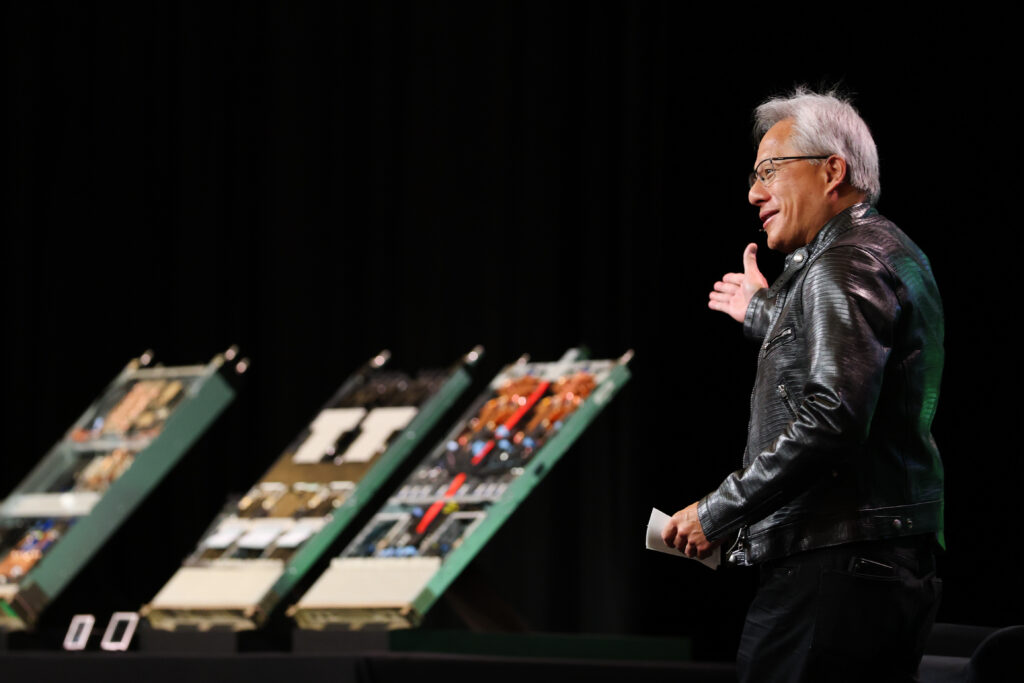
A beaming US President Donald Trump hailed his “great success” in talks with Chinese President Xi Jinping in the South Korean city of Busan on Thursday.From a deal to reduce tariffs slapped on China for its role in the fentanyl trade to planned cooperation in ending the war in Ukraine, here’s what Trump says he achieved in talks with Xi: – Fentanyl -The fentanyl trade has long been a sore point in relations between China and the United States: Washington accuses Beijing of turning a blind eye to the illegal trade in the drug, a charge it denies.Trump hit China with a 20 percent levy on Chinese imports over complaints about its exports of chemicals used to make fentanyl.However, he said after the talks in Busan the tariffs would be reduced to 10 percent — bringing overall US tariffs on Chinese goods to 47 percent.Trump said Xi “agreed that he was going to work very hard to stop the flow” of the powerful opioid, which has killed thousands of Americans.”I believe he’s going to work very hard to stop the death that’s coming in,” Trump told reporters on Air Force One.- Hill of beans -Beijing retaliated against Trump’s fentanyl tariffs with levies against US agricultural products, including soybeans.More than half of US soybean exports went to China last year, but Beijing halted all orders as the trade dispute deepened.US farmers have been badly hit by the tariff war and are a key source of domestic political support for Trump.Trump said China had now agreed to purchase “tremendous” amounts of soybeans, as well as other farm products.”That was a very nice gesture,” he said.- Rare earths -A strategic field dominated by China that is essential for manufacturing in defence, automobiles and consumer electronics, rare earths were expected to occupy a central role in the Busan talks.Beijing imposed sweeping export controls on the materials and related technology this month. Trump swiftly announced retaliatory tariffs of 100 percent on all Chinese goods, which were originally due to come into effect on Saturday.But the US leader insisted on Thursday that “that whole situation, that roadblock is gone now”.”There’s no roadblock at all on rare earths — that will hopefully disappear from our vocabulary,” he said, without giving details.- Ukraine – The United States and China have also reportedly agreed to cooperate more on seeking an end to the war in Ukraine.China says it is a neutral party in the conflict, but Kyiv and Western governments have long accused Beijing of providing political and economic support to Moscow.Trump told reporters the subject had come up “very strongly” during his talks with Xi.”He’s going to help us, and we’re going to work together on Ukraine,” Trump said.- Chips -Beijing has ramped up its chip industry to beat Washington’s export restrictions on the critical component used to power artificial intelligence systems.US chip giant Nvidia has been caught in the middle of that geopolitical tussle. Nvidia’s chips are currently not sold in China due to a combination of Beijing government bans, US national security concerns and ongoing trade tensions.CEO Jensen Huang has urged the United States to allow the sale of US-made AI chips in China in order to ensure Silicon Valley companies remain a global powerhouse in providing artificial intelligence.”We did discuss chips,” Trump said after meeting Xi, adding that Huang would speak to Beijing about the dispute.”We’re sort of the arbitrator or the referee,” Trump said.Huang is currently in South Korea for the Asia-Pacific Economic Cooperation (APEC) CEO summit in Gyeongju, which Xi is also expected to attend.

US economy in the dark as government shutdown cuts off crucial data

US policymakers, financial institutions and business owners have been flying blind for almost a month as a government shutdown has stopped the release of crucial federal economic data ranging from the size of the labor force to the country’s GDP.The void is set to deepen by Thursday as Washington holds off publishing gross domestic product (GDP) numbers measuring the growth of the world’s biggest economy in the July to September period.The United States has already delayed reports on employment, trade, retail sales and others, only recalling some furloughed staff to produce key inflation figures needed for the government to calculate Social Security payments.Congressional Republicans and Democrats remain at an impasse, each assigning blame to the other side over the shutdown with no quick end in sight and food aid for millions now at stake.Analysts warn the growing information blackout could, in turn, cause businesses to lower hiring and investment.”There’s a huge demand right now for government data,” said Heather Long, chief economist at Navy Federal Credit Union. “Every industry is trying to figure out if the Federal Reserve is going to keep cutting interest rates.”The central bank’s decisions hinge upon the economy’s health, particularly inflation and the weakening jobs market.”This is the time of year where most organizations are finalizing their budgets for 2026,” Long told AFP.”So, almost any company is sitting there thinking: Do we think 2026 is going to be an uptick? Or a slowdown, or a recession?”The nonpartisan Congressional Budget Office estimates the shutdown could cost the economy up to $14 billion.Economist Matthew Martin of Oxford Economics expects firms to proceed cautiously, with President Donald Trump’s tariffs already sending uncertainty surging this year.”Businesses would therefore reduce their overall hiring to be on the safe side of things, until they see data that really points towards increased demand, or at least stabilization in the economy,” he told AFP.Similarly, those in the financial markets need data to make investments and decide their moves in equities, he said.- ‘Tainted data’ -Should the shutdown last through mid-November, as prediction markets expect, most delayed data releases will likely not come out until December, Goldman Sachs said in a note this week.”The risk would grow that delays could distort not just the October but the November data too,” the report added.Long said that October’s data could even be lost if the shutdown drags on for too long, “because the data was not collected.”Government workers could ask people to recount economic conditions once the shutdown ends, but this proves tricky if the delay is too long, she said.The risk is no data or “tainted data” if memories are seen as less reliable over time, she added.While economists, policymakers and business leaders have been relying on private sector data, analysts stress that these cannot replace numbers produced by the US government, which are viewed as the gold standard.”We have a remarkable amount of uncertainty about just literally what’s happening with labor supply, like how many people are in the United States and want jobs,” said Brookings Institution senior fellow Wendy Edelberg.She added that there is significant disagreement about how many people have left the country since the start of 2025.Wells Fargo senior economist Sarah House said despite strong GDP growth recently, there are many “signs of strain underneath the surface,” alongside signals that “not every component or group in the economy is doing equally well.”She cautioned that the shutdown is unhelpful for the economy: “If you’re not sure when your next paycheck is coming as a government worker, you’re not going to be going out to eat for dinner.” “You’re maybe pushing off a trip, or just not buying little discretionary things.”

From La Guardia to De Blasio: New York’s most memorable mayors

New York’s mayors are an eclectic bunch: from uniters to heroes-turned-villains and those accused of corruption.Here is what to know about five of the most high-profile mayors of The Big Apple as the city prepares to pick its 111th leader on November 4:- Fiorello La Guardia (1934-1945) -La Guardia lends his name to New York’s first major airport, inaugurated in 1939, a recognition of his role as the builder of modern New York.He remains the preferred mayor of present-day candidates Zohran Mamdani and Andrew Cuomo.Born in New York to Italian parents and raised between the United States and Italy, La Guardia was one of many city leaders of immigrant descent.A progressive Republican, he was elected by opposing Tammany Hall, the Democratic hub that had controlled the city for a century. Nicknamed “the Little Flower,” he led the city during the Great Depression, collaborating with president Franklin Roosevelt.Under La Guardia’s administration, New York developed public housing, a modernized subway system, new parks and two airports, and reformed its welfare system.- The Orator: Ed Koch (1978-1989) -Koch famously described himself as “the sort of person who will never get ulcers. Why? Because I say exactly what I think.”Born in New York in 1924 to Polish Jewish parents, he studied law before entering politics. The city faced high crime and a financial crisis when he took office.The Democrat, who described himself as “liberal with sanity,” imposed austerity while renovating thousands of abandoned homes. He famously pounded the sidewalks, asking passersby “How’m I doin’?” His tenure ended marred by corruption scandals involving close associates, the closure of a hospital serving Black residents, and criticism of his AIDS policy.- Diversity champion: David Dinkins (1990-1993) -New York’s first African American mayor championed diversity, calling it a “gorgeous mosaic.” Born in neighboring New Jersey, Dinkins served in the military before studying mathematics and law.His marriage to the daughter of a New York State Assembly member propelled him into politics.He was unable to secure re-election after battling rising crime and racial tensions.This culminated in 1991’s Brooklyn riots after a rabbi’s motorcade hit two Black children, killing one. Dinkins strengthened police and supported community mediation and racial integration, laying the groundwork for a sustained drop in crime and more inclusive policies. – ‘America’s mayor’: Rudy Giuliani (1994-2001) -The first Republican mayor in 20 years in true-blue New York, Giuliani cut spending and cracked down on crime. He pushed controversial “broken windows theory,” insisting on zero tolerance for low-level lawbreaking. Critics accused him of ignoring police brutality, noting crime was declining nationwide anyway.Giuliani’s management of the September 11, 2001 attacks aftermath earned him the nickname “America’s Mayor” — and Time magazine’s Person of the Year.After an unsuccessful 2008 Republican presidential run, he joined Donald Trump’s campaign to overturn Joe Biden’s 2020 presidential victory. Ex-attorney Giuliani has since been repeatedly sued for defamation and disbarred in New York.- The Progressive: Bill de Blasio (2014-2021) -This Democratic outsider courted voters emphasizing the city’s economic divisions after 12 years under independent Michael Bloomberg’s leadership.His progressive wins included universal pre-kindergarten and a reduction in police stop-and-frisk actions.But de Blasio’s policies aimed at promoting affordable housing failed to curb rising rents, and homelessness.His attempt to introduce a “millionaire’s tax” to fund his social programs was blocked by state legislators. He struggled to engage police unions following the Black Lives Matter protests in 2014 and 2020, and is remembered for a stuttering response to the Covid-19 pandemic. He abandoned his presidential ambitions in 2020 amid a lack of support.

US says 4 killed in new strike on alleged Pacific drug boat

The US military on Wednesday struck another boat in the eastern Pacific it claimed was trafficking drugs, killing four people, Pentagon chief Pete Hegseth said, bringing the death toll from Washington’s controversial anti-narcotics campaign to at least 62.The strike occurred in international waters, Hegseth announced on X, and a video accompanying his post showed a boat floating stationary in the water before a large explosion and subsequent fire.Like previous videos released by the US government, areas on the boat are obfuscated, rendering it impossible to verify how many people were on board.”This vessel, like all the others, was known by our intelligence to be involved in illicit narcotics smuggling, was transiting along a known narco-trafficking route, and carrying narcotics,” Hegseth said.Experts say the attacks, which began in early September, amount to extrajudicial killings even if they target known traffickers, and Washington has yet to make public any evidence that its targets were smuggling narcotics or posed a threat to the United States.Wednesday’s deadly attack comes two days after multiple strikes on four boats killed 14 people in the eastern Pacific and left one survivor.The United States asked Mexico to attempt to rescue the survivor, but Mexican President Claudia Sheinbaum said Wednesday that search efforts had failed.Earlier Wednesday, Venezuelan President Nicolas Maduro said his country had intercepted three planes allegedly used for drug trafficking, as tensions mount over the US boat strikes and its military deployment in the region.”The day before yesterday…a drug-trafficking plane entered through the Caribbean. Our aviation detected it in a second,” Maduro said at an official event. “Today, two drug-trafficking aircraft entered from the north. And in accordance with our law, we have an interception law…bam, boom, bang!”It was not immediately clear if this meant the planes were shot down.Maduro said the action was taken “to make them respect Venezuela…what is that called? Exercising sovereignty.”Caracas has sought to showcase anti-drug efforts in the face of a massive US military deployment within striking distance of the country.The United States has deployed seven US Navy warships as well as F-35 stealth warplanes, and ordered the USS Gerald R. Ford aircraft carrier strike group to the region, bringing a massive increase in firepower.Washington calls its deployment an anti-drug operation, but Caracas fears it is a guise for military action to oust Maduro.US President Donald Trump’s administration says Maduro is a drug lord, an accusation he denies, and has issued a $50 million reward for information leading to his capture.Maduro insists there is no drug cultivation in Venezuela, which he says is used as a trafficking route for Colombian cocaine against its will.