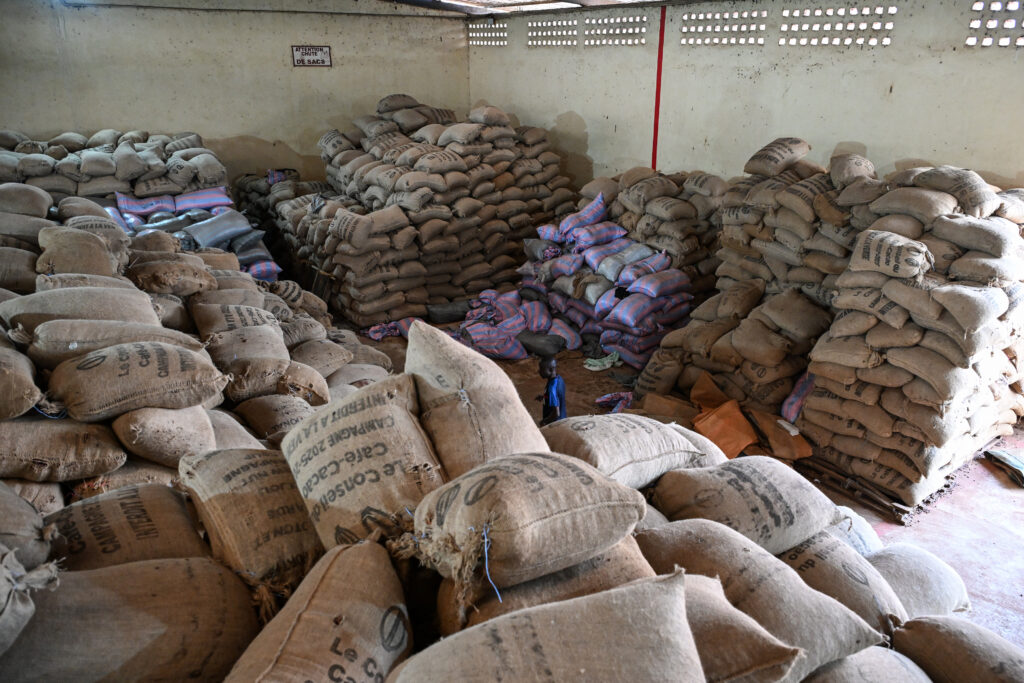
At a warehouse in western Ivory Coast the backlog of cocoa beans waiting to be shipped has grown so big the storage site can barely accept another sack.Producers in the world’s leading cocoa exporter complain of a massive hold-up in the system, all but stopping exports and hitting farmers hard.Siriri Millogo, head of a cooperative of agricultural producers in Duekoue, said he had sent 13 export requests to the Coffee and Cocoa Board (CCC).The oldest dates from January 4, he said, but they are all still pending a response from the body that manages and regulates the sector, which accounts for 14 percent of Ivory Coast’s gross domestic product.Ordinarily, such export requests — or bills of lading detailing the product for transport — are approved in a matter of minutes, Millogo said.Perplexed, he has put in numerous calls to the CCC and to exporters but has not found any answers. Meanwhile, 660 tonnes of cocoa has now piled up at the cooperative, which could only accept one sack despite the deliverer’s motorbike being piled high with cocoa.Cocoa prices for growers in the west African country are set twice a year by the government but can end up being out of synch with fluctuating world market prices.In October, weeks before his re-election, President Alassane Ouattara himself announced a record price of 2,800 CFA francs per kilo ($4.95, 4.26 euros), a decision welcomed by producers.After soaring to $12,000 per tonne in late 2024 after several years of harvests failing to meet demand, cocoa prices have slumped on world markets since the middle of last year and are now only around $5,000 a tonne, or $5 per kilo.”There is no blockage,” the director of the CCC Yves Brahima Kone told a press conference last week, saying he wanted to “reassure” growers.”All the production… will be purchased,” he said.- ‘How do I pay?’ – Growers deliver their produce, which requires a bill of lading before it can be exported and payment is made to the cooperative, which in turn pays the producers.One in five people in Ivory Coast indirectly relies on cocoa to make a living.”Just yesterday, a producer came by, he has a product (harvested cocoa) worth nine million (CFA francs) and yet he doesn’t even have 100 francs to pay for his wife’s funeral,” said Marty Somda, from the Cabend cooperative, which has six requests for export pending.Growers who have not seen any money since mid-October have sold at rock-bottom prices out of necessity.”My wife is ill. They gave me a prescription but how do I pay for it? Yesterday I sold for 2,000 francs because I was in need,” Laurent Kone, a grower from near Duekoue, said.- Reimbursing a shortfall -Against the backdrop of prices that could drop further, both national and international exporters have delayed purchases.”If prices keep falling, on April 1 the government will be forced to set a lower price,” consultant Ousmane Attai Ouedraogo, who specialises in the cocoa sector, said.Some buyers face other hurdles.Somda, from the Cabend cooperative, said that last week he went to talk to large exporter Cargill in the economic hub Abidjan.”They want to buy, but they don’t have any quotas because the CCC isn’t issuing any to them,” he said.But Moussa Kone, of the growers’ union Synap-ci, pointed to the impact of a guaranteed minimum farm-gate price for cocoa.If prices decrease, exporters buying at the government-set price of 2,800 CFA francs could incur a loss of around 1,000 francs per kilo when selling on the global market, taking into account extra export costs, he said.”The law compels the Board to reimburse the shortall” to the exporters, Kone said.”Why hasn’t it been triggered?” the trade unionist asked, as did many growers. Contacted by AFP on that issue, the CCC declined to comment.”It’s a war between the CCC and the exporters,” Ouedraogo, the consultant, said.Many highlighted the irony of a government guaranteed price system meant to shield growers from the worry of market fluctuations has instead led to their being unable to export their crops.”Those who are growing cocoa aren’t protected,” said Kone, of the growers’ union Synap-ci.