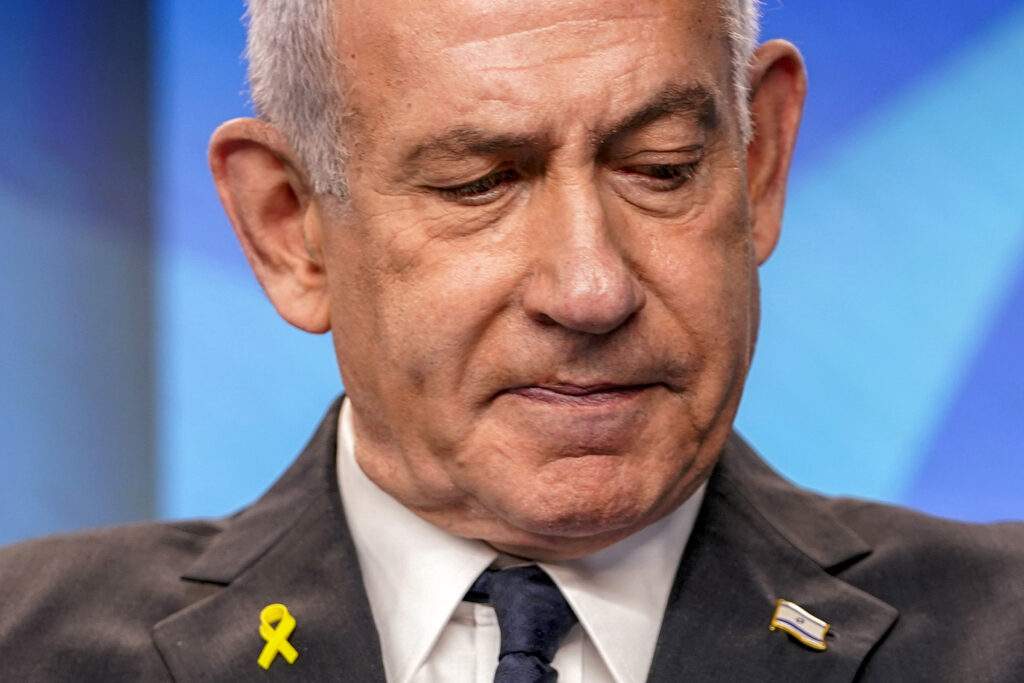
Benjamin Netanyahu’s request for a pardon in three ongoing corruption cases is widely seen as his latest bid to ensure his political survival, as the canny premier stares down the prospect of close elections in 2026.The first sitting Israeli prime minister to stand trial, Netanyahu has been dogged by the allegations for years, and has had to appear in front of a judge weekly for hearings.He has repeatedly denied any wrongdoing and denounced the cases as a politically motivated plot against him.He submitted his request on Sunday to President Isaac Herzog, who will now decide whether to take the rare move of pardoning Netanyahu before any conviction.”The pardon request that Netanyahu’s lawyers submitted is not a legal move. It is purely a political move,” prominent columnist Nahum Barnea wrote in the Yediot Aharonot daily.The request starts a negotiation led by Herzog that could see the trials end through a plea bargain agreement, a pardon or a combination of the two, the columnist said.”If Herzog grants him a deluxe pardon he will be freed from his trial… he will ride that wave all the way to victory in the elections,” he wrote Monday.”If the negotiations end in failure,” he added, “Netanyahu will ride the wave of victimhood all the way to victory in the elections.”- ‘Political tool’ -Netanyahu, 76, is Israel’s longest-serving premier, having spent more than 18 years in the post across three spells since 1996.The next election must be held no later than November 2026, but could be even earlier if Netanyahu chooses, or if his hand is forced by the loss of his very fragile majority.The premier has already made it clear he intends to run again, though he is facing a tricky race.Polls have shown that if an election were held today, Netanyahu’s right-wing Likud party would win, putting him in prime position to form the next government.But according to a Kan poll conducted the day of his pardon request, the prime minister’s parliamentary bloc would win just 52 seats, compared to 58 for the opposition — not counting Arab parties, which are unlikely to join a coalition with either side.Meanwhile, Netanyahu faces a wall of anger in Israel.Nearly two-thirds of Israelis want him to acknowledge his responsibility for the security failures that led to Palestinian militant group Hamas’s October 7, 2023 attack on Israel.Opinions are mixed on the prospect of offering him clemency, with between 40 and 48 percent of Israelis opposing it, and 35 to 38 percent in favour, according to two surveys published after the request.For Netanyahu, it is all about securing the next term, said legal expert Dorit Koskas, who said the premier was using the pardon as a “political tool”.He wants to “erase the consequences of his failings so he can continue his political career instead of finally being held accountable”, she told AFP.Political journalist Ari Shavit speculated in Yediot Aharonot that Netanyahu would propose a deal: “a pardon in exchange for a complete halt to the judicial reform” that deeply divided the country in 2023.Netanyahu’s government proposed far-reaching judicial reforms that critics said sought to weaken the courts, prompting massive protests that were only curtailed after the onset of the Gaza war.- Trump backing -But Netanyahu has one significant and powerful supporter: US President Donald Trump, who wrote to Herzog last month seeking a pardon for the prime minister.Netanyahu said in a letter sent alongside the pardon request that an end to his trials would heal the divisions in Israel.Although the Israeli opposition rejects a pardon without Netanyahu’s withdrawal from political life, Herzog said Monday he would focus only on Israel’s “best interests” when he weighs the request.According to political analyst Myriam Shermer, a pardon for Netanyahu would only reduce divisions if it allowed “a broad centrist coalition to emerge… after years of political deadlock”.Israel’s system of proportional representation has often led to coalitions made up of very different parties which frequently results in unstable governments.To achieve a broad centrist coalition, Shermer said the opposition must end its stigmatisation of Netanyahu, and the prime minister must agree to govern with parties other than his current far-right and ultra-Orthodox allies.She added Netanyahu would also have to establish a “real commission that will examine the security and political failings” that led to the October 7 attack, which the premier opposes despite wide support across Israel for such a move.Shermer said Netanyahu should “have no problem putting aside” the judicial reform in exchange for a final term, which the premier hopes will be “crowned with diplomatic successes”, including his dream of normalisation with Saudi Arabia.
Benjamin Netanyahu’s request for a pardon in three ongoing corruption cases is widely seen as his latest bid to ensure his political survival, as the canny premier stares down the prospect of close elections in 2026.The first sitting Israeli prime minister to stand trial, Netanyahu has been dogged by the allegations for years, and has had to appear in front of a judge weekly for hearings.He has repeatedly denied any wrongdoing and denounced the cases as a politically motivated plot against him.He submitted his request on Sunday to President Isaac Herzog, who will now decide whether to take the rare move of pardoning Netanyahu before any conviction.”The pardon request that Netanyahu’s lawyers submitted is not a legal move. It is purely a political move,” prominent columnist Nahum Barnea wrote in the Yediot Aharonot daily.The request starts a negotiation led by Herzog that could see the trials end through a plea bargain agreement, a pardon or a combination of the two, the columnist said.”If Herzog grants him a deluxe pardon he will be freed from his trial… he will ride that wave all the way to victory in the elections,” he wrote Monday.”If the negotiations end in failure,” he added, “Netanyahu will ride the wave of victimhood all the way to victory in the elections.”- ‘Political tool’ -Netanyahu, 76, is Israel’s longest-serving premier, having spent more than 18 years in the post across three spells since 1996.The next election must be held no later than November 2026, but could be even earlier if Netanyahu chooses, or if his hand is forced by the loss of his very fragile majority.The premier has already made it clear he intends to run again, though he is facing a tricky race.Polls have shown that if an election were held today, Netanyahu’s right-wing Likud party would win, putting him in prime position to form the next government.But according to a Kan poll conducted the day of his pardon request, the prime minister’s parliamentary bloc would win just 52 seats, compared to 58 for the opposition — not counting Arab parties, which are unlikely to join a coalition with either side.Meanwhile, Netanyahu faces a wall of anger in Israel.Nearly two-thirds of Israelis want him to acknowledge his responsibility for the security failures that led to Palestinian militant group Hamas’s October 7, 2023 attack on Israel.Opinions are mixed on the prospect of offering him clemency, with between 40 and 48 percent of Israelis opposing it, and 35 to 38 percent in favour, according to two surveys published after the request.For Netanyahu, it is all about securing the next term, said legal expert Dorit Koskas, who said the premier was using the pardon as a “political tool”.He wants to “erase the consequences of his failings so he can continue his political career instead of finally being held accountable”, she told AFP.Political journalist Ari Shavit speculated in Yediot Aharonot that Netanyahu would propose a deal: “a pardon in exchange for a complete halt to the judicial reform” that deeply divided the country in 2023.Netanyahu’s government proposed far-reaching judicial reforms that critics said sought to weaken the courts, prompting massive protests that were only curtailed after the onset of the Gaza war.- Trump backing -But Netanyahu has one significant and powerful supporter: US President Donald Trump, who wrote to Herzog last month seeking a pardon for the prime minister.Netanyahu said in a letter sent alongside the pardon request that an end to his trials would heal the divisions in Israel.Although the Israeli opposition rejects a pardon without Netanyahu’s withdrawal from political life, Herzog said Monday he would focus only on Israel’s “best interests” when he weighs the request.According to political analyst Myriam Shermer, a pardon for Netanyahu would only reduce divisions if it allowed “a broad centrist coalition to emerge… after years of political deadlock”.Israel’s system of proportional representation has often led to coalitions made up of very different parties which frequently results in unstable governments.To achieve a broad centrist coalition, Shermer said the opposition must end its stigmatisation of Netanyahu, and the prime minister must agree to govern with parties other than his current far-right and ultra-Orthodox allies.She added Netanyahu would also have to establish a “real commission that will examine the security and political failings” that led to the October 7 attack, which the premier opposes despite wide support across Israel for such a move.Shermer said Netanyahu should “have no problem putting aside” the judicial reform in exchange for a final term, which the premier hopes will be “crowned with diplomatic successes”, including his dream of normalisation with Saudi Arabia.