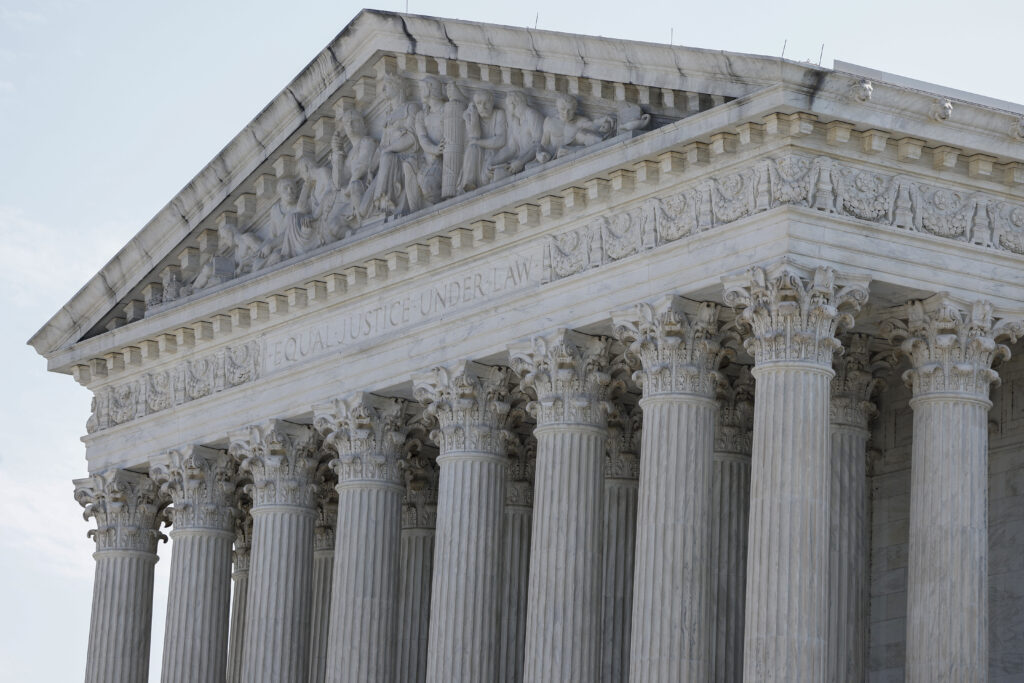
The US Supreme Court appeared likely on Tuesday to strike down a Hawaii law that bans the carrying of firearms on private property open to the public such as stores or restaurants.A majority of the justices on the conservative-dominated top court seemed skeptical of the state law, viewing it as a violation of the constitutional right to bear arms.The Hawaii law requires a gun owner with a concealed carry permit to get the explicit permission of a private property owner before bringing a firearm into their establishment.Four other Democratic-ruled states — California, Maryland, New Jersey and New York — have similar laws, which pit the rights of property owners against those of gun owners.The Supreme Court expanded gun rights in a landmark 2022 ruling and has been generally sympathetic to gun owners.”Our national tradition is that people are allowed to carry on private property that is open to the public,” Alan Beck, an attorney representing gun owners who are challenging the state law, told the justices.Beck accused Hawaii of “running roughshod” over the Second Amendment’s “right of the people to keep and bear arms.”Justice Samuel Alito, one of the six conservatives on the nine-member court, told Neal Katyal, the lawyer for Hawaii, that the state law was “relegating the Second Amendment to second-class status.””I don’t see how you can get away from that,” Alito said.Justice Neil Gorsuch, another conservative, dismissed suggestions the case was just about “property rights and has nothing to do with the Second Amendment.””We don’t allow governments to redefine property rights in other contexts that would infringe other constitutional rights,” Gorsuch said.President Donald Trump’s Justice Department is backing the challenge and was represented in court by Deputy Solicitor General Sarah Harris, who said the Hawaii law turns “property open to the public, like a gas station, into the equivalent of someone’s house.””You’re committing a crime under Hawaii law if you actually go onto it without consent,” Harris said.Arguing for the state, Katyal said the case is about “two fundamental rights, the right to bear arms and the property right to exclude.””Everyone agrees there’s a right to carry on private property if the owner wants guns on his property,” he said. “Everyone also agrees there’s also no such right if the owner doesn’t want guns.”There is no constitutional right to assume that every invitation to enter private property includes an invitation to bring a gun,” Katyal said.”The Constitution protects the right to keep and bear arms. It doesn’t create implied consent to bring arms onto another’s property.”The court is expected to rule in the case by the end of June or early July.
The US Supreme Court appeared likely on Tuesday to strike down a Hawaii law that bans the carrying of firearms on private property open to the public such as stores or restaurants.A majority of the justices on the conservative-dominated top court seemed skeptical of the state law, viewing it as a violation of the constitutional right to bear arms.The Hawaii law requires a gun owner with a concealed carry permit to get the explicit permission of a private property owner before bringing a firearm into their establishment.Four other Democratic-ruled states — California, Maryland, New Jersey and New York — have similar laws, which pit the rights of property owners against those of gun owners.The Supreme Court expanded gun rights in a landmark 2022 ruling and has been generally sympathetic to gun owners.”Our national tradition is that people are allowed to carry on private property that is open to the public,” Alan Beck, an attorney representing gun owners who are challenging the state law, told the justices.Beck accused Hawaii of “running roughshod” over the Second Amendment’s “right of the people to keep and bear arms.”Justice Samuel Alito, one of the six conservatives on the nine-member court, told Neal Katyal, the lawyer for Hawaii, that the state law was “relegating the Second Amendment to second-class status.””I don’t see how you can get away from that,” Alito said.Justice Neil Gorsuch, another conservative, dismissed suggestions the case was just about “property rights and has nothing to do with the Second Amendment.””We don’t allow governments to redefine property rights in other contexts that would infringe other constitutional rights,” Gorsuch said.President Donald Trump’s Justice Department is backing the challenge and was represented in court by Deputy Solicitor General Sarah Harris, who said the Hawaii law turns “property open to the public, like a gas station, into the equivalent of someone’s house.””You’re committing a crime under Hawaii law if you actually go onto it without consent,” Harris said.Arguing for the state, Katyal said the case is about “two fundamental rights, the right to bear arms and the property right to exclude.””Everyone agrees there’s a right to carry on private property if the owner wants guns on his property,” he said. “Everyone also agrees there’s also no such right if the owner doesn’t want guns.”There is no constitutional right to assume that every invitation to enter private property includes an invitation to bring a gun,” Katyal said.”The Constitution protects the right to keep and bear arms. It doesn’t create implied consent to bring arms onto another’s property.”The court is expected to rule in the case by the end of June or early July.