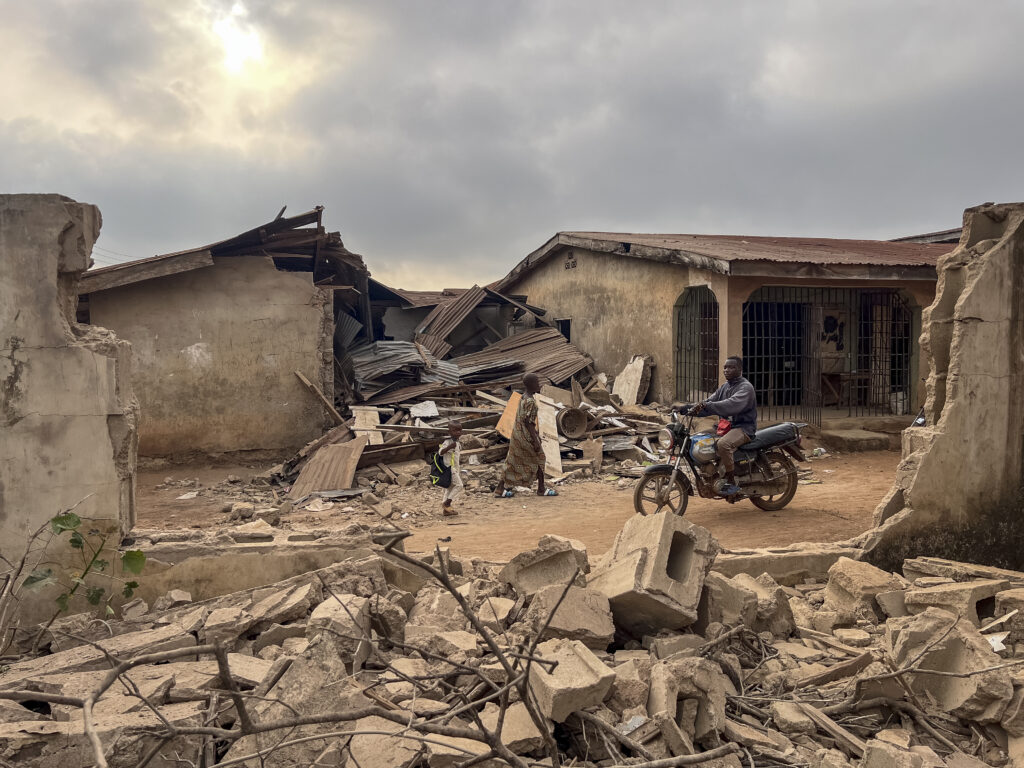
Immediately following surprise US strikes targeting militants in Nigeria, it remained unclear who or what was actually hit as Washington and Abuja told slightly different stories.Complicating matters was the fact that the strikes were delayed by American President Donald Trump, apparently to prioritise the symbolism of launching the attack on Christmas — and allegations that Washington backed out of issuing a joint statement with the Nigerians.The two countries agree the strikes hit targets linked to Islamic State, but neither immediately provided details on which of Nigeria’s myriad armed groups were targeted.”Twenty-four hours after the bombing, neither Nigeria nor its so-called ‘international partners’ can provide clear, verifiable information about what was actually struck,” activist and former presidential candidate Omoyele Sowore said Saturday.Nigeria is battling multiple jihadist organisations, including several linked to Islamic State. Neighbouring countries are also fighting IS-linked groups, and there are worries those conflicts are spilling into the country.Mohammed Idris, the country’s information minister, said late Friday that the strikes “targeted ISIS elements attempting to penetrate Nigeria from the Sahel corridor”.More official clarity started to emerge Saturday, when Daniel Bwala, a spokesman for President Bola Tinubu, told AFP the strikes targeted Islamic State militants who were in the country to work with the Lakurawa jihadist group and “bandit” gangs.All three were targeted, and there were casualties, though it is unknown who was killed, and from which group, Bwala said.- Trump claims credit -Taking to social media the night of the strike, Trump was the first to take credit for the overnight Thursday into Friday strikes in northwestern Sokoto state — sparking worries from Nigerians that their sovereignty had been violated.Trump also told US outlet Politico that the strikes had been scheduled earlier than Thursday, “And I said, ‘nope, let’s give a Christmas present’.”The opposition People’s Democratic Party slammed the government for allowing “foreign powers” to “break the news of security operations in our country before our government does”.Early Friday, Nigerian Foreign Minister Yusuf Tuggar insisted it was a joint operation, with Tinubu ultimately giving the go-ahead and Nigeria supplying intelligence for the strikes. Tuggar later told broadcaster Arise News that, while he was on the phone ahead of the strikes with US Secretary of State Marco Rubio, the two had agreed on issuing a joint statement, but Washington rushed out its own.- Villages hit by mistake -Late Friday, almost 24 hours after the strikes, it was Nigeria that finally provided clarity around what the targets were: “two major Islamic State (ISIS) terrorist enclaves” in Sokoto state’s Tangaza district, according to Idris.Other villages were hit by what the information minister said was debris from the strikes.Images from an AFP photographer in Offa, in neighbouring Kwara state, showed crumbled buildings, destroyed by the debris, with roofs caved in and belongings scattered among the wreckage.Explosions in Sokoto state’s Jabo town, also apparently from the debris, shook the community and “surprised us because this area has never been” a stronghold for armed groups, local resident Haruna Kallah told AFP. The munitions used were unclear. The US military released a video showing a navy ship launching what appeared to be missiles. Idris said “the strikes were launched from maritime platforms domiciled in the Gulf of Guinea”. But he also said “a total of 16 GPS-guided precision munitions were deployed using MQ-9 Reaper” drones.- Targets unknown -The choice to strike the northwest has sowed confusion among analysts, as Nigeria’s jihadists are mainly concentrated in the northeast.Some researchers have recently linked some members of the armed group known as Lakurawa — the main jihadist group located in Sokoto State — to Islamic State Sahel Province (ISSP), but other analysts have disputed those links.The strikes also come after a diplomatic spat between Washington and Abuja sparked by Trump saying the violence in the country amounted to “persecution” against Christians — a framing long used by the US religious right.The Nigerian government and independent analysts reject the accusations.The framing of Nigeria’s violence in religious terms, the lack of clarity around the targets and the fact that the strikes were delayed til Christmas all add to concerns from critics that the attack was bigger on symbolism than substance.Both countries have said that more strikes are on the table.
Immediately following surprise US strikes targeting militants in Nigeria, it remained unclear who or what was actually hit as Washington and Abuja told slightly different stories.Complicating matters was the fact that the strikes were delayed by American President Donald Trump, apparently to prioritise the symbolism of launching the attack on Christmas — and allegations that Washington backed out of issuing a joint statement with the Nigerians.The two countries agree the strikes hit targets linked to Islamic State, but neither immediately provided details on which of Nigeria’s myriad armed groups were targeted.”Twenty-four hours after the bombing, neither Nigeria nor its so-called ‘international partners’ can provide clear, verifiable information about what was actually struck,” activist and former presidential candidate Omoyele Sowore said Saturday.Nigeria is battling multiple jihadist organisations, including several linked to Islamic State. Neighbouring countries are also fighting IS-linked groups, and there are worries those conflicts are spilling into the country.Mohammed Idris, the country’s information minister, said late Friday that the strikes “targeted ISIS elements attempting to penetrate Nigeria from the Sahel corridor”.More official clarity started to emerge Saturday, when Daniel Bwala, a spokesman for President Bola Tinubu, told AFP the strikes targeted Islamic State militants who were in the country to work with the Lakurawa jihadist group and “bandit” gangs.All three were targeted, and there were casualties, though it is unknown who was killed, and from which group, Bwala said.- Trump claims credit -Taking to social media the night of the strike, Trump was the first to take credit for the overnight Thursday into Friday strikes in northwestern Sokoto state — sparking worries from Nigerians that their sovereignty had been violated.Trump also told US outlet Politico that the strikes had been scheduled earlier than Thursday, “And I said, ‘nope, let’s give a Christmas present’.”The opposition People’s Democratic Party slammed the government for allowing “foreign powers” to “break the news of security operations in our country before our government does”.Early Friday, Nigerian Foreign Minister Yusuf Tuggar insisted it was a joint operation, with Tinubu ultimately giving the go-ahead and Nigeria supplying intelligence for the strikes. Tuggar later told broadcaster Arise News that, while he was on the phone ahead of the strikes with US Secretary of State Marco Rubio, the two had agreed on issuing a joint statement, but Washington rushed out its own.- Villages hit by mistake -Late Friday, almost 24 hours after the strikes, it was Nigeria that finally provided clarity around what the targets were: “two major Islamic State (ISIS) terrorist enclaves” in Sokoto state’s Tangaza district, according to Idris.Other villages were hit by what the information minister said was debris from the strikes.Images from an AFP photographer in Offa, in neighbouring Kwara state, showed crumbled buildings, destroyed by the debris, with roofs caved in and belongings scattered among the wreckage.Explosions in Sokoto state’s Jabo town, also apparently from the debris, shook the community and “surprised us because this area has never been” a stronghold for armed groups, local resident Haruna Kallah told AFP. The munitions used were unclear. The US military released a video showing a navy ship launching what appeared to be missiles. Idris said “the strikes were launched from maritime platforms domiciled in the Gulf of Guinea”. But he also said “a total of 16 GPS-guided precision munitions were deployed using MQ-9 Reaper” drones.- Targets unknown -The choice to strike the northwest has sowed confusion among analysts, as Nigeria’s jihadists are mainly concentrated in the northeast.Some researchers have recently linked some members of the armed group known as Lakurawa — the main jihadist group located in Sokoto State — to Islamic State Sahel Province (ISSP), but other analysts have disputed those links.The strikes also come after a diplomatic spat between Washington and Abuja sparked by Trump saying the violence in the country amounted to “persecution” against Christians — a framing long used by the US religious right.The Nigerian government and independent analysts reject the accusations.The framing of Nigeria’s violence in religious terms, the lack of clarity around the targets and the fact that the strikes were delayed til Christmas all add to concerns from critics that the attack was bigger on symbolism than substance.Both countries have said that more strikes are on the table.