

Japan’s sticky problem with Trump, tariffs and rice
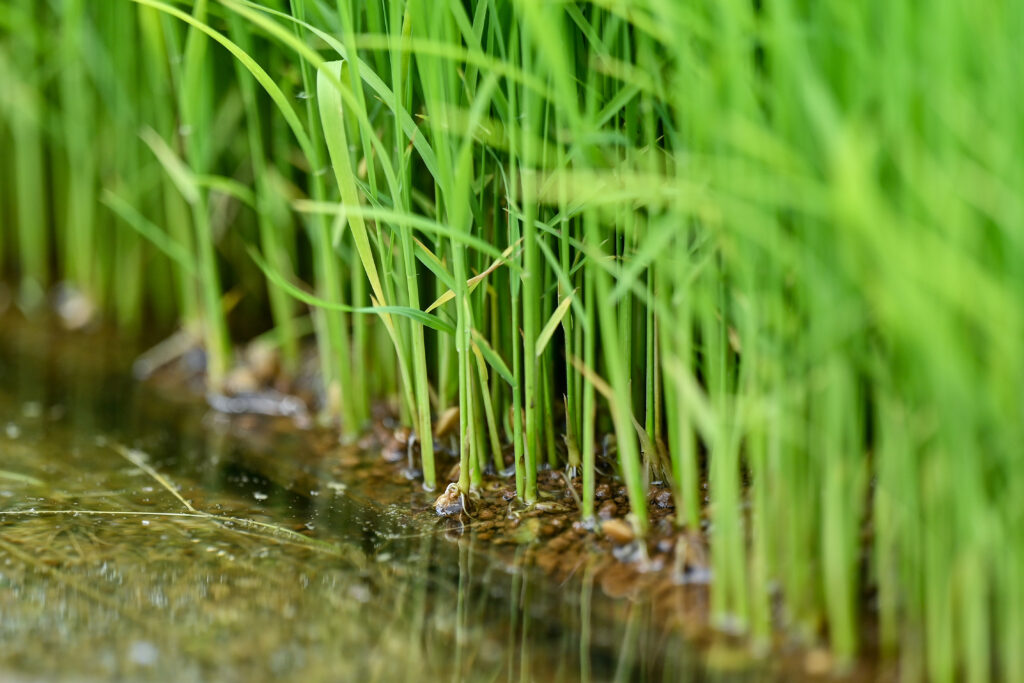
Donald Trump’s insistence that “spoiled” Japan imports more US rice is adding to Prime Minister Shigeru Ishiba’s problems ahead of elections that could sink his premiership after less than a year in office.Japan is one of more than 20 countries receiving letters this week from the US president warning of “reciprocal” tariffs from August 1 failing a trade agreement with Washington. The 25 percent across-the-board levy for Japan is separate from similar charges for cars, steel and aluminium that have already been imposed.Trump wants to get Japanese firms to manufacture more in the United States and for Tokyo to buy more US goods — notably gas and oil, cars and rice — to reduce the $70 billion trade deficit with the Asian powerhouse.”I have great respect for Japan, they won’t take our RICE, and yet they have a massive rice shortage,” Trump said on Truth Social on June 30.Rice, though, is small fry in the grand scheme of bilateral business between the countries.BMI Fitch Solutions said that it accounts for only 0.37 percent of US exports to Japan, and that even doubling that would have a “negligible” effect on overall trade.”(The) Trump administration seems more concerned with the optics of striking deals than with meaningfully narrowing the US trade deficit,” BMI said.For Japan, doubling imports could be swallowed if only the economic impact is considered.It could be well worth it if such a concession could reduce or even remove Trump’s damaging 25 percent tariff on Japanese autos.- Lost majority -But the politics of rice are fraught for Ishiba, whose ruling coalition disastrously lost its majority in lower house elections in October.Upper house elections on July 20 could see a similar drubbing, which might prompt Ishiba to quit, 10 months after taking the helm of the long-dominant but unloved Liberal Democratic Party (LDP).Rice Japan holds a cherished place in Japanese national culture — samurai reputedly used to be paid in it.Relying on imports — currently almost all rice consumed is grown domestically — would be seen by many as a national humiliation for the country of 124 million people, and risky.”Culturally, and historically, the Japanese people are all about rice,” Shinichi Katayama, the fourth-generation owner of 120-year-old Tokyo rice wholesaler Sumidaya, told AFP.”I personally welcome having an additional option for Japanese consumers. But I also feel the move (letting in lots of foreign rice) is too early from the standpoint of food security,” he said.”If we become reliant on rice imports, we may face shortages again when something happens.”While Japan already imports rice from the United States, many consumers see foreign, long-grain varieties as being of dubious quality and lacking the requisite stickiness of the homegrown short-grain rice.Bad memories linger from when Japan suffered a cold summer in 1993 and had to import large volumes of the grain from Thailand.American rice “tastes awful. It lacks stickiness”, said Sueo Matsumoto, 69, who helps families where children have hearing difficulties.”If they (the Americans) want to export to Japan, they must work at it. They must think about consumer preference,” he told AFP in Tokyo.- No sacrifice -As a result, Ishiba’s government has been at pains to say it won’t bend on the issue — although this may change after the election.”We have no intention of sacrificing agriculture in future negotiations,” Chief Cabinet Secretary Yoshimasa Hayashi said recently.”Ishiba is walking a narrow plank, wary of provoking powerful domestic lobbies like rice farmers, while juggling an approval rating that would make aggressive trade moves politically perilous,” said Stephen Innes at SPI Asset Management.The government has already been under fire for the recent skyrocketing of rice prices, which have roughly doubled in 12 months.Factors include a very hot summer in 2023, panic-buying after a warning of an imminent “megaquake” in 2024, alleged hoarding by some traders, and a surge in rice-hungry tourists. To help ease the pain, Tokyo is tapping emergency stockpiles, and imports have risen sharply — led by rice from California — but these are still tiny compared with domestic production.”All these problems with rice prices show the LDP’s agriculture policy has failed,” retiree Yasunari Wakasa, 77, told AFP.

European court to rule in Semenya sports gender caseThu, 10 Jul 2025 04:02:31 GMT
A top European court will decide Thursday whether double Olympic champion Caster Semenya can be required to lower her testosterone levels to compete as a woman, in a key decision on contested gender testing.The European Court of Human Rights’ decision comes after a row engulfed the 2024 Paris Olympics over the gender of an Algerian …
European court to rule in Semenya sports gender caseThu, 10 Jul 2025 04:02:31 GMT Read More »
A la Maison Blanche, le pétrole est roi, dénonce un sénateur
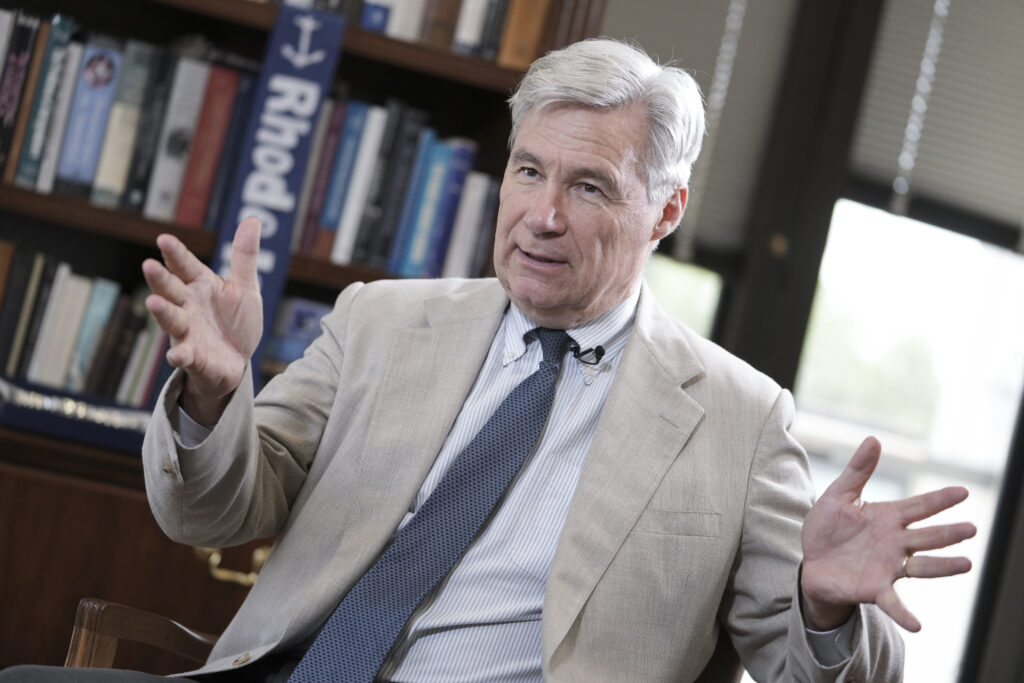
L’administration du président américain Donald Trump ne gouverne plus, elle “occupe” le pays au service de l’industrie des énergies fossiles, tonne un influent sénateur démocrate.Sheldon Whitehouse, l’un des élus américains les plus engagés sur les questions climatiques, tire la sonnette d’alarme dans un entretien sur la toute-puissance du lobby de l’or noir à Washington.”Il ne s’agit même plus d’un gouvernement”, fustige devant la presse l’élu du Rhode Island, âgé de 69 ans. “C’est une force d’occupation de l’industrie des combustibles fossiles qui s’est infiltrée dans les postes-clés”.Pour le démocrate, les membres du gouvernement “ont les bureaux, les titres”, mais “ce sont des larbins des combustibles fossiles (…) ils ne se soucient pas le moins du monde de l’opinion publique ou de la sécurité publique”.Celui qui s’apprête à tenir mercredi au Congrès son 300e discours d’alerte sur la crise climatique, une allocution qu’il a intitulée “Time to Wake Up” (“Il est temps de se réveiller”), exhorte à exposer l’ampleur de cette “escroquerie” pour la contrer.D’après une récente analyse de l’organisation Climate Power, les grandes entreprises pétrolières ont dépensé au moins 445 millions de dollars pour faire élire Donald Trump en novembre 2024, un montant probablement très sous-estimé car de nombreux dons restent anonymes.- “Corruption” – Depuis son retour au pouvoir, le dirigeant républicain a enclenché une marche arrière toute en matière de lutte contre le changement climatique, sortant une nouvelle fois la première puissance mondiale de l’Accord de Paris sur le climat, sapant les agences scientifiques et détricotant les mesures environnementales de son prédécesseur démocrate.Et ce alors que les signes de cette crise se multiplient, les Etats-Unis pleurant cette semaine leurs morts après des inondations dévastatrices au Texas dont la survenue a été rendue plus probable par le changement climatique.Les “rêves les plus sordides” des pollueurs “deviennent réalité”, accuse M. Whitehouse, qui appelle ses pairs à dénoncer publiquement ce qu’il qualifie “de corruption et de fraude politique les plus graves que le pays ait jamais connu”.Pour lui, l’emprise du lobby du pétrole sur la politique remonte à un arrêt controversé de la Cour suprême datant de 2010 et ayant levé toute limite au financement des campagnes politiques par les entreprises.Elles “ont pu entrer dans le Parti républicain et dire: +Nous vous donnerons des sommes illimitées. Vous aurez plus d’argent dans vos élections que vous n’en avez jamais vu auparavant+”, assure M. Whitehouse.Avant cela, élus démocrates et républicains collaboraient sur les questions climatiques et le candidat conservateur à la présidentielle de 2008, John McCain, disposait même d’un programme à ce sujet “tout à fait respectable”, insiste-t-il.Et pour preuve, selon lui, qu’il s’agit d’une question d’argent et non d’idéologie: Donald Trump lui-même cosignait en 2009 une publication exhortant le président de l’époque, Barack Obama, à en faire plus en matière de climat.- “Remise à zéro” – Malgré ce constat, le démocrate veut croire en un possible changement.D’abord, à l’international, avec la possible mise en place d’une initiative mondiale de taxe carbone qui se traduirait par un impôt sur les importations ayant une lourde empreinte climatique.Des pays comme le Royaume-Uni, le Canada, le Mexique et l’Australie pourraient copier le mécanisme de taxe aux frontières adopté en ce sens par l’Union européenne en 2022, et cela se répercuterait sur les Etats-Unis via les nombreuses transactions marchandes liant Washington à ces pays, espère-t-il.Une autre piste se trouve dans les mains de M. Whitehouse et de ses collègues du Congrès, qui pourraient adopter un projet de loi pour rendre les dons de campagne davantage transparents.Mais la solution la plus concrète pourrait venir de l’économie américaine elle-même, veut-il croire, car cette dernière est menacée par le changement climatique.La multiplication des événements météorologiques extrêmes pousse en effet les assureurs et banques à se retirer des régions les plus vulnérables, et fait craindre une crise financière similaire à celle ayant ébranlé le pays en 2008.”Lorsqu’il sera clairement établi ce qui est fait ici, il y aura une remise à zéro spectaculaire”, assure-t-il. Et “il y aura des comptes à rendre”.
A la Maison Blanche, le pétrole est roi, dénonce un sénateur
L’administration du président américain Donald Trump ne gouverne plus, elle “occupe” le pays au service de l’industrie des énergies fossiles, tonne un influent sénateur démocrate.Sheldon Whitehouse, l’un des élus américains les plus engagés sur les questions climatiques, tire la sonnette d’alarme dans un entretien sur la toute-puissance du lobby de l’or noir à Washington.”Il ne s’agit même plus d’un gouvernement”, fustige devant la presse l’élu du Rhode Island, âgé de 69 ans. “C’est une force d’occupation de l’industrie des combustibles fossiles qui s’est infiltrée dans les postes-clés”.Pour le démocrate, les membres du gouvernement “ont les bureaux, les titres”, mais “ce sont des larbins des combustibles fossiles (…) ils ne se soucient pas le moins du monde de l’opinion publique ou de la sécurité publique”.Celui qui s’apprête à tenir mercredi au Congrès son 300e discours d’alerte sur la crise climatique, une allocution qu’il a intitulée “Time to Wake Up” (“Il est temps de se réveiller”), exhorte à exposer l’ampleur de cette “escroquerie” pour la contrer.D’après une récente analyse de l’organisation Climate Power, les grandes entreprises pétrolières ont dépensé au moins 445 millions de dollars pour faire élire Donald Trump en novembre 2024, un montant probablement très sous-estimé car de nombreux dons restent anonymes.- “Corruption” – Depuis son retour au pouvoir, le dirigeant républicain a enclenché une marche arrière toute en matière de lutte contre le changement climatique, sortant une nouvelle fois la première puissance mondiale de l’Accord de Paris sur le climat, sapant les agences scientifiques et détricotant les mesures environnementales de son prédécesseur démocrate.Et ce alors que les signes de cette crise se multiplient, les Etats-Unis pleurant cette semaine leurs morts après des inondations dévastatrices au Texas dont la survenue a été rendue plus probable par le changement climatique.Les “rêves les plus sordides” des pollueurs “deviennent réalité”, accuse M. Whitehouse, qui appelle ses pairs à dénoncer publiquement ce qu’il qualifie “de corruption et de fraude politique les plus graves que le pays ait jamais connu”.Pour lui, l’emprise du lobby du pétrole sur la politique remonte à un arrêt controversé de la Cour suprême datant de 2010 et ayant levé toute limite au financement des campagnes politiques par les entreprises.Elles “ont pu entrer dans le Parti républicain et dire: +Nous vous donnerons des sommes illimitées. Vous aurez plus d’argent dans vos élections que vous n’en avez jamais vu auparavant+”, assure M. Whitehouse.Avant cela, élus démocrates et républicains collaboraient sur les questions climatiques et le candidat conservateur à la présidentielle de 2008, John McCain, disposait même d’un programme à ce sujet “tout à fait respectable”, insiste-t-il.Et pour preuve, selon lui, qu’il s’agit d’une question d’argent et non d’idéologie: Donald Trump lui-même cosignait en 2009 une publication exhortant le président de l’époque, Barack Obama, à en faire plus en matière de climat.- “Remise à zéro” – Malgré ce constat, le démocrate veut croire en un possible changement.D’abord, à l’international, avec la possible mise en place d’une initiative mondiale de taxe carbone qui se traduirait par un impôt sur les importations ayant une lourde empreinte climatique.Des pays comme le Royaume-Uni, le Canada, le Mexique et l’Australie pourraient copier le mécanisme de taxe aux frontières adopté en ce sens par l’Union européenne en 2022, et cela se répercuterait sur les Etats-Unis via les nombreuses transactions marchandes liant Washington à ces pays, espère-t-il.Une autre piste se trouve dans les mains de M. Whitehouse et de ses collègues du Congrès, qui pourraient adopter un projet de loi pour rendre les dons de campagne davantage transparents.Mais la solution la plus concrète pourrait venir de l’économie américaine elle-même, veut-il croire, car cette dernière est menacée par le changement climatique.La multiplication des événements météorologiques extrêmes pousse en effet les assureurs et banques à se retirer des régions les plus vulnérables, et fait craindre une crise financière similaire à celle ayant ébranlé le pays en 2008.”Lorsqu’il sera clairement établi ce qui est fait ici, il y aura une remise à zéro spectaculaire”, assure-t-il. Et “il y aura des comptes à rendre”.

Stocks mostly rise on trade deal optimism
Asian markets mostly rose Thursday on optimism that governments will hammer out deals to avoid the worst of US President Donald Trump’s tariffs even after he broadened his range of measures.Negotiators from around the world have tried to reach agreements with Washington since Trump in April unveiled his “Liberation Day” tariff bombshell, with a July 9 deadline recently pushed back to August 1.Letters have been sent in recent days to more than 20 trading partners — including Japan and South Korea — setting out new tolls, with some higher and some lower than the initial levels.The US president also said this week he would put a 50 percent tariff on copper imports, while considering a 200 percent charge for pharmaceuticals.However, analysts said the threats are largely being seen as negotiating tools, and investors have increasingly taken them in their stride, with the S&P 500 and Nasdaq hitting all-time highs in New York.And David Chao, global market strategist for Asia Pacific at Invesco, painted a positive picture even in light of the threatened levies.”Should the US ultimately impose higher tariffs on Asian countries, the region appears better positioned to withstand the resulting headwinds,” he wrote.”A softer dollar should give Asian central banks greater flexibility to ease policy to support their domestic economies without heightened concerns over currency depreciation.”Asian stocks mostly advanced after a healthy lead from Wall Street, where the Nasdaq hit another peak thanks to a surge in Nvidia that pushed the firm to a $4 trillion valuation at one point.Hong Kong, Shanghai, Sydney, Singapore, Seoul, Taipei, Manila and Jakarta all rose, though Tokyo edged down with Wellington.The broadly upbeat mood helped push bitcoin above $112,000 for the first time.There was also little reaction to news that Trump had hit Brazil with a 50 percent tariff as he blasted the trial of the country’s ex-president Jair Bolsonaro.In a letter addressed to Brazilian President Luiz Inacio Lula da Silva, he called the treatment of his right-wing ally an “international disgrace”. Bolsonaro is on trial over accusations he plotted a coup after his 2022 election loss to Lula.Lula said he will impose reciprocal levies on the United States.Brazil had not been among those threatened with these higher duties previously, with the United States running a goods trade surplus instead with the South American giant.Traders were given few guides on the Federal Reserve’s interest rate plans after minutes from its June policy meeting showed officials divided on the best way forward.Boss Jerome Powell’s patient approach to lowering borrowing costs has drawn the ire of Trump, who on Wednesday said they were “at least” three points too high.While the board sees the president’s tariffs as inflationary, the minutes said there remained “considerable uncertainty” on the timing, size and duration of the effects.Companies might choose not to raise consumer prices until they depleted their product stockpiles, for example, but supply chain disruptions caused by the levies could trigger larger price hikes.”While a few participants noted that tariffs would lead to a one-time increase in prices and would not affect longer-term inflation expectations, most participants noted the risk that tariffs could have more persistent effects on inflation,” the report said.- Key figures at around 0230 GMT -Tokyo – Nikkei 225: DOWN 0.5 percent at 39,610.61 (break)Hong Kong – Hang Seng Index: UP 0.2 percent at 23,938.07Shanghai – Composite: UP 0.3 percent at 3,503.13Euro/dollar: UP at $1.1741 from $1.1719 on WednesdayPound/dollar: UP at $1.3608 from $1.3590Dollar/yen: DOWN at 145.95 yen from 146.30 yenEuro/pound: UP at 86.28 pence from 86.21 penceWest Texas Intermediate: DOWN 0.2 percent at $68.28 per barrelBrent North Sea Crude: DOWN 0.1 percent at $70.15 per barrelNew York – Dow: UP 0.5 percent at 44,458.30 (close)London – FTSE 100: UP 0.2 percent at 8,867.02 (close)
Israel’s Bedouin communities use solar energy to stake claim to land
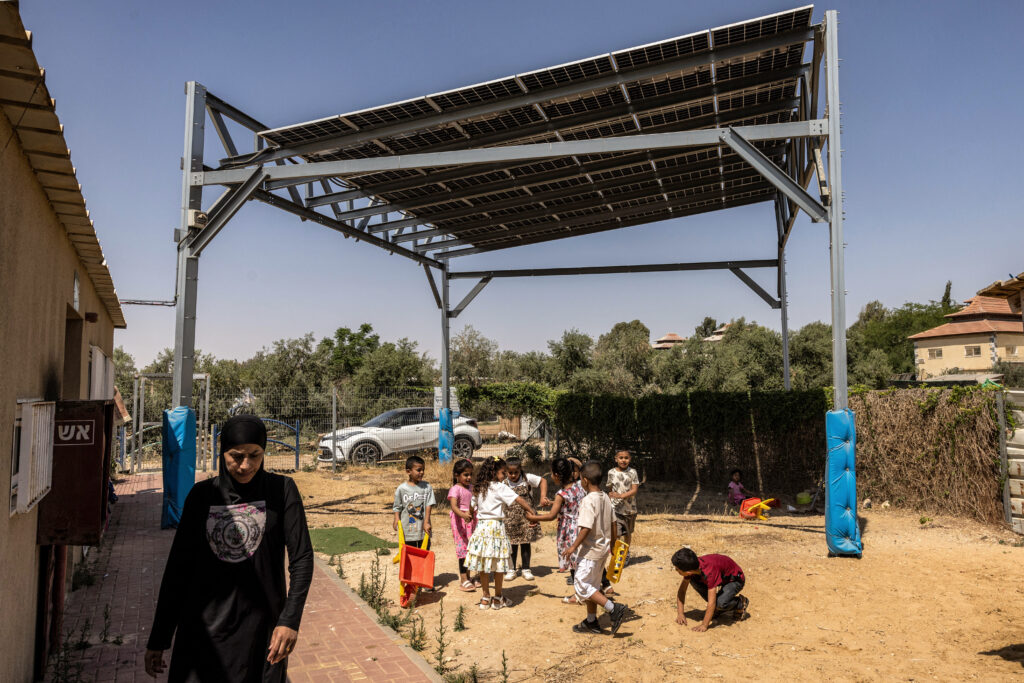
At the end of a dusty road in southern Israel, beyond a Bedouin village of unfinished houses and the shiny dome of a mosque, a field of solar panels gleams in the hot desert sun.Tirabin al-Sana in Israel’s Negev desert is the home of the Tirabin (also spelled Tarabin) Bedouin tribe, who signed a contract with an Israeli solar energy company to build the installation.The deal has helped provide jobs for the community as well as promote cleaner, cheaper energy for the country, as the power produced is pumped into the national grid.Earlier this month, the Al-Ghanami family in the town of Abu Krinat a little further south inaugurated a similar field of solar panels. Bedouin families have for years tried and failed to hold on to their lands, coming up against right-wing groups and hardline government officials.Demolition orders issued by Israeli authorities plague Bedouin villages, threatening the traditionally semi-nomadic communities with forced eviction. But Yosef Abramowitz, co-chair of the non-profit organisation Shamsuna, said solar field projects help them to stake a more definitive claim.”It secures their land rights forever,” he told AFP.”It’s the only way to settle the Bedouin land issue and secure 100 percent renewable energy,” he added, calling it a “win, win”.For the solar panels to be built, the land must be registered as part of the Bedouin village, strengthening their claim over it.- Land recognition -Roughly 300,000 Bedouins live in the Negev desert, half of them in places such as Tirabin al-Sana, including some 110,000 who reside in villages not officially recognised by the government. Villages that are not formally recognised are fighting the biggest battle to stay on the land.Far-right groups, some backed by the current government of Prime Minister Benjamin Netanyahu, have stepped up efforts in the past two years to drive these families away.A sharp increase in home demolitions has left the communities vulnerable and whole families without a roof over their heads.”Since 2023, more than 8,500 buildings have been demolished in these unrecognised villages,” Marwan Abu Frieh, from the legal aid organisation Adalah, told AFP at a recent protest in Beersheva, the largest city in the Negev.”Within these villages, thousands of families are now living out in the open, an escalation the Negev has not witnessed in perhaps the last two decades.”Tribes just want to “live in peace and dignity”, following their distinct customs and traditions, he said.Gil Yasur, who also works with Shamsuna developing critical infrastructure in Bedouin villages, said land claims issues were common among Bedouins across the Negev.Families who include a solar project on their land, however, stand a better chance of securing it, he added.”Then everyone will benefit — the landowners, the country, the Negev,” he said. “This is the best way to move forward to a green economy.”- Positive energy -In Um Batin, a recognised village, residents are using solar energy in a different way –- to power a local kindergarten all year round.Until last year, the village relied on power from a diesel generator that polluted the air and the ground where the children played.Now, a hulking solar panel shields the children from the sun as its surface sucks up the powerful rays, keeping the kindergarten in full working order.”It was not clean or comfortable here before,” said Nama Abu Kaf, who works in the kindergarten.”Now we have air conditioning and a projector so the children can watch television.” Hani al-Hawashleh, who oversees the project on behalf of Shamsuna, said the solar energy initiative for schools and kindergartens was “very positive”.”Without power you can’t use all kinds of equipment such as projectors, lights in the classrooms and, on the other hand, it saves costs and uses clean energy,” he said.The projects are part of a pilot scheme run by Shamsuna. Asked if there was interest in expanding to other educational institutions that rely on polluting generators, he said there were challenges and bureaucracy but he hoped to see more.”We need people to collaborate with us to move this forward,” he said, adding that he would “love to see a solar energy system in every village”.